Depyrogenation Validation: Principles and GMP Approach
Depyrogenation Validation is a documented process used to demonstrate that a validated depyrogenation cycle can consistently reduce bacterial endotoxins on pharmaceutical components, product-contact equipment, or other applicable materials to an established acceptable level.
Depyrogenation is particularly important in manufacturing sterile and parenteral pharmaceutical products, because bacterial endotoxins can remain even after microorganisms have been destroyed sterilization and depyrogenation address different quality risks. Current EU GMP Annex 1 requires validation studies for thermal depyrogenation processes to demonstrate a suitable Fh value and a minimum 3-log reduction in endotoxin concentration, along with representative containers inoculated with endotoxin and demonstration of endotoxin quantification and recovery efficiency.
What Is Depyrogenation?
Depyrogenation is a process used to remove or destroy pyrogens, particularly bacterial endotoxins, from pharmaceutical materials or product-contact components. A commonly used approach is dry-heat depyrogenation, especially for heat-resistant glass containers and other suitable components. Depyrogenation may be achieved through dry heat, suitable washing processes, or other scientifically justified processes whichever is selected must be appropriately validated for its intended application.
Depyrogenation vs. Sterilization
Depyrogenation and sterilization shouldn’t be treated as interchangeable:
| Depyrogenation | Sterilization |
|---|---|
| Primarily controls pyrogens/endotoxins | Controls viable microorganisms |
| Commonly evaluated using endotoxin challenge | May use biological indicators and physical parameters |
| Important for components used in parenteral products | Required where sterile status is necessary |
| Demonstrates endotoxin reduction | Demonstrates microbial lethality |
| Thermal depyrogenation may use dry heat | May use moist heat, dry heat, radiation, filtration, etc. |
A process can therefore require both sterilization and depyrogenation, depending on the component and manufacturing process. EU GMP Annex 1 specifically states that when a depyrogenation process is used for components or product-contact equipment, the validation should demonstrate the required endotoxin reduction it doesn’t automatically require a separate sterilization demonstration for that depyrogenation process.
Why Is Depyrogenation Validation Important?
Endotoxins are components of the outer membrane of Gram-negative bacteria, and can remain in materials even after the bacteria themselves have been destroyed. For products administered parenterally, uncontrolled endotoxin levels present a significant patient-safety concern.
Depyrogenation Validation provides documented evidence that the process is capable of reducing endotoxin, the validated cycle is reproducible, critical process parameters are controlled, the worst-case load is adequately processed, endotoxin recovery can be reliably measured, and the process consistently meets predefined acceptance criteria. WHO GMP principles emphasize that pharmaceutical processes should be appropriately validated, documented, and controlled.
Common Applications of Depyrogenation
Depyrogenation may be used for suitable glass vials, ampoules, product-contact components, equipment, other heat-resistant materials, and primary packaging components. Dry-heat ovens are commonly used for sterilization or depyrogenation of primary packaging components and other suitable materials EU GMP guidance identifies temperature and exposure time among the critical parameters to consider during qualification and routine processing.
Principle of Thermal Depyrogenation
In thermal depyrogenation, the material is exposed to a controlled dry-heat cycle. Effectiveness depends on factors like temperature, exposure time, heat distribution, heat penetration, load configuration, material characteristics, airflow, conveyor or belt speed in tunnels, and the initial endotoxin challenge. The cycle must be developed and validated so the least favourable location and load condition still receive adequate thermal treatment.
What Is Depyrogenation Validation?
Depyrogenation Validation is a documented study demonstrating that the process can consistently achieve its intended endotoxin reduction under defined conditions. A typical validation programme follows:
Equipment Qualification → Temperature Mapping → Heat Penetration → Endotoxin Challenge → Cycle Execution → Endotoxin Recovery → Log Reduction Calculation → Acceptance → Routine Monitoring
The exact validation strategy should be based on the equipment, process, material, load configuration, and applicable regulatory requirements.
Key Elements of Depyrogenation Validation
1. Equipment Qualification
The depyrogenation oven or tunnel should be appropriately qualified before process validation Installation Qualification (IQ), Operational Qualification (OQ), and Performance Qualification (PQ) confirm the equipment can consistently maintain the required operating conditions.
2. Temperature Mapping
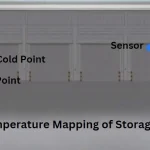
Temperature mapping evaluates temperature distribution throughout the chamber or tunnel, identifying locations that may receive less thermal exposure than others, to demonstrate an adequate and reproducible thermal profile.
3. Heat Penetration Study
Heat penetration evaluates how quickly and effectively heat reaches the material or container being processed particularly important when load configuration or container geometry can affect heat transfer. EU GMP Annex 1 identifies heat penetration, heat distribution/uniformity, temperature, exposure time, and airflow as important considerations for thermal processes.
4. Worst-Case Load
Validation should represent the most challenging conditions for the process maximum validated load, minimum validated load where relevant, container size and configuration, load arrangement, material characteristics, cold spots, and maximum conveyor loading. The selected worst-case condition should be scientifically justified.
Endotoxin Challenge Study
One of the most important elements of Depyrogenation Validation is the endotoxin challenge: containers or applicable components are intentionally challenged with a known quantity of endotoxin before processing, then subjected to the validated depyrogenation cycle. After processing, residual endotoxin is recovered and quantified. EU GMP Annex 1 states that representative containers inoculated with endotoxin should be used during validation, and that endotoxin quantification and recovery efficiency should be demonstrated.

Basic study concept:
Known Endotoxin Challenge → Depyrogenation Cycle → Recovery of Residual Endotoxin → Endotoxin Quantification → Calculate Log Reduction → Compare With Acceptance Criteria
Why Is Endotoxin Recovery Important?
A depyrogenation study depends on reliable measurement of endotoxin before and after processing. If endotoxin recovery from the test article is poor, the calculated reduction may not accurately represent actual process performance which is why recovery studies and appropriate controls are important components of the validation strategy. EU GMP Annex 1 specifically requires demonstration of endotoxin quantification and recovery efficiency through biological measurement.
https://pharmavk.com/low-endotoxin-recovery/
Endotoxin Log Reduction
Endotoxin reduction can be expressed as a logarithmic reduction:
Endotoxin Log Reduction = log₁₀ Initial Endotoxin − log₁₀ Residual Endotoxin
Example: Initial endotoxin = 1,000 EU; Residual endotoxin = 1 EU. Log Reduction = log₁₀(1000) − log₁₀(1) = 3 − 0 = 3 log reduction.
A 3-log reduction corresponds to a 1,000-fold reduction in endotoxin level.
What Does a 3-Log Reduction Mean?
| Initial Level | After 3-Log Reduction |
|---|---|
| 1,000 EU | 1 EU |
| 10,000 EU | 10 EU |
| 100,000 EU | 100 EU |
The actual endotoxin challenge and acceptance criteria should be scientifically justified and defined in the approved validation protocol. For thermal depyrogenation, current EU GMP Annex 1 specifies a minimum 3-log reduction in endotoxin concentration for the applicable process.
Fh Value in Thermal Depyrogenation
For thermal processes, Fh is a measure of the lethality delivered by the process relative to a defined reference temperature and z-value. EU GMP Annex 1 requires thermal depyrogenation validation to demonstrate a suitable Fh value in addition to the required endotoxin reduction. The Fh calculation should use the validated reference conditions and parameters defined for the specific process it shouldn’t be treated as a universal value simply copied from another oven or tunnel.
Critical Parameters in Depyrogenation
- Temperature: the actual product/component temperature matters, not simply the equipment set point
- Exposure time: the material must remain under validated thermal conditions for the required duration
- Heat distribution: temperature should be adequately distributed throughout the relevant processing zone
- Heat penetration: the process must demonstrate that heat reaches the critical locations within the load
- Airflow: airflow can influence heat transfer and temperature uniformity
- Load configuration: changes to load size or arrangement can affect heat distribution and penetration
EU GMP Annex 1 specifically identifies temperature, exposure time, heat penetration, heat distribution/uniformity, and airflow among the parameters to consider during qualification and routine processing.
Depyrogenation Tunnel Validation
Depyrogenation tunnels are commonly used for continuous processing of suitable glass containers, typically following:
Loading Zone → Preheating Zone → Depyrogenation Zone → Cooling Zone → Unloading. Validation should consider the thermal profile throughout the process, including belt speed, exposure time, temperature, heat distribution, heat penetration, airflow, load configuration, cooling conditions, and sterile boundary protection. EU GMP Annex 1 states that for dry-heat ovens used for sterilization or depyrogenation, critical parameters should include temperature and exposure period/time, among other applicable factors.
Depyrogenation Oven Validation
For a depyrogenation oven, validation generally evaluates whether the chamber can repeatedly deliver the required thermal conditions. Studies typically include:
- Empty-chamber temperature mapping
- Loaded-chamber temperature mapping
- Heat penetration studies
- Worst-case load assessment
- Endotoxin challenge studies
- Endotoxin recovery studies
- Cycle reproducibility
- Review of critical process parameters
The validation protocol should define the number of runs, sampling locations, acceptance criteria, and documentation requirements.
Is 250°C for 30 Minutes Always Required?
No and this is an important point. Don’t treat 250°C for 30 minutes as a universal depyrogenation requirement. The validated temperature-time combination depends on the specific process, equipment, material, load, and regulatory strategy. EU GMP Annex 1 focuses on demonstrating a suitable Fh value and the required endotoxin reduction, rather than prescribing one universal temperature-time cycle. The correct statement isn’t “every depyrogenation oven must operate at 250°C for 30 minutes” it’s that the temperature-time combination must be validated and demonstrated to achieve the required process performance.
Depyrogenation Validation Acceptance Criteria
Acceptance criteria should be predefined in the approved validation protocol, potentially addressing: required endotoxin log reduction, Fh value, temperature range, exposure time, heat distribution, heat penetration, endotoxin recovery, assay suitability, load configuration, equipment performance, and cycle reproducibility. For applicable thermal depyrogenation processes, EU GMP Annex 1 specifies a minimum 3-log endotoxin reduction.
Common Errors During Depyrogenation Validation
- Using only the chamber set point: the equipment display temperature doesn’t necessarily represent the temperature experienced by the critical load location
- Ignoring cold spots: the worst-case location should be identified through appropriate mapping and penetration studies
- Using an unrepresentative load: the validation load should represent the intended routine process and justified worst-case conditions
- Poor endotoxin recovery: inadequate recovery can compromise interpretation of the endotoxin reduction study
- Changing the load without assessment: significant changes in load configuration can affect heat transfer and should go through the site’s change-control process
- Confusing sterilization with depyrogenation: sterility and endotoxin control are different quality attributes
- Relying only on physical data: physical parameters matter, but the endotoxin challenge provides direct evidence of depyrogenation capability
Revalidation and Change Control
Depyrogenation processes should remain in a validated state throughout their lifecycle. Changes that may affect process performance should be assessed through the pharmaceutical quality system new container size, new load configuration, major equipment modification, heating-system modification, conveyor/belt-speed change, change in operating range, change in material, significant maintenance, or a change in endotoxin challenge strategy. The need for requalification or revalidation should be determined through documented risk assessment and the site’s approved procedures. WHO GMP emphasizes that processes should be validated, reviewed, and documented as part of the pharmaceutical quality system.
https://pharmavk.com/change-control-in-pharmaceutical-manufacturing/
Depyrogenation Validation: Practical Flow
URS / Process Requirements → Equipment Qualification → Temperature Mapping → Heat Penetration Study → Identify Worst-Case Load / Cold Spot → Endotoxin Challenge → Depyrogenation Cycle → Endotoxin Recovery & Quantification → Calculate Log Reduction → Evaluate Fh and Physical Parameters → Compare Against Acceptance Criteria → Document Validation Report → Routine Monitoring & Change Control
QA Responsibilities During Depyrogenation Validation
QA plays an important role in ensuring the validation process complies with the pharmaceutical quality system reviewing and approving validation protocols, verifying predefined acceptance criteria, reviewing calibration status, qualification documentation, temperature mapping, and endotoxin challenge results, reviewing deviations and validation reports, assessing change control, approving validated operating ranges, and ensuring appropriate documentation and traceability.
QC/Microbiology Responsibilities
QC or microbiology personnel may be involved in preparing or handling endotoxin challenge materials, endotoxin testing, recovery studies, test controls, assay suitability, calculating endotoxin reduction, data review, and microbiological documentation. Exact responsibilities should follow the site’s approved procedures and organizational structure.
Frequently Asked Questions
What is depyrogenation validation?
A documented demonstration that a defined process can consistently reduce bacterial endotoxin on applicable pharmaceutical materials or components to the required level.
What is the difference between sterilization and depyrogenation?
Sterilization eliminates viable microorganisms, while depyrogenation focuses on removing or destroying pyrogens, particularly bacterial endotoxins.
What is the minimum endotoxin reduction expected for thermal depyrogenation?
For applicable thermal depyrogenation processes, EU GMP Annex 1 requires validation to demonstrate a minimum 3-log reduction in endotoxin concentration, together with a suitable Fh value.
Why are endotoxin-challenged containers used?
They provide a known endotoxin challenge that lets the effectiveness of the depyrogenation process be quantitatively evaluated. EU GMP Annex 1 requires representative containers inoculated with endotoxin during validation.
Why is endotoxin recovery important?
Recovery demonstrates that the endotoxin measurement procedure can reliably recover and quantify endotoxin from the tested material. Poor recovery can make interpretation of the calculated reduction unreliable.
Is depyrogenation the same as sterilization?
No. They address different quality attributes a validated depyrogenation process shouldn’t automatically be described as a substitute for every sterilization requirement.
What parameters are important during thermal depyrogenation?
Temperature, exposure time, heat penetration, heat distribution, airflow, and load configuration are among the important parameters evaluated during qualification and routine processing.
Conclusion
Depyrogenation Validation is an important element of sterile pharmaceutical manufacturing, particularly when components or product-contact equipment require control of bacterial endotoxins. A robust validation strategy combines equipment qualification, temperature mapping, heat penetration studies, representative endotoxin challenges, recovery studies, physical process monitoring, and endotoxin reduction assessment. For applicable thermal processes, current EU GMP Annex 1 requires demonstration of a suitable Fh value and minimum 3-log endotoxin reduction.
The validated process should be maintained through appropriate monitoring, change control, investigation, and lifecycle management. Most importantly, a depyrogenation cycle should be evaluated using product- and process-specific scientific evidence, rather than relying on a generic temperature or exposure time.
References