Temperature Mapping in Pharmaceutical Storage: 7 Essential Steps for GMP Compliance
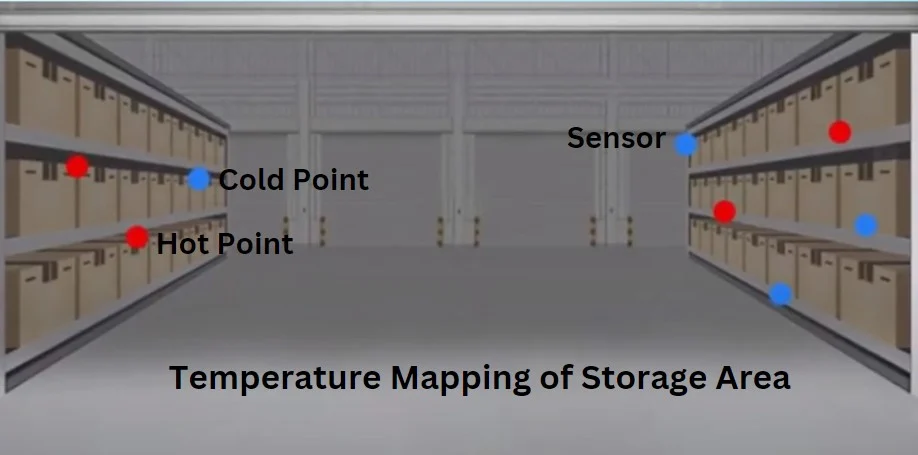
Temperature Mapping in Pharmaceutical Storage is an important qualification and monitoring activity used to understand how temperature is distributed throughout a storage area. Pharmaceutical warehouses, cold rooms, refrigerators, freezers, and other controlled environments may not maintain the same temperature at every location differences can occur near doors, cooling units, corners, ceilings, floors, and other areas affected by airflow or heat sources. WHO guidance explains that temperature mapping establishes the temperature distribution within a defined space and helps identify hot and cold spots.
For pharmaceutical companies, effective mapping helps determine suitable monitoring locations, supports appropriate storage practices, and provides documented evidence that storage conditions are capable of maintaining products within their labelled requirements.
What Is Temperature Mapping in Pharmaceutical Storage?
Temperature Mapping in Pharmaceutical Storage is the systematic recording and analysis of temperature at multiple locations within a defined three-dimensional storage area over a specified period. The objective isn’t simply to record the temperature at one point — mapping evaluates temperature variation throughout the storage space to identify areas that may run hotter or colder than others. WHO guidance identifies temperature mapping as applicable to cold rooms, freezer rooms, temperature-controlled storage areas, quarantine areas, receiving and loading bays, and other spaces where products have specified storage temperatures.
A mapping study generally involves preparing an approved mapping protocol, selecting suitable calibrated temperature data loggers, establishing appropriate logger locations, recording temperature data over a defined study period, analysing the collected data, identifying hot and cold spots, and preparing a mapping report with any required actions.
Why Is Temperature Mapping Important in Pharmaceutical Storage?
Pharmaceutical products can be sensitive to temperature excursions, and exposure outside labelled storage conditions may affect product quality, stability, or suitability for use depending on the product and duration of exposure. A storage room may look fine based on one wall-mounted sensor while another location experiences a completely different temperature — areas near doors, cooling units, external walls, ceilings, floors, corners, air vents, and frequently opened access points may behave differently from the centre of the storage area. WHO notes that temperature can vary significantly within the same storage unit, and mapping helps identify these variations.
Temperature Mapping in Pharmaceutical Storage supports product quality protection, identification of temperature risk zones, selection of monitoring locations, storage-area qualification, GMP compliance, investigation of temperature excursions, better warehouse layout and product placement, and continuous improvement of environmental controls.
Temperature Mapping vs. Temperature Monitoring
| Parameter | Temperature Mapping | Temperature Monitoring |
|---|---|---|
| Main purpose | Understand temperature distribution | Monitor ongoing conditions |
| Coverage | Multiple locations | Selected monitoring locations |
| Output | Temperature distribution and risk zones | Continuous or periodic temperature records |
| Main use | Establish hot/cold spots and monitoring locations | Detect excursions during routine operation |
| Timing | Performed as a defined study | Ongoing activity |
| Result | Mapping report | Routine monitoring records |
The results of a mapping study help determine where routine monitoring devices should be positioned WHO guidance specifically recommends placing monitoring devices in appropriate risk or worst-case locations identified through mapping.
https://pharmavk.com/change-control-in-pharmaceutical-manufacturing/
7 Essential Steps in Temperature Mapping
1. Prepare a Temperature Mapping Protocol
The mapping study should begin with an approved protocol defining the purpose and scope and describing how the exercise will be performed covering storage-area identification, area dimensions and layout, storage temperature requirement, mapping conditions, data logger specifications and identification numbers, proposed logger locations, study duration, sampling interval, acceptance criteria, data analysis method, responsibilities, deviation handling, and report requirements. The protocol should be approved per the site’s quality system before execution.
2. Assess the Storage Area and Identify Risk Zones
Before placing data loggers, evaluate the physical characteristics of the storage area room size, storage height, racking arrangement, HVAC or refrigeration equipment, airflow pattern, doors and loading areas, windows or external walls, lighting and other heat sources, product-loading pattern, and potential temperature stratification. Large or high-bay warehouses may show temperature differences between lower and upper levels; WHO specifically highlights considering the full working height when mapping high-bay storage areas. Risk assessment should guide logger placement rather than relying on a convenient or uniform grid.
3. Select Suitable Temperature Data Loggers
Electronic data logging monitors are commonly used to continuously record temperature during the mapping study. Selected equipment should suit the expected temperature range, study environment, required measurement accuracy, recording interval, study duration, and data storage requirements. Devices should have appropriate calibration status WHO guidance states temperature monitoring equipment should be calibrated at suitable predetermined intervals with records maintained. The number of loggers should be justified based on the size, configuration, risk profile, and purpose of the study, rather than using one universal number for every facility.
4. Place the Data Loggers Strategically
Correct placement is one of the most important parts of Temperature Mapping in Pharmaceutical Storage. Loggers should be distributed so meaningful temperature variation can be evaluated near doors, corners, near cooling equipment, centre of the storage area, upper and lower storage levels, areas with restricted airflow, and areas with known temperature variability. Exact locations should be documented in the protocol and supported by a risk-based rationale. For cold rooms and dry stores, WHO’s mapping guidance provides example sensor-placement approaches considering different heights and positions within the space.
5. Conduct the Mapping Study Under Representative Conditions
The mapping exercise should represent the intended operating environment as closely as practical normal HVAC operation, typical door-opening activity, representative storage configuration, normal product loading, seasonal conditions, and routine operational activities. Seasonal variation matters because a storage area’s temperature distribution can change between different environmental conditions, so the mapping strategy should be defined using the facility’s risk assessment and applicable procedures rather than assuming one study represents every possible operating condition. WHO describes mapping as a structured process involving a protocol, mapping exercise, report, and implementation of identified remedial actions.
6. Analyse the Data and Identify Hot and Cold Spots
After the study, recorded data should be analysed systematically minimum, maximum, and average temperature, temperature trends, location-wise comparison, excursion periods, hot spots, cold spots, and temperature stratification. A hot spot consistently or repeatedly experiences relatively higher temperatures, while a cold spot experiences relatively lower temperatures compared with other locations. The significance of either depends on the applicable labelled storage range and predefined acceptance criteria. WHO explains that mapping establishes temperature distribution and identifies hot and cold spots so products can be stored appropriately within their labelled range.
7. Prepare the Mapping Report and Implement CAPA Where Needed
The final report should document the study and its conclusions objective, scope, storage-area description, protocol reference, data logger details and calibration information, logger-location diagram, study conditions, raw temperature data, graphs and trends, minimum/maximum values, identified hot and cold spots, deviations, assessment against predefined criteria, conclusions, recommendations, and CAPA where applicable. If unacceptable temperature variation is identified, the organization should investigate the cause possible actions include adjusting airflow, modifying storage arrangements, improving insulation, reviewing door management, servicing HVAC/refrigeration systems, relocating monitoring devices, restricting product placement in unsuitable areas, or implementing CAPA. WHO notes that mapping can identify zones requiring remedial action, and follow-up mapping may be needed to verify the effectiveness of those actions.
https://pharmavk.com/Why-is-CAPA-Correct/
When Should Temperature Mapping Be Performed?
Temperature mapping should be planned according to the facility’s qualification strategy, risk assessment, applicable regulatory requirements, and site procedures. An initial mapping study should be performed before a storage area is put into use where required by applicable guidance. Additional mapping or reassessment may be appropriate after HVAC or refrigeration-system modification, major room-layout or racking changes, a change in storage configuration, facility expansion, repeated temperature excursions, or investigation findings indicating temperature variability. EU GDP guidance states an initial mapping exercise should be conducted before use and monitoring equipment positioned based on the mapping results, linking repeat mapping to risk assessment and significant facility or temperature-control modifications.
Important: a single universal frequency shouldn’t be presented as a GMP requirement for every facility the appropriate frequency should be established through applicable regulations, SOPs, qualification strategy, and documented risk assessment.
What Happens If Temperature Mapping Fails?
A mapping study shouldn’t simply be marked “failed” because one location records a different temperature the result should first be evaluated against the predefined acceptance criteria and labelled storage requirements. If unacceptable conditions are identified, the investigation may consider:
- Was the data logger calibrated?
- Was the logger positioned correctly?
- Was there an equipment malfunction?
- Was the storage configuration representative?
- Was a door left open?
- Was there an HVAC or refrigeration problem?
- Did seasonal or environmental conditions influence the result?
- Were products stored in an unsuitable location?
- Is the affected area routinely used for product storage?
The quality unit should assess the impact and determine appropriate corrective action per the site’s procedures.
Role of QA in Temperature Mapping
QA ensures temperature mapping is properly planned, documented, reviewed, and controlled reviewing and approving the mapping protocol, ensuring appropriate calibration status, reviewing data and deviations, assessing temperature excursions, ensuring investigations are documented, reviewing CAPA where required, approving the final report, ensuring records are retained, and supporting audit and inspection readiness. WHO guidance states recorded temperature monitoring data should be available for review and that out-of-limit or out-of-trend results should be investigated per an SOP with appropriate action taken.
Role of Engineering and Warehouse Teams
Temperature mapping isn’t solely a QA activity. Engineering may support HVAC systems, refrigeration equipment, temperature-control systems, preventive maintenance, airflow assessment, and equipment troubleshooting. Warehouse personnel support correct storage practices, door management, product arrangement, avoiding airflow blockage, maintaining appropriate clearance, following defined storage conditions, and reporting temperature abnormalities. QA provides quality oversight throughout and ensures the process is appropriately documented and controlled.
Common Mistakes in Temperature Mapping
- Using too few monitoring locations without justification: a small number of sensors may fail to adequately characterize a large or complex storage area
- Ignoring vertical temperature variation: temperature can vary between floor, middle, and ceiling levels, particularly in high-bay storage
- Placing all sensors near the centre: the centre may not represent areas exposed to doors, walls, cooling units, or poor airflow
- Ignoring seasonal conditions: temperature distribution can change with external environmental conditions
- Using uncalibrated equipment: incorrect measurement data can compromise the entire study
- Treating mapping and monitoring as the same activity: mapping establishes temperature distribution and supports monitoring-point selection; routine monitoring then tracks conditions during normal operations
- Failing to investigate abnormal results: a temperature excursion or unexpected trend should be assessed per the site’s procedures rather than ignored
Temperature Mapping Checklist
| Activity | Key Question |
|---|---|
| Protocol | Is the mapping protocol approved? |
| Storage requirement | Is the labelled temperature range defined? |
| Risk assessment | Have potential hot/cold zones been identified? |
| Data loggers | Are suitable and calibrated devices available? |
| Placement | Are locations scientifically/risk-based justified? |
| Study conditions | Are operating conditions representative? |
| Data analysis | Have minimum, maximum, and trends been reviewed? |
| Hot/cold spots | Have temperature-risk areas been identified? |
| Deviations | Have abnormal results been investigated? |
| Report | Is the final mapping report approved? |
| CAPA | Have required corrective actions been implemented? |
| Monitoring | Are routine monitoring locations appropriately selected? |
Temperature Mapping vs. Qualification vs. Calibration
These terms are often confused by freshers. Calibration confirms the relationship between an instrument’s indication and an applicable reference standard under specified conditions. Qualification provides documented evidence that equipment or a system is suitable for its intended use. Temperature mapping evaluates the spatial temperature distribution within a defined storage environment. These activities relate to each other within a qualification and monitoring programme, but they aren’t interchangeable.
Interview Questions on Temperature Mapping
1. What is temperature mapping?
The systematic recording and analysis of temperature at multiple locations within a defined storage area to determine temperature distribution and identify hot and cold spots.
2. Why is temperature mapping performed?
It helps demonstrate that the storage environment can maintain required conditions and helps identify locations that may experience temperature extremes.
3. What is a hot spot?
A location within the mapped area that experiences relatively higher temperatures compared with other locations and may present a storage risk.
4. What is a cold spot?
A location that experiences relatively lower temperatures potentially important where products are sensitive to low temperatures or freezing.
5. What instruments are used?
Electronic temperature data loggers are commonly used to record temperature over the mapping period.
6. Where should data loggers be placed?
Based on the storage area’s size, configuration, airflow, risk assessment, and potential temperature extremes.
7. Is temperature mapping the same as routine temperature monitoring?
No. Mapping characterizes the temperature distribution of an area, while routine monitoring tracks conditions during normal operations.
8. What happens if a temperature excursion is identified?
It should be documented and investigated per the applicable SOP and quality system, with product impact and appropriate corrective actions assessed.
Frequently Asked Questions
What is Temperature Mapping in Pharmaceutical Storage?
A documented study that records temperatures at multiple locations within a storage area to determine temperature distribution and identify hot and cold spots.
Why is temperature mapping important in pharmaceutical warehouses?
It helps identify temperature variations that may not be detected by a single monitoring point and supports appropriate storage and monitoring decisions.
How many temperature data loggers are required?
There’s no single universal number the number and placement should be justified based on the size, configuration, risk profile, and purpose of the mapping study.
How long should a temperature mapping study run?
The duration should be defined in the approved protocol based on the facility, purpose, operating conditions, applicable guidance, and risk assessment, rather than applying one universal duration to every site.
Does temperature mapping need to be repeated?
Reassessment or repeat mapping may be required based on risk assessment, significant changes, investigation findings, or applicable regulatory and site requirements. EU GDP guidance specifically links repeat mapping to risk assessment and significant modifications.
What is the difference between a hot spot and a cold spot?
A hot spot has relatively higher temperatures, while a cold spot has relatively lower temperatures within the mapped storage environment.
Conclusion
Temperature Mapping in Pharmaceutical Storage is an important part of pharmaceutical storage qualification and environmental control providing a three-dimensional understanding of temperature distribution rather than relying on a single monitoring location. A well-designed study uses an approved protocol, suitable calibrated data loggers, risk-based placement, representative operating conditions, systematic data analysis, and documented follow-up actions. WHO guidance emphasizes identifying hot and cold spots and using mapping results to support appropriate storage and monitoring decisions.
For pharmaceutical companies, temperature mapping isn’t simply a compliance exercise it’s a practical quality tool that helps protect product quality throughout storage and supports a controlled, documented, inspection-ready pharmaceutical supply chain.
References