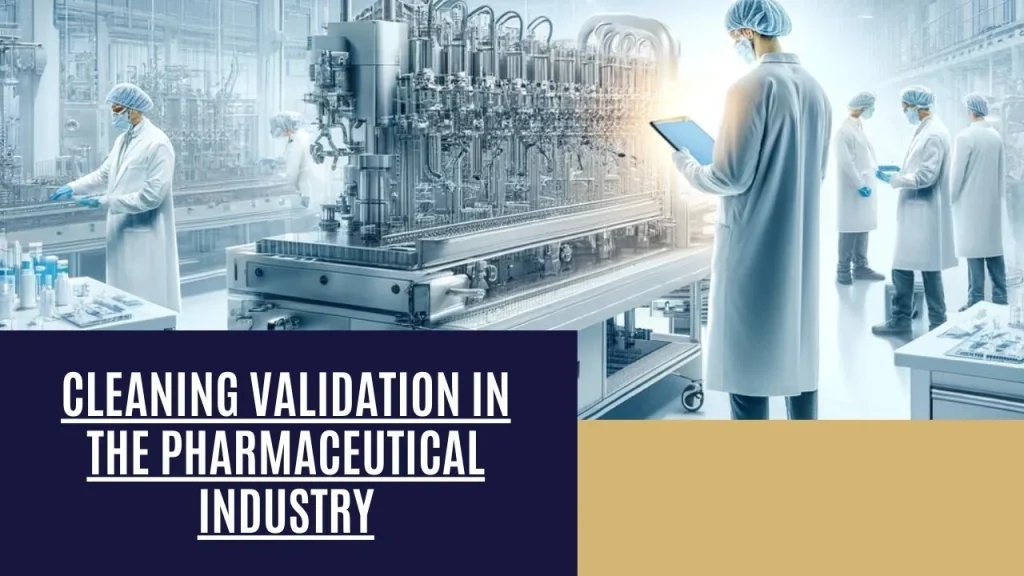
Cleaning validation in pharma is documented evidence that a cleaning procedure consistently removes product residues, cleaning agents, and other contaminants from equipment down to a predetermined, acceptable level. It matters most on shared equipment, where inadequate cleaning creates a real risk of cross-contamination between products.
This article explains what cleaning validation in pharma involves, what MACO, HBEL, and PDE actually mean and how they relate to each other, how carryover limits are set, and the sampling and analytical approaches used to prove a cleaning process works.
What Is Cleaning Validation in Pharma?
Definition
Cleaning validation in pharma is documented evidence that a defined cleaning procedure consistently removes residues from product-contact equipment to an acceptable level. The goal isn’t absolute, zero contamination — FDA notes that’s neither practical nor the intended GMP requirement. Instead, equipment should be cleaned to scientifically justified limits that prevent contamination from harming product quality.
What It Covers
Cleaning validation may address:
- Previous product residues and active pharmaceutical ingredients (APIs)
- Degradation products
- Cleaning-agent residues and process-related contaminants
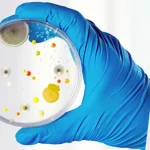
- Microbial contamination and endotoxins, where applicable
FDA’s Q7 guidance states that cleaning procedures should normally be validated, particularly where contamination or carryover presents a significant risk to API quality.
Why Is Cleaning Validation in Pharma Important?
Inadequate cleaning can lead to cross-contamination, product-quality failures, OOS results, microbial contamination, allergenic or sensitizing exposure, regulatory observations, and batch rejection or recall. In shared facilities, cleaning is one of the primary controls against unacceptable cross-contamination, and FDA specifically expects manufacturers to validate cleaning procedures so residues are adequately removed from product-contact surfaces.
What Is MACO?
MACO stands for Maximum Allowable Carryover — the maximum amount of residue from a previous product that can carry over into the next product without exceeding a scientifically justified exposure or quality limit. MACO is a carryover limit; it isn’t the same thing as HBEL or PDE.
A simplified conceptual relationship:
MACO = acceptable exposure from the previous product ÷ exposure from the next product
The actual calculation needs details about the previous product, next product, batch size, dosage, equipment surface area, and the applicable health-based limit — and the calculation and units should always be defined in the site’s approved cleaning-validation procedure.
What Is HBEL?
HBEL stands for Health-Based Exposure Limit — a scientifically derived exposure limit based on pharmacological and toxicological data for a substance. EMA’s HBEL guideline provides a scientific approach for evaluating that data and establishing threshold levels to support risk identification and carryover-limit decisions.
An HBEL essentially answers: “What level of exposure to this substance is acceptable, based on its health effects?” This assessment should be performed by personnel with relevant pharmacological and toxicological expertise.
What Is PDE?
PDE stands for Permitted Daily Exposure — a type of health-based exposure limit representing the daily dose of a substance unlikely to cause an appreciable risk of adverse health effects. PDE calculations draw on toxicological and pharmacological data with appropriate adjustment factors.
A simplified concept:
PDE = Point of departure ÷ adjustment factors
In practice, PDE derivation is a full scientific toxicological assessment — not something calculated by applying a generic formula without evaluating substance-specific data.
HBEL vs. PDE vs. MACO
| Term | Meaning | Main Purpose |
|---|---|---|
| HBEL | Health-Based Exposure Limit | Defines acceptable health-based exposure |
| PDE | Permitted Daily Exposure | A specific type of health-based exposure limit |
| MACO | Maximum Allowable Carryover | Defines how much previous-product residue may carry over |
| Cleaning Limit | Operational acceptance limit | Used to judge whether cleaning performance is acceptable |
Important: HBEL/PDE and MACO aren’t interchangeable. HBEL/PDE provides the health-based scientific basis; MACO translates that into a carryover limit for the specific manufacturing scenario. EMA specifically clarifies that cleaning limits shouldn’t simply be set equal to the calculated HBEL — existing cleaning limits can be retained as alert limits when they provide sufficient assurance that exposure above the HBEL is prevented.
How Is MACO Determined?
The calculation should account for the specific manufacturing scenario, including:
- HBEL/PDE of the previous product
- Maximum daily dose and batch size of the next product
- Equipment train and shared surface area
- Product solubility, toxicity, and potency
- Cleanability and stability of the residue
- Sampling and analytical capability
Example: if Product A (with an established health-based limit) is manufactured before Product B on shared equipment, the cleaning-validation team combines Product A’s health-based information with Product B’s maximum daily dose and batch size to set a scientifically justified carryover limit — then converts that into equipment-surface or product-related acceptance criteria, using the site’s approved methodology and units.
Is the 1/1000 Dose Criterion Still Enough?
The traditional 1/1000th of the minimum therapeutic dose criterion shouldn’t be treated as a universal regulatory standard. Modern regulatory expectations lean toward scientific, health-based risk assessment — EMA’s HBEL guideline exists specifically to provide a more scientific, substance-specific approach to setting thresholds and carryover decisions. Companies shouldn’t pick an arbitrary limit just because it’s commonly used in the industry; acceptance criteria should be scientifically justified, documented, and appropriate for the specific product and process.
Worst-Case Product Selection
When multiple products share equipment and a cleaning procedure, a worst-case or representative product approach can be used. Selection criteria include high potency, high toxicity, low solubility, difficult-to-clean characteristics, low therapeutic dose, stability, and cleaning history. FDA’s Q7 guidance notes that representative products may be selected based on solubility and difficulty of cleaning, alongside potency, toxicity, and stability. A well-justified worst-case approach reduces unnecessary validation work while still maintaining adequate assurance.
Cleaning Validation Sampling
1. Swab Sampling
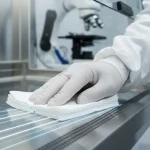
A defined equipment surface area is swabbed and analyzed for residue — useful for direct information on specific, especially hard-to-clean, locations.
2. Rinse Sampling
A suitable solvent passes over or through the equipment and the rinse is analyzed — useful for large or inaccessible surfaces.
3. Direct Surface Sampling
Other scientifically justified techniques may apply depending on equipment design and the residue in question. FDA notes sampling may include swabbing, rinsing, or alternatives, provided the method can quantitatively measure the relevant residue.
Is Rinse Sampling Alone Enough?
Not necessarily. FDA states rinse samples alone aren’t sufficient where direct surface measurement is feasible. Rinse sampling is valuable for large or inaccessible areas, but the overall sampling approach needs to be scientifically demonstrated, factoring in equipment accessibility, surface characteristics, residue solubility, sampling recovery, analytical sensitivity, and worst-case locations.
Analytical Methods in Cleaning Validation
The analytical method must reliably detect the relevant residue at the required acceptance level, with adequate specificity, accuracy, precision, sensitivity, recovery, and detection/quantification capability. FDA’s Q7 guidance calls for validated analytical methods with adequate sensitivity to detect relevant residues.
https://pharmavk.com/common-data-integrity-red-flags-laboratories/
Cleaning Validation Acceptance Criteria
Acceptance criteria should be predetermined and scientifically justified, potentially covering product residue, cleaning-agent residue, microbial limits, endotoxin limits, visual cleanliness, and rinse or swab results. Visual inspection matters too — gross contamination concentrated in small areas isn’t always caught by analytical sampling alone, and FDA Q7 recognizes visual examination as an important monitoring tool where feasible.
Cleaning Validation Lifecycle
A practical lifecycle looks like: Risk Assessment → Worst-Case Selection → Cleaning Process Development → Acceptance Criteria → Sampling Strategy → Analytical Method → Validation Protocol → Execution → Evaluation → Validation Report → Routine Monitoring.
Cleaning validation in pharma shouldn’t be a one-time paperwork exercise — the validated process needs ongoing monitoring to confirm it stays effective during routine use.
https://pharmavk.com/revalidation-in-pharma-6-critical-situations-explained/
Common Cleaning Validation Mistakes
- Using arbitrary residue limits
- Treating 1/1000th dose as universally applicable
- Ignoring HBEL/PDE information
- Selecting worst-case products without scientific justification
- Sampling only easy-to-clean locations
- Relying only on rinse sampling where direct sampling is feasible
- Using an analytical method that lacks adequate sensitivity
- Ignoring cleaning-agent residues
- Not considering dirty hold time or clean hold time
- Failing to evaluate equipment design
- Poorly documenting deviations
- Treating visual inspection as the only acceptance criterion
Practical Example
A facility uses the same equipment for Product A and Product B. Product A has a lower HBEL and is difficult to clean; Product B has a relatively high daily dose. The cleaning-validation team should:
- Review the health-based information for Product A
- Establish the appropriate HBEL/PDE
- Assess potential carryover into Product B
- Determine an appropriate MACO/carryover limit
- Identify worst-case equipment locations
- Select appropriate swab and/or rinse sampling methods
- Validate the analytical method
- Execute the cleaning-validation protocol
- Compare results against predetermined acceptance criteria
- Establish routine monitoring and review requirements
This links toxicological risk, manufacturing conditions, cleaning capability, sampling, and analytical performance — rather than leaning on a single generic limit.
Cleaning Validation and GMP
GMP requires manufacturers to establish effective cleaning procedures that prevent contamination and protect product quality. FDA’s Q7 guidance requires written cleaning procedures and directs cleaning validation toward situations where contamination or carryover presents significant risk. FDA also ties equipment-cleaning requirements to 21 CFR 211.67, which requires equipment to be cleaned and maintained at appropriate intervals to prevent contamination that could adversely affect drug quality.
Frequently Asked Questions
What is the difference between HBEL and MACO?
HBEL is a health-based exposure limit. MACO is the calculated maximum amount of residue from a previous product that can carry over into the next product without exceeding the applicable risk-based limit.
Is PDE the same as HBEL?
PDE is a type of health-based exposure limit; HBEL is the broader concept used to establish scientifically justified health-based thresholds.
Is MACO equal to PDE?
No. PDE/HBEL describes an acceptable health-based exposure, while MACO translates that exposure information into a carryover limit for a specific manufacturing scenario.
Is 1/1000th dose mandatory?
No. It shouldn’t be treated as a universal regulatory requirement — a scientifically justified, health-based approach should be used where applicable.
Does every product require separate cleaning validation?
Not necessarily. A scientifically justified representative or worst-case approach can be used when products share equipment and cleaning processes, provided it adequately demonstrates cleaning effectiveness.
Conclusion
Cleaning validation in pharma provides documented evidence that equipment can be cleaned consistently to predetermined, acceptable levels. A modern program connects HBEL/PDE-based health considerations with MACO, equipment characteristics, cleaning capability, sampling strategy, and analytical sensitivity. The key principle: cleaning limits should be scientifically justified, risk-based, achievable, and verifiable — not built around a single generic carryover rule. Evaluating product-specific toxicity, potency, solubility, cleanability, equipment design, and process conditions supports effective cross-contamination control and continued GMP compliance.
References