Revalidation in Pharma: When and Why Is It Required?
Revalidation in pharma is the documented process of confirming that a previously validated process, system, equipment, or method still performs as intended after a change, or when a periodic review shows that confirmation is needed. It’s a core part of maintaining a validated state across the product lifecycle, not a one-time event that ends after initial qualification.
This article covers what revalidation in pharma means, why it matters, when it’s triggered, how the decision is made, and how full revalidation differs from a partial, targeted approach.
https://pharmavk.com/𝗪𝗵𝗮𝘁-𝗶𝘀-𝘃𝗮𝗹𝗶𝗱𝗮𝘁𝗶𝗼𝗻/
What Is Revalidation in Pharma?
Definition
Revalidation in pharma means demonstrating, with documented evidence, that a previously validated process, system, equipment, or method continues to meet its predefined requirements after a change — or when a performance review indicates that validation status needs reconfirming. It isn’t simply repeating the original validation protocol; scope depends on the nature of the change, risk to product quality, existing knowledge, and available performance data.
Validation establishes the initial state of control. Revalidation confirms that state remains appropriate when circumstances change or evidence says it needs reconfirming.
Key Features
- Triggered by a change, deviation, or periodic review — not a fixed calendar date
- Scope can be full or partial, based on risk and impact
- Backed by a documented, science- and risk-based rationale
- Tied into the site’s change control and quality risk management systems
Why Is Revalidation in Pharma Important?
Benefits
Pharmaceutical processes run over long lifecycles, during which equipment gets replaced, software gets upgraded, and new knowledge emerges. Revalidation in pharma helps confirm that none of these changes have quietly affected:
- Product quality, safety, and efficacy
- Critical quality attributes (CQAs) and critical process parameters (CPPs)
- Equipment performance and process consistency
- Data integrity and overall GMP compliance
Applications
FDA’s process-validation guidance frames this around a lifecycle approach: understanding and controlling variation throughout the process, then maintaining that state of control during routine manufacturing through continued process verification.
When Is Revalidation in Pharma Required?
There’s no blanket rule that every validated process needs automatic revalidation after a fixed period. The decision should run through a risk-based quality system rather than a calendar.
1. After Significant Process Changes
Changes to critical process parameters, formulation, manufacturing steps, batch size, processing time or temperature, critical raw materials, or anything affecting critical quality attributes may trigger revalidation. Any such change should first go through the site’s change control system.
2. After Equipment Changes or Replacement
Replacing critical equipment, major modifications, changes to capacity or critical components, control-system changes, or relocation can all affect validated performance. For example, replacing a critical temperature-control component in a validated sterilization system may call for targeted qualification testing rather than a full revalidation.
https://pharmavk.com/Why-is-IQ-OQ-PQ-Impo/
3. After Changes to Utilities or Facilities
HVAC modifications, pharmaceutical water-system changes, compressed-air or steam-system changes, cleanroom modifications, and changes to environmental controls all warrant a risk assessment to determine whether qualification or revalidation is needed.
4. After Significant Deviations or Failures
Repeated process failures, major equipment failures, repeated OOS/OOT results, unexpected environmental monitoring trends, sterilization-cycle failures, or cleaning validation failures can raise questions about whether the validated state has held. Revalidation should never substitute for a proper root-cause investigation — the investigation comes first, and revalidation need is assessed as part of CAPA and quality risk management.
5. When Periodic Review Indicates the Need
Validated systems should be periodically reviewed against deviations, CAPA, change controls, OOS/OOT results, environmental trends, process performance, batch rejection trends, equipment and maintenance history, complaints, and regulatory or scientific developments. Per ICH Q7, where there are no significant changes and quality review confirms continued compliance with specifications, there’s normally no need for revalidation.
6. After Changes to Computerized Systems
Software upgrades, changes to calculations or data handling, system interface or control logic changes, and replacement of critical hardware can all affect data integrity or functionality. FDA inspection guidance notes that revalidation may be appropriate following significant hardware or software changes, depending on the nature and potential impact of the change.
Revalidation vs. Validation
| Aspect | Validation | Revalidation |
|---|---|---|
| Purpose | Establishes documented evidence of suitability | Confirms continued suitability |
| Timing | Before or during initial implementation | After relevant changes or when review indicates need |
| Starting point | New process, equipment, system, or method | Previously validated process/system |
| Basis | Development knowledge and intended use | Change, risk, performance, and existing knowledge |
| Scope | Defined validation strategy | Usually targeted to the affected areas |
| Approach | Establishes initial state of control | Confirms maintenance of the validated state |
How Is Revalidation in Pharma Decided?
A typical decision path runs: Change/Event → Change Control or Investigation → Impact Assessment → Quality Risk Assessment → Determine Validation Impact → Define Scope → Execute Testing → Review Results → Approval.
The assessment should answer:
- What has changed?
- What validated state could be affected?
- Could the change affect product quality?
- Are critical process parameters or quality attributes affected?
- What existing data support continued validation status?
- What additional testing is required?
- Is partial or full revalidation necessary?
This keeps testing proportionate to risk instead of defaulting to “revalidate everything.”
Full vs. Partial Revalidation
Revalidation doesn’t automatically mean repeating the entire original validation.
Partial Revalidation
Appropriate when only a specific component, parameter, system, or process step is affected. For example, a modification to a temperature-control system may only need targeted testing of temperature control and its alarms, rather than every original qualification test.
Full Revalidation
Appropriate when changes are extensive enough to affect the overall validated state. Either way, the decision should be scientifically justified and documented.
Documentation Required for Revalidation
Typical documentation includes: change control, quality risk assessment, revalidation protocol, approved acceptance criteria, test and calibration records, deviations, investigation reports, the revalidation report itself, CAPA where applicable, updated SOPs and validation documents, and training records. Good documentation traces a clear line from the original validation, through the change and assessment, to the testing performed and final conclusion.
Practical Example: Revalidation of a Cleaning Process
Suppose a manufacturer changes an equipment component that directly contacts the product. The QA/validation team should first assess whether the change affects cleaning performance — looking at equipment surface characteristics, product-contact area, cleaning procedure, cleaning agents and parameters, the worst-case product, and existing cleaning-validation data. If the change can affect the established cleaning process, cleaning-validation or qualification activities may be required, with scope set by documented scientific and risk-based justification.
Common Mistakes in Revalidation
- Automatically revalidating everything after every change
- Treating revalidation as a paperwork exercise
- Skipping impact assessment
- Not linking revalidation to change control
- Ignoring process-trend data
- Repeating the original validation without evaluating the actual change
- Poorly documenting the rationale for not revalidating
- Using revalidation as a substitute for root-cause investigation
- Not updating procedures and training after changes
A strong revalidation program stays risk-based, scientifically justified, and tied into the pharmaceutical quality system.
Revalidation and Continued Process Verification
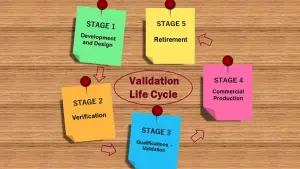
Revalidation decisions shouldn’t be made in isolation from ongoing monitoring. FDA’s process-validation model has three lifecycle stages — Process Design, Process Qualification, and Continued Process Verification (CPV) — and CPV provides ongoing assurance during routine production that the process remains in a state of control. Process data, trends, deviations, and changes all feed into whether the validated state still holds.
Frequently Asked Questions
Is revalidation mandatory every year?
Not necessarily. A fixed annual requirement shouldn’t be assumed for every process or system — need and frequency should be justified by applicable requirements, site procedures, risk, performance data, and change history.
Is revalidation the same as validation?
No. Validation establishes documented evidence that a process or system is suitable for its intended use. Revalidation confirms continued suitability after relevant changes or when evidence shows confirmation is needed.
Does every change require revalidation?
No. Every change should be assessed, but not every change needs full revalidation — the extent should match the change’s potential impact.
Can revalidation be partial?
Yes. Where only specific aspects are affected, targeted or partial revalidation can be scientifically justified.
What is the role of change control in revalidation?
Change control is the formal mechanism for evaluating a proposed change, assessing its impact, determining validation requirements, and documenting approval and implementation.
Conclusion
Revalidation in pharma helps manufacturers maintain the validated state across the product and process lifecycle — triggered by significant process or equipment changes, major deviations, facility or utility modifications, computerized-system changes, or periodic review findings. The key principle: don’t revalidate just because time has passed. Evaluate the change, the risk, the performance data, and the applicable requirements, then scope the revalidation accordingly. Done well, this supports consistent product quality and GMP compliance while avoiding unnecessary duplication of validation work.
References