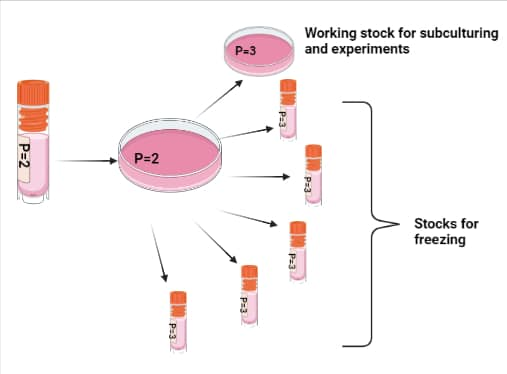
The USP 36-NF 31 <51> states: “The viable microorganisms used in the test must not be
more than five passages removed from the original ATCC culture.
The recommendation of five passages or less from the ATCC reference culture has been
broadly accepted in the healthcare community and the pharmaceutical and biopharmaceutical
industries. ATCC agrees with this recommendation.
Cell S𝗲𝗻𝗲𝘀𝗰𝗲𝗻𝗰𝗲
After several passages, cells may reach senescence, where they lose the ability to divide,
reducing their viability and altering exper
Genetic Drift
With more passages, cells might undergo genetic changes, which could affect the reliability
and reproducibility of results. Researchers often limit the number of passages to avoid this
drift.
Consistency
Early passages are usually preferred to ensure experimental consistency, as fewer passages mean the cells are closer to their original state the number of passages should be minimized to reduce the possibility of phenotypic variations, genetic drift, and contamination as much as possible.