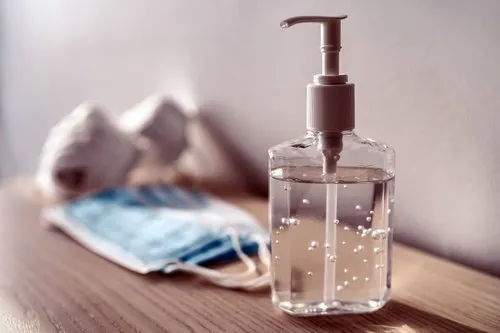
We use 70% Isopropyl Alcohol (IPA) instead of 100% because it is more effective at killing microorganisms. Pure alcohol evaporates too quickly to penetrate cell walls and denature proteins.
70% IPA has the right balance of water and alcohol, which allows it to stay on surfaceslonger, breaking down bacterial cell membranes more effectively
H𝗼𝘄 𝗱𝗼𝗲𝘀 𝗜𝗣𝗔 𝗯𝗿𝗲𝗮𝗸 𝗱𝗼𝘄𝗻 𝗰𝗲𝗹𝗹 𝘄𝗮𝗹𝗹𝘀?
Bacteria have a protective outer layer called the cell wall, which helps maintain their shape and protect them from their environment.
When 70% IPA comes into contact with the bacterial cell, it easily penetrates this wall. The water in the solution helps in this process by allowing IPA to pass through the cell membrane more effectively.
Once inside the cell, IPA interacts with the proteins and enzymes, which are essential for the bacteria’s survival.
Proteins are made up of long chains of amino acids folded into specific shapes that determine their function. IPA unfolds these proteins, rendering them nonfunctional. Think of it like unraveling a ball of yarn once the structure is lost, it can`t perform its job.
Denaturation is key because proteins control many critical processes in a bacterial cell, like metabolism, replication, and repairing damage. When these proteins are disrupted, the bacteria lose their ability to function and die.
Water plays a crucial role in the effectiveness of 70% IPA. Pure 100% IPA evaporates too quickly, meaning it doesn’t stay on the surface long enough to kill all the bacteria.
The presence of 30% water slows the evaporation rate, giving the alcohol more time to penetrate the bacterial cell wall and fully denature the proteins.
For Example:
It’s like cooking an egg when you apply heat (IPA), the egg white (proteins) changes from clear to solid white, losing its original form. Similarly, when IPA interacts with bacterial proteins, they change structure, and the bacteria are effectively “cooked” and killed.