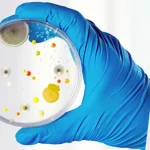
The first person to use a Petri dish was German bacteriologist Julius Richard Petri in 1877.
Petri dishes are incubated in an inverted position to prevent contamination and to ensure
proper microbial growth.
When plates are incubated in an upright position, water vapor from the medium condenses on
the lid and can drip into the medium. This can ruin the growth of isolated bacterial colonies.
In an inverted position, the water vapor stays within the medium. This decreases the rate of
evaporation, which can affect microbial growth.
Inversion also reduces the risk of contamination from the air.
If a petri plate becomes contaminated by microbes, it can interfere with the growth of the
target microbes.
In an inverted position, nutrients in the media are easily distributed and available to cells due
to gravitational force.
The Petri dish is named after its inventor, German bacteriologist Julius Richard Petri. It is the
most common type of culture plate. Scientists use them every day and discard them without a second thought.