The Feller correction is a mathematical adjustment applied to microbial air sampling to correct for the “overlap” of particles on the sampling plate.
When using a microbial air sampler, there is a statistical probability that one or more viablemicroorganisms enter the same hole in the sample head, and impact in the agar forming only one (1) colony forming unit, rather than two (2) colony forming units. In the particle counter world, this is referred to as “Coincidence Error.”
The probability theory that the Feller Correction equation is based was developed in 1968 by William Feller, and first introduced in 1989 by Janet Macherfor use in multi-jet microbial air impactors having between 200 to 400 holes.
The equation provides a statistical adjustment to account for the probability of two or more microorganisms entering the same inlet.
The Feller correction helps to provide a more accurate count by accounting for this phenomenon, ensuring reliable microbial load measurements in controlled environments.
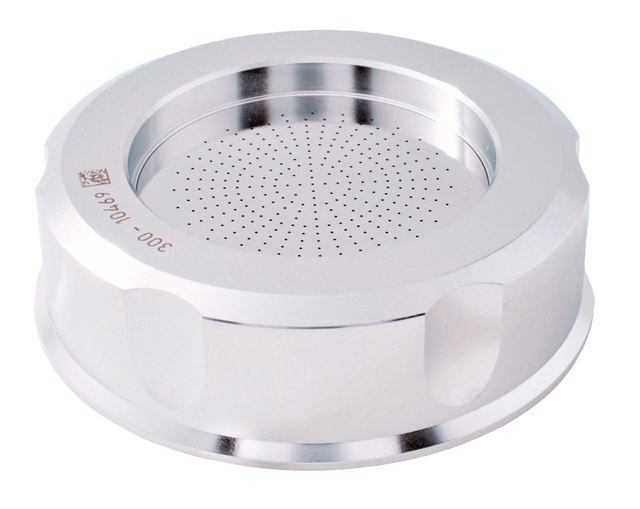
The number of holes in an air sampler sieve, it typically varies depending on the manufacturer and design. However, a standard sieve plate in a microbial air sampler may have anywhere from 200 to 350 holes.