Fermentor :
What is fermentor ?
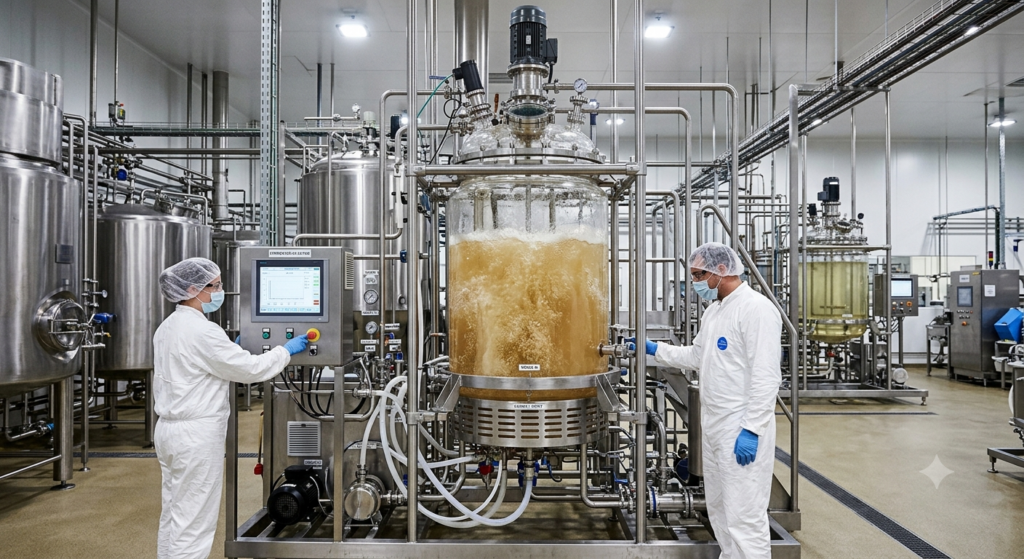
A fermentor (also frequently called a bioreactor) is an enclosed, sterile vessel designed to provide an optimal environment for the growth of microorganisms (like bacteria, fungi, or yeast) or animal/plant cells. It allows these cells to convert raw substrates into valuable commercial products under highly controlled conditions.
Principal of fermentor :
The core principle behind a fermentor is controlled optimization of microbial kinetics. Instead of letting microbes grow naturally—where nutrients run out quickly or toxic waste builds up—a fermentor dynamically regulates every environmental parameter to keep the culture in its peak exponential growth phase or production phase.
Function systems:
Sterility Maintenance:
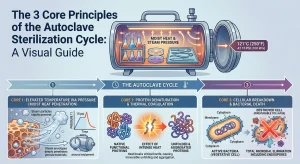
The vessel, growth medium, and air supply are completely sterilized (often using steam at high pressure) before inoculation. This ensures that only the desired production strain grows, eliminating contamination.
Mass & Oxygen Transfer:
Aerobic processes require continuous oxygen. Microbes cannot easily access oxygen from static liquids, so the fermentor uses a submerged aerator (sparger) to pump in sterile air, and an agitation system (impeller) to break those bubbles into tiny droplets, ensuring equal distribution.
Environmental Homeostasis:
As microbes grow, they generate heat and alter the chemical environment. Dedicated sensor probes continuously read the temperature, pH, and dissolved oxygen (DO). If the pH drops, an automated system pumps in a base; if the temperature rises, cold water circulates through the external thermal jacket to cool it down.