Fermentation :
What is Fermentation ?
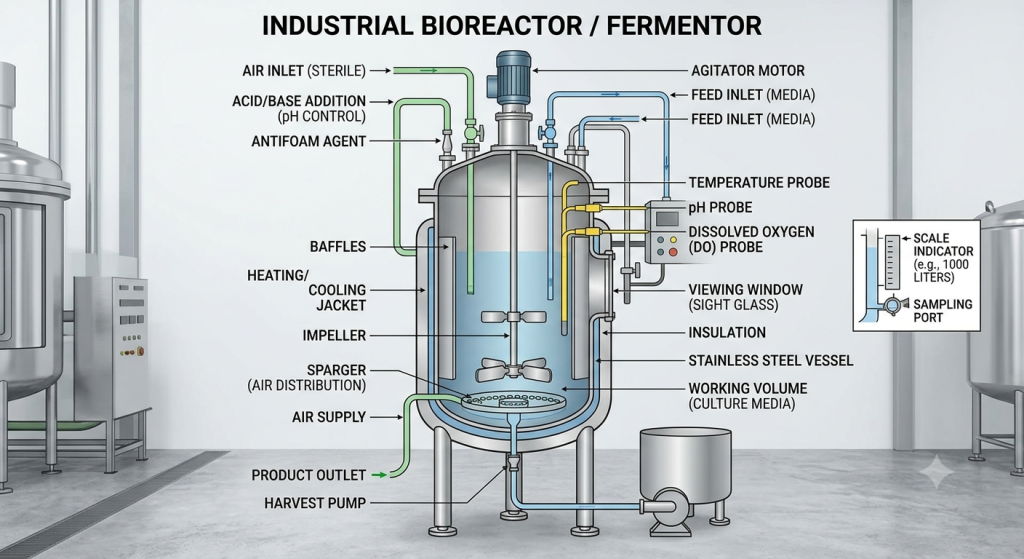
Fermentation is any process where microorganisms (like bacteria, fungi, or yeast) are grown in large quantities to convert a raw substrate into a valuable commercial product.While biochemistry defines fermentation strictly as anaerobic (without oxygen) energy production, industry uses the term much more broadly. In a factory or production plant, industrial fermentation often includes aerobic processes (requiring oxygen) to mass-produce everything from food ingredients to life-saving medicines.
Why fermentation is important ?
Industrial fermentation acts as a natural, highly efficient chemical factory. Instead of using harsh chemicals, high temperatures, and dangerous pressures to synthesize compounds, we let microbes do the work at ambient or mild temperatures.
1.Food and Beverage:
Production of cheese, yogurt, bread, beer, wine, and food additives like citric acid, MSG (monosodium glutamate), and amino acids.
2. Pharmaceuticals:
Mass-producing life-saving antibiotics (like penicillin), therapeutic proteins, vaccines, and insulin.
3.Industrial Chemicals & Biofuels:
Generating ethanol, lactic acid, butanol, and enzymes used in laundry detergents and textile processing.