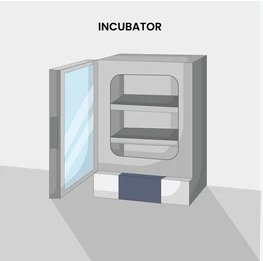
In microbiology, incubators are used to grow and culture microorganisms at specific
temperatures. The temperature range and limits vary depending on the type of microorganism
being cultured.
- 𝟐𝟎-𝟐𝟓°C (𝟔𝟖-𝟕𝟕°F): BOD Incubators (𝟐𝟐.𝟓±𝟐.𝟓)
This temperature range is suitable for culturing:
- Incubate environmental monitoring plates for 72 hours.
- Enumeration of fungal growth in MLT plates after 120 hourss
- Psychrotrophic bacteria (e.g., Pseudomonas, Bacillus)
- Fungi (e.g., yeast, mold)
- Some protozoa
- This range is often used for:
- Environmental sampling (e.g., water, soil)
- Food microbiology (e.g., dairy, meat products)
2 .𝟑𝟎-𝟑𝟓°C (𝟖𝟔-𝟗𝟓°F): (𝟑𝟐.𝟓±𝟐.𝟓)
This temperature range is suitable for culturing
- MLT and water enrichment
- E.coli test MCA plates
- CA,MSA,RVSEB,XLDA plates incubation
- Mesophilic bacteria (e.g., E. coli, Staphylococcus)
- Some fungi (e.g., Aspergillus)
- Many protozoa
- This range is often used for:
- Clinical microbiology (e.g., blood cultures, urine cultures)
- Food microbiology (e.g., meat, poultry products
3. 𝟒𝟐-𝟒𝟒°C (𝟏𝟎𝟖-𝟏𝟏𝟏°F): (𝟒𝟑.𝟎±𝟏.𝟎)
This temperature range is suitable for culturing:
- E.coli test MCB
4. 𝟓𝟓-𝟔𝟎°C
Thermophilic bacteria (e.g., Bacillus stearothermophilus)
Incubator temperatures should be regularly monitored, usually through built-in sensors and
independent thermometers. Continuous monitoring systems with alarms are often employed
to alert in case of temperature deviations.