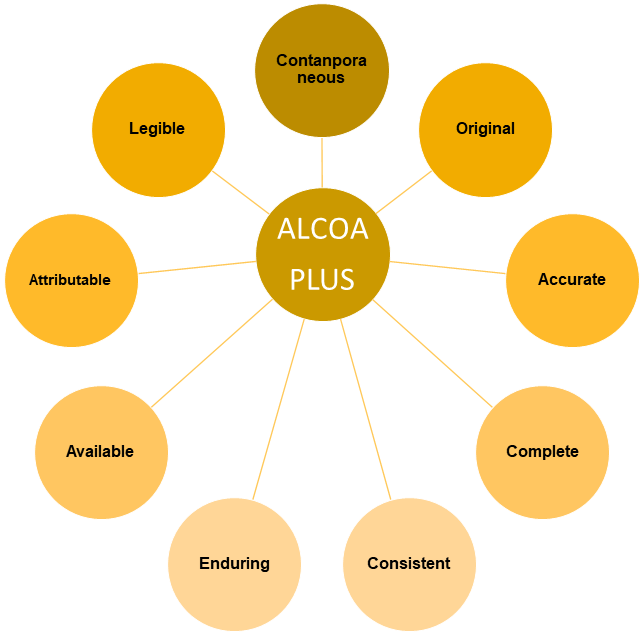
ALCOA+ is a fundamental concept in the pharmaceutical industry, particularly in
Good Documentation Practices (GDP) and data integrity. It provides a framework to
ensure that data generated during the manufacturing, testing, and quality control
processes is reliable.
The ALCOA principles were originally introduced by the U.S. Food and Drug
Administration (FDA) in the 1990s as part of its guidance on Good Manufacturing
Practices (GMP).
A – 𝗔𝘁𝘁𝗿𝗶𝗯𝘂𝘁𝗮𝗯𝗹𝗲: The data must be linked to the person who generated it. This includes
who performed an action and when it was performed.
L – 𝗟𝗲𝗴𝗶𝗯𝗹𝗲: Data should be clear and understandable, ensuring that it can be easily read
and interpreted by others. This is important for both handwritten and electronic records.
C- 𝗖𝗼𝗻𝘁𝗲𝗺𝗽𝗼𝗿𝗮𝗻𝗲𝗼𝘂𝘀: Data should be recorded at the time the activity is performed.
This ensures that information is captured in real-time, reducing the risk of errors or
omissions
O – 𝗢𝗿𝗶𝗴𝗶𝗻𝗮𝗹: The data should be the first recording of the information. This means keeping
the original documents or electronic records rather than copies or transcriptions.
A – 𝗔𝗰𝗰𝘂𝗿𝗮𝘁𝗲: The data should be correct and free from errors. This requires verification
and validation to ensure that the data truly represents what occurred.
The “+” in ALCOA+ adds additional principles to further strengthen data integrity
C – 𝗖𝗼𝗺𝗽𝗹𝗲𝘁𝗲: All data, including any changes, deletions, or omissions, must be included.
This ensures that the entire history of the data is preserved.
C – 𝗖𝗼𝗻𝘀𝗶𝘀𝘁𝗲𝗻𝘁: Data should be consistent over time, including the application of correct
procedures, methods, and time stamps.
E – 𝗘𝗻𝗱𝘂𝗿𝗶𝗻𝗴: Data should be preserved in a durable medium, ensuring that it remains
accessible and readable throughout its entire lifecycle.
A – 𝗔𝘃𝗮𝗶𝗹𝗮𝗯𝗹𝗲: Data should be readily available for review and audit at any time. It ensures
that data can be accessed when needed for decision-making or inspections.
ALCOA++ with addition of 𝗧-𝗧𝗿𝗮𝗰𝗲𝗮𝗯𝗶𝗹𝗶𝘁𝘆: Data should be traceable throughout the
process and life cycle, including changes.