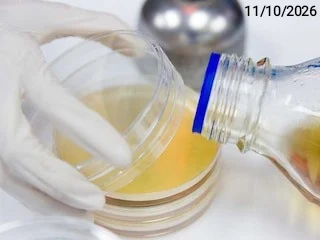
Culture media dehydration is the loss of moisture from prepared microbiological culture media, particularly agar plates, during storage, handling, transportation, or incubation. In pharmaceutical microbiology laboratories, excessive moisture loss can affect the physical condition of the medium and may interfere with microbial recovery, colony development, and the reliability of test results.
Culture media provide the nutrients and environmental conditions required for microorganisms to grow. They are routinely used in microbial limit testing, environmental monitoring, growth promotion testing, sterility-related laboratory activities, and other microbiological examinations. Therefore, maintaining the quality of prepared media is essential for reliable laboratory results and compliance with Good Manufacturing Practices (GMP).
Dehydration can occur when agar plates are exposed to dry airflow, stored in poorly sealed packaging, or kept under unsuitable environmental conditions. Recognizing the causes, effects, and preventive measures helps microbiology and quality control personnel maintain media quality and avoid unnecessary investigations or repeat testing.
Culture media dehydration refers to the reduction of water content in a culture medium through evaporation or moisture loss. It is particularly noticeable in solid media, such as agar plates, where the surface may become dry, cracked, uneven, or visibly shrunken.
Prepared agar contains a high proportion of water. When moisture evaporates, the medium may lose its original physical characteristics. The extent of the effect depends on the medium formulation, storage conditions, container design, exposure time, and intended application.
Important distinction: Dehydrated culture media powder is a manufactured dry formulation intended for reconstitution, whereas dehydration of prepared media is unintended moisture loss after preparation. These are different conditions and should not be confused.
Why Is Culture Media Dehydration Important?
Culture media must support the recovery and growth of the microorganisms relevant to the test. Excessive drying may change the physical condition of agar and contribute to uneven spreading, altered colony appearance, or reduced recovery under certain test conditions.
In pharmaceutical microbiology, these changes may affect the interpretation of results from:
Microbial limit testing, including Total Aerobic Microbial Count (TAMC) and Total Yeasts and Moulds Count (TYMC).
Environmental monitoring of pharmaceutical cleanrooms.
Growth promotion testing of culture media.
Microbial enumeration and recovery studies.
Other validated microbiological procedures that use prepared media.
The actual impact must be assessed according to the medium, test method, and observed condition. A dry-looking plate does not automatically prove that the medium has failed, but visibly compromised media should not be used without evaluation against approved laboratory procedures.
Major Causes of Culture Media Dehydration
1. Improper Storage Conditions
Storage conditions that permit continuous moisture loss are a major cause of agar plate dehydration. Plates stored without adequate protective packaging may gradually lose water, especially during prolonged storage.
Prevention: Store prepared media according to the manufacturer’s instructions or validated in-house conditions. Use appropriate sealed packaging or containers when specified by the storage procedure.
2. Prolonged Storage
Even when prepared correctly, agar plates may lose moisture over time. The risk depends on the medium formulation, packaging integrity, storage environment, and approved shelf life.
Prevention: Follow the established expiry period and avoid extending storage beyond the approved limit without appropriate justification and validation.
3. Exposure to Airflow
Continuous exposure to air, including direct airflow from fans or certain laboratory ventilation arrangements, can accelerate evaporation from exposed agar surfaces.
Prevention: Minimize unnecessary exposure of plates and keep them closed when not in use. Follow the laboratory’s approved handling practices for cleanroom and microbiology work.
4. Unsuitable Temperature and Humidity Conditions
Elevated temperatures can increase evaporation, while unsuitable storage conditions can affect the physical stability of prepared media. Repeated temperature changes may also cause condensation, which can create other problems during microbiological testing.
Prevention: Maintain the specified storage conditions and avoid placing media near heat sources or in areas where environmental conditions fluctuate significantly.
Damaged bags, loose closures, cracked containers, or poorly fitting lids can allow moisture to escape. Packaging damage can also increase the risk of contamination.
Prevention: Inspect packaging and containers during receipt and storage. Segregate damaged or suspect media for assessment.
6. Excessive Exposure During Laboratory Handling
Leaving plates open for longer than necessary during preparation, sampling, or testing may contribute to surface moisture loss. The extent of dehydration depends on the environmental conditions and duration of exposure.
Prevention: Plan laboratory activities in advance, minimize unnecessary exposure, and follow approved aseptic techniques.
7. Excessive Drying Before Use
Some microbiological procedures require plates to have a suitably dry surface before inoculation. However, excessive drying can damage the medium’s physical condition.
Prevention: Follow the validated procedure for plate preparation and surface drying. Avoid relying on a fixed drying time unless it has been established for the specific medium and conditions.
Visible Signs of Dehydrated Culture Media
The following observations may indicate excessive moisture loss or compromised media quality.
Observation
Possible concern
Cracks in agar
Excessive drying or physical damage
Dimpled or shrunken surface
Moisture loss during storage
Excessively dry or hardened surface
Prolonged exposure or unsuitable storage
Uneven agar surface
Drying, pouring variation, or other preparation issues
Condensation on the lid
Temperature changes or unsuitable handling
Abnormal colour or clarity
Possible overheating, formulation issues, or degradation
These observations are not all specific to dehydration. For example, abnormal colour or clarity may indicate a preparation or heating problem rather than moisture loss alone. The cause should be assessed using the medium’s specifications and preparation records.
Effects of Culture Media Dehydration on Microbiological Testing
1. Reduced or Uneven Microbial Recovery
Severely compromised agar may not provide the intended conditions for microbial recovery. This can affect the reliability of enumeration or recovery studies.
2. Altered Colony Appearance
Changes in the agar surface may influence colony size, distribution, or appearance, making examination more difficult in some situations.
3. Difficulty in Inoculation and Spreading
An excessively dry or uneven surface can interfere with uniform spreading of an inoculum, depending on the test method.
4. Risk to Result Reliability
If the medium does not perform as required, test results may not accurately represent the sample. The laboratory must assess whether the medium met the required quality controls and whether the test remains valid.
5. Additional Laboratory Work
Suspect media may need to be quarantined, investigated, and replaced. If a quality issue is confirmed, the laboratory should follow its approved procedure to determine whether testing must be repeated.
Store prepared media under the conditions specified by the manufacturer or established through appropriate in-house validation. Do not assume that all culture media require identical storage conditions.
2. Use Suitable Protective Packaging
Keep prepared plates in suitable sealed bags, containers, or other protective packaging when required. Check that closures remain intact throughout storage.
3. Control Storage Duration
Label media with the required identification, batch or lot number, preparation date where applicable, and expiry date. Use the media within its approved storage period.
4. Minimize Unnecessary Exposure
Keep plates closed when practical and minimize the time they remain exposed during handling. Follow aseptic and cleanroom procedures appropriate to the activity.
5. Avoid Uncontrolled Drying
Where surface drying is required, use the time, environment, and procedure established for the relevant method. Do not use excessive drying as a general corrective measure.
6. Inspect Media Before Use
Examine plates for cracks, shrinkage, abnormal appearance, contamination, packaging damage, and other defects specified in the laboratory’s acceptance procedure. Record and escalate discrepancies as required.
7. Verify Media Quality
Perform applicable quality control checks, including growth promotion testing and sterility checks where required by the method and laboratory procedure. Other checks may include pH, appearance, or selectivity and indicative properties, depending on the medium and intended use.
Growth promotion testing evaluates whether the medium supports the required microbial growth under specified test conditions. It does not, by itself, justify ignoring visible defects or other quality concerns.
Troubleshooting Culture Media Dehydration
Problem observed
Possible cause
Recommended action
Cracked agar plates
Excessive moisture loss or physical damage
Segregate suspect plates and assess against approved acceptance criteria
Dry agar surface
Prolonged exposure or unsuitable storage
Review storage history and packaging integrity
Condensation inside plates
Temperature variation or handling conditions
Assess storage and handling practices before use
Repeated dehydration across a batch
Packaging or storage-system issue
Investigate the common storage area, packaging, and handling process
Growth promotion failure
Media quality, preparation, storage, or test-related issue
Initiate the applicable investigation and assess the validity of associated testing
Do not attempt to restore dehydrated plates simply by adding water or rehydrating the agar surface. Such actions can compromise the medium, introduce contamination, or alter its composition. Follow the approved laboratory procedure for disposition and replacement.
Role of Quality Control and Quality Assurance
The QC microbiology team is responsible for preparing or receiving media correctly, inspecting it, maintaining storage records, performing applicable quality checks, and reporting abnormalities.
QA may review deviations, assess potential impact on completed or ongoing testing, and ensure that any required corrective and preventive actions are documented and effective.
When a media-related issue is identified, the investigation should consider:
The affected medium and batch or lot number.
Preparation, receipt, storage, and expiry records.
Packaging condition and environmental storage history.
Results of applicable media quality control tests.
Tests performed using the affected media.
The need for replacement, retesting, impact assessment, or CAPA under approved procedures.
The investigation should be proportionate to the risk and supported by documented evidence. Retesting should not be used simply to obtain a passing result without an appropriate scientific justification.
GMP Documentation for Culture Media Management
Good documentation practices help demonstrate that culture media were suitable for their intended use. Records should be maintained according to the laboratory’s approved procedures and applicable requirements.
Relevant records may include:
Media preparation and sterilization records, where applicable.
Supplier certificates of analysis and receipt checks.
Media identification, lot number, and expiry details.
Storage condition records, where required.
Growth promotion and other applicable QC results.
Media rejection, deviation, investigation, and CAPA records.
Traceability between media lots and the microbiological tests performed.
Accurate records help laboratories identify recurring issues and demonstrate that decisions about media acceptance and use are scientifically justified.
Frequently Asked Questions (FAQs)
1. What is culture media dehydration?
Culture media dehydration is unintended moisture loss from prepared media, especially agar plates, which may cause shrinkage, cracking, or changes in surface condition.
2. What are the main causes of agar plate dehydration?
Common causes include inadequate packaging, prolonged storage, exposure to airflow, unsuitable temperature conditions, and excessive exposure during handling.
3. Can dehydrated agar plates be used for microbiological testing?
Only if they meet the laboratory’s approved acceptance criteria and are suitable for the intended test. Plates with significant defects should be segregated and assessed rather than used automatically.
4. Does dehydration always cause growth promotion test failure?
No. The effect depends on the degree of moisture loss, medium composition, organism, and test conditions. Applicable quality control testing is needed to evaluate media performance.
5. How can agar plates be stored to minimize dehydration?
Follow manufacturer instructions or validated storage conditions, use appropriate protective packaging, avoid unnecessary exposure, and monitor expiry and container integrity.
6. What should a microbiology analyst do after finding cracked agar plates?
Segregate the affected plates, document the observation as required, inform the responsible personnel, and follow the laboratory’s approved procedure for assessment and disposition.
Conclusion
Culture media dehydration is an important media-quality concern in pharmaceutical microbiology. Excessive moisture loss can alter the physical condition of agar and may affect microbial recovery or the reliability of test results. Proper storage, suitable packaging, controlled handling, visual inspection, and applicable quality control testing help maintain media suitability.
For pharmaceutical QC laboratories, prevention should be supported by documented procedures, traceable records, and scientifically justified investigations. Maintaining culture media quality helps support reliable microbiological testing and effective GMP compliance.