PUPSIT Pharmaceutical Manufacturing: Meaning, Importance and Process
PUPSIT pharmaceutical manufacturing is a quality control step used to confirm that a sterilizing-grade filter has not been damaged during sterilization, handling, or setup. Pre-Use Post-Sterilization Integrity Testing (PUPSIT) is performed after the filter is sterilized but before it touches the product.
This article explains what PUPSIT pharmaceutical manufacturing involves, why it matters in sterile manufacturing, how it is carried out, the common test methods used, and what regulators expect when it isn’t technically feasible.
In this article:
- What Is PUPSIT Pharmaceutical Manufacturing?
- Why Is PUPSIT Pharmaceutical Manufacturing Important?
- How Does PUPSIT Pharmaceutical Manufacturing Work?
- Common Filter Integrity Test Methods
- PUPSIT vs. Post-Use Integrity Testing
- What Factors Can Affect Filter Integrity?
- What If PUPSIT Cannot Be Performed?
- Best Practices
- FAQs
- Conclusion
What Is PUPSIT Pharmaceutical Manufacturing?
Definition
PUPSIT stands for Pre-Use Post-Sterilization Integrity Testing. In PUPSIT pharmaceutical manufacturing, a non-destructive test is run on a sterilizing-grade filter after sterilization and before product filtration begins. Its purpose is to catch any damage the filter may have picked up during preparation, sterilization, handling, or installation — even if the filter passed integrity testing before sterilization.
Key Features
- Performed after sterilization, before product contact
- Non-destructive, so the filter can still be used if it passes
- Based on predefined, validated acceptance criteria
- Documented as part of the batch record
Why Is PUPSIT Pharmaceutical Manufacturing Important?
Benefits
A sterilizing filter that looks fine on paper can still develop hidden damage during sterilization. PUPSIT pharmaceutical manufacturing catches that damage before the filter is trusted with a sterile product, which:
- Confirms filter integrity immediately before use
- Detects sterilization-related damage early
- Reduces the risk of microbial contamination passing through a compromised filter
- Creates documented evidence that the filter met its criteria
- Supports the broader contamination control strategy
Applications
PUPSIT is most relevant where terminal sterilization isn’t an option and sterile filtration is the primary sterility assurance step. EU GMP Annex 1 requires verifying sterilized filter assembly integrity by PUPSIT before use, while allowing justified alternatives when it isn’t technically possible. Annex 1 also requires a non-destructive post-use integrity test for filters used to sterilize fluids.
How Does PUPSIT Pharmaceutical Manufacturing Work?
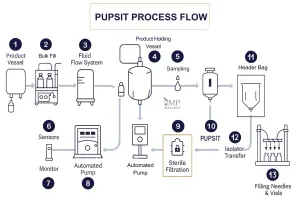
The exact steps vary by filter type, system design, and manufacturer recommendations, but the general PUPSIT pharmaceutical manufacturing process follows four stages:
Step 1: Sterilize the Filter Assembly
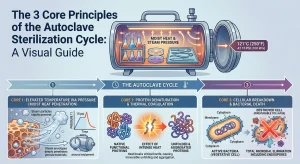
The filter and its assembly go through a validated sterilization process. Conditions like pressure, temperature, and handling during this step are controlled, since any of them could affect filter integrity.
Step 2: Perform the PUPSIT
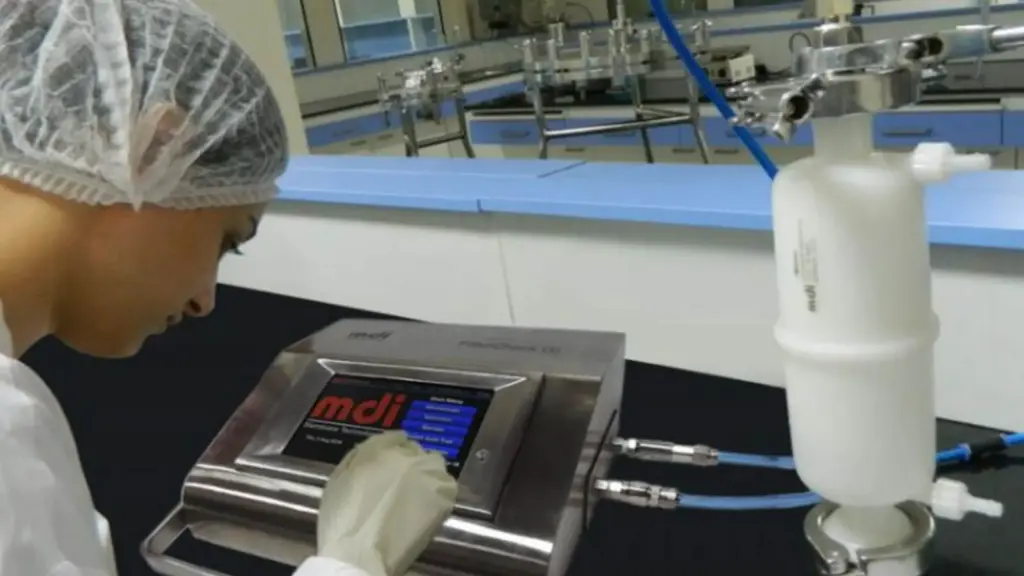
After sterilization, a validated non-destructive integrity test is run on the filter before any product filtration starts.
Step 3: Compare Results to Acceptance Criteria
The result is checked against acceptance criteria set during filter validation. A pass confirms the filter is still integral.
Step 4: Begin Sterile Filtration
Once the filter passes and all other conditions are met, sterile filtration proceeds per the approved manufacturing procedure.
Common Filter Integrity Test Methods
| Method | Basic Principle |
|---|---|
| Bubble Point Test | Determines the pressure at which gas displaces liquid from the largest pores |
| Diffusive Flow Test | Measures gas flow through a wetted membrane below the bubble point |
| Water Intrusion Test | Measures water penetration through a hydrophobic filter |
| Pressure Hold Test | Monitors pressure changes over a defined period |
EU GMP Annex 1 names bubble point, diffusive flow, water intrusion, and pressure hold testing as example methods. The right choice depends on the membrane, configuration, wetting liquid, and validated methodology. FDA’s Aseptic Processing guidance also discusses filtration efficacy and integrity testing expectations.
PUPSIT vs. Post-Use Integrity Testing
These two tests work together rather than replacing one another:
| PUPSIT | Post-Use Integrity Testing |
|---|---|
| Done after sterilization, before use | Done after filtration |
| Checks if the filter survived sterilization intact | Checks if integrity held up during filtration |
| Catches pre-use damage | Catches processing-related damage |
| Gives pre-filtration assurance | Gives post-filtration evidence |
FDA guidance also recommends routine post-use integrity testing, noting that methods such as forward flow and bubble point testing can be used when appropriately applied.
What Factors Can Affect Filter Integrity?
Several process and product variables can influence filter performance, including filtration pressure, flow rate, temperature, filtration time, product characteristics, filter material and compatibility, maximum filtration volume, sterilization conditions, handling, and hydraulic shock. FDA guidance specifically flags viscosity, surface tension, pH, filter compatibility, pressure, flow rate, maximum use time, and temperature as key considerations.
https://pharmavk.com/Why-is-HEPA-Filter-I/
What If PUPSIT Cannot Be Performed?
PUPSIT pharmaceutical manufacturing is expected under EU GMP Annex 1, but it isn’t always technically feasible — for example, when filtering very small volumes or where the process design creates practical constraints.
In these cases, Annex 1 permits an alternative approach, but only when a thorough risk assessment has been completed and appropriate controls are in place to manage the risk of a non-integral system. That risk assessment should look at filter sterilization, packaging and transport, and process knowledge. Simply stating PUPSIT “isn’t possible” isn’t sufficient — the alternative needs to be scientifically justified.
Best Practices for PUPSIT Pharmaceutical Manufacturing
- Use a properly validated sterilizing-grade filter
- Establish validated sterilization conditions
- Perform PUPSIT after sterilization and before filtration, where applicable
- Use a validated integrity-test method
- Set scientifically justified acceptance criteria
- Follow the filter manufacturer’s validated recommendations
- Document results in the batch/manufacturing record
- Perform post-use integrity testing as well
- Investigate any test failure before releasing the batch
- Periodically review filter and process performance
https://pharmavk.com/alert-level-vs-action-level/
Frequently Asked Questions
What does PUPSIT stand for?
PUPSIT stands for Pre-Use Post-Sterilization Integrity Testing.
When is PUPSIT performed?
It’s performed after the filter assembly is sterilized and before the sterilizing-grade filter is used for product filtration.
Why is PUPSIT performed?
To detect any damage or loss of integrity the filter may have picked up during sterilization or preparation, before it’s relied on for sterile filtration.
Is PUPSIT the same as post-use integrity testing?
No. PUPSIT happens before filtration; post-use integrity testing happens after. They serve different, complementary purposes.
Which methods are used for PUPSIT?
Common validated methods include bubble point, diffusive flow, water intrusion, and pressure hold testing.
Conclusion
PUPSIT pharmaceutical manufacturing verifies that a sterilized, sterilizing-grade filter is still intact before it’s used for product filtration — a key safeguard in sterile manufacturing. It works best alongside proper filter validation, a validated test method, clear acceptance criteria, controlled sterilization, and thorough documentation. Where PUPSIT genuinely can’t be performed, EU GMP Annex 1 expects a risk-based, scientifically justified alternative rather than a blanket exemption. Combined with post-use integrity testing, PUPSIT pharmaceutical manufacturing strengthens the overall contamination control strategy.
References