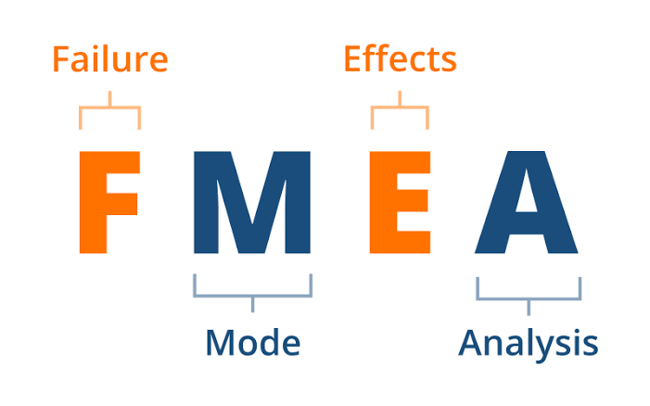
Failure Mode and Effects Analysis (FMEA) is a proactive risk assessment tool that identifies potential failures in design, manufacturing, or distribution before they occur. In pharmaceuticals, it is vital to protect patient safety, ensure regulatory compliance (such as GMP), and prevent costly recalls or product-quality events.
“Failure mode” means the way, or mode, in which something might fail. Failures are any errors or defects, especially those that affect the customer, and can be potential or actual.
“Effects analysis” refers to studying the consequences of those failures.
Why FMEA is Critical in Pharma
- Ensures Patient Safety: Pharmaceuticals directly impact health. FMEA anticipates process flaws—like contamination or incorrect dosing—that could harm patients.
- Regulatory Compliance: Guidelines like ICH Q9 mandate Quality Risk Management (QRM). FMEA provides the structured, documented evidence regulatory agencies look for during audits.
- Prioritizes Risks: By scoring risks based on Severity, Occurrence, and Detection, FMEA calculates a Risk Priority Number (RPN). This allows teams to target high-priority hazards first.
- Prevents Costly Deviations: Identifying issues in the development or scaling phase avoids mass production errors, batch rejections, and expensive downtime.
WHEN TO USE FMEA
FMEA is used when a process, product, or service is being designed, redesigned, or evaluated. It also is used:
- After quality function deployment (QFD)
- When an existing process, product, or service is being applied in a new way
- Before developing control plans for a new or modified process
- When improvement goals are planned for an existing process, product, or service
- When analysing failures of an existing process, product, or service.
Types of FMEA
- Design FMEA (DFMEA)
- Process FMEA (PFMEA)
- System FMEA (SFMEA)
- Stages of FMEA
Benefits of Implementing FMEA
- Reduced Operating Costs
- Quality Improvement
- Compliance with Safety Standards
- Competitive Edge
How to effectively implement FMEA in the pharmaceutical industry
- Identify the scope and objectives
- Assemble a cross-functional team
- Gather relevant information
- Conduct a brainstorming session
- Assess and prioritize risks
- Develop action plans
- Implement and monitor
Guidelines such as ICH Q9 (Quality Risk Management) recommend tools like FMEA to identify, evaluate, and control risks that could affect product quality and patient safety.
Using FMEA demonstrates a proactive approach to quality rather than simply reacting to failures after they occur.