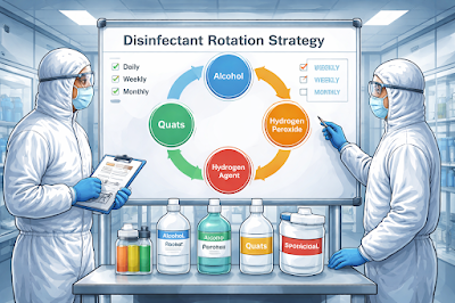
Disinfectants are rotated in pharmaceutical cleanrooms primarily to ensure comprehensive microbial spectrum coverage specifically by alternating daily broad-spectrum agents with periodic sporicidal agents.
While historical practice cited preventing microbial resistance, modern regulatory standards like EU GMP Annex 1 focus on using complementary chemistries to eliminate both vegetative cells and tough bacterial spores.
Core Reasons for Rotation
- Spectrum Coverage: Routine daily disinfectants (like alcohols or quaternary ammonium compounds) kill most bacteria and fungi, but they do not kill spores.
- Sporicidal Interventions: Periodic introduction of a sporicidal agent (such as hydrogen peroxide or bleach) targets dormant, highly resistant spore-forming organisms and Molds.
- Regulatory Compliance: Global regulatory bodies explicitly mandate or expect a validated cleaning program incorporating a sporicide rotation.
- Residue and Facility Management: Many sporicides are corrosive or leave heavy chemical residues; alternating them prevents excessive surface degradation while controlling the total bioburden
Where the Idea came from?
The idea of rotating disinfectants in pharmaceutical cleanrooms originally came from a misapplication of antibiotic resistance theory, combined with a practical need to cover a wide spectrum of different microorganisms (such as bacteria, fungi, and bacterial spores).
Objectives of a Rotation Strategy
- Control bacteria, fungi, and bacterial spores
- Maintain a low microbial load in cleanrooms
- Prevent contamination of pharmaceutical products
- Support Environmental Monitoring programmes
- Meet GMP and regulatory expectations
- Protect product quality and patient safety
Key Elements of a Rotation Strategy
- Risk Assessment
- Selection of Disinfectants
- Define the Rotation Schedule
- Validate the Programme
- Environmental Monitoring
- Review and Continuous Improvement
Rotation Schedule
- Routine disinfectant used daily
- Sporicidal disinfectant used weekly or monthly (based on risk assessment)
- Additional sporicidal treatment after maintenance activities or contamination events
A well-designed disinfectant rotation strategy is a critical element of pharmaceutical microbiology. It not only ensures effective contamination control but also strengthens regulatory compliance and audit readiness.