Introduction
Surface monitoring methods are an essential part of environmental monitoring in pharmaceutical microbiology. They help assess the microbiological condition of equipment, work surfaces, cleanroom areas, and other locations where microbial contamination could affect pharmaceutical products or manufacturing operations. Two commonly used methods are contact plates and swabs.
Contact plates are generally suitable for sampling accessible, relatively flat surfaces, while swabs are useful for irregular, curved, narrow, or difficult-to-reach locations. Selecting the appropriate method depends on the surface characteristics, sampling objective, cleanroom conditions, and the approved environmental monitoring procedure.
In pharmaceutical manufacturing, surface monitoring supports contamination control, environmental trend analysis, cleaning and disinfection assessment, and investigations into microbiological excursions. The European Union’s GMP Annex 1 and the US Food and Drug Administration’s guidance on aseptic processing describe surface sampling as part of a scientifically designed environmental monitoring program.
Understanding contact plates vs swabs helps microbiology analysts select suitable sampling methods, perform sampling consistently, and interpret results in accordance with approved procedures and applicable regulatory expectations.
What Is Surface Monitoring in Pharmaceutical Microbiology?
Surface monitoring is the collection and examination of samples from surfaces to assess the presence of viable microorganisms. Samples may be collected from equipment, workbenches, walls, floors, cleanroom surfaces, and personnel garments or gloves, depending on the monitoring program.
The collected samples are examined using an appropriate microbiological method, and results are commonly reported as colony-forming units (CFU). The sampling method, area sampled, culture medium, incubation conditions, and reporting format should be defined by the applicable procedure.
Surface monitoring can help identify:
- Potential sources or routes of microbial contamination.
- Areas requiring improved cleaning or disinfection.
- Changes in environmental microbial trends.
- Possible contamination associated with personnel practices or interventions.
- Locations requiring further investigation following an excursion.
Surface monitoring is one component of a broader contamination control strategy. Results should be interpreted alongside other relevant information, including air monitoring, personnel monitoring, cleaning records, process activities, and microbial identification when appropriate.
What Are Contact Plates?
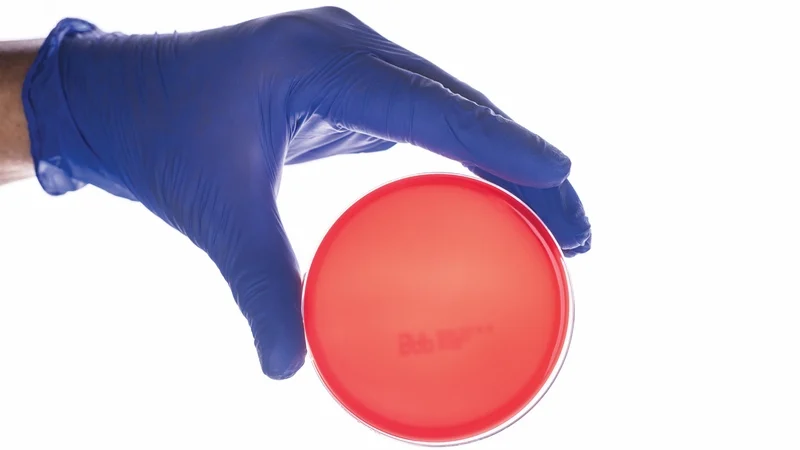
Contact plates are Petri dishes containing a suitable agar medium, often prepared with a slightly convex surface so the medium can contact a surface during sampling.
A plate is gently pressed against the designated surface for the contact time specified in the approved procedure. Microorganisms transferred from the sampled surface to the agar may grow during the specified incubation period.
Contact plates are commonly used for accessible, flat surfaces, such as:
- Workbenches and equipment panels.
- Selected cleanroom surfaces.
- Suitable areas of equipment exteriors.
- Personnel gown surfaces and gloves, where the procedure specifies contact sampling.
The contact area, pressure, contact time, medium suitability, and sampling technique should be standardized. Contact plates should not be forced onto surfaces where sampling could damage the agar, compromise aseptic conditions, or interfere with equipment operation.
Advantages of Contact Plates
- Simple sampling technique: Contact sampling can be performed using a standardized procedure.
- Direct microbial recovery: Microorganisms transferred to the agar can form colonies for examination.
- Useful for routine monitoring: Plates can be suitable for repeated monitoring of predefined, accessible locations.
- Straightforward reporting: Results can be reported as CFU per plate when the sampling method and reporting convention support that unit.
Limitations of Contact Plates
- They are not well suited to narrow, recessed, highly curved, or irregular surfaces.
- Agar contact may be incomplete on uneven surfaces.
- Residual disinfectants can inhibit microbial recovery unless neutralization is appropriately addressed.
- Sampling can leave agar residue or otherwise affect some surfaces.
- The method samples only the area contacted by the plate and may not recover all microorganisms present.
What Are Swab Sampling Methods?
Swab sampling involves collecting microorganisms from a surface using a sterile swab or another suitable sampling device. Depending on the method, the swab may be moistened with a suitable sterile diluent or neutralizing solution before sampling.
The swab is rubbed across the designated area using the specified pattern and technique. It is then transferred to an appropriate transport or extraction medium for processing and microbiological examination.
Swabs are particularly useful for surfaces that cannot be sampled effectively using contact plates, including:
- Corners and edges.
- Narrow equipment components.
- Curved surfaces and joints.
- Recessed or difficult-to-access locations.
- Selected equipment parts where direct agar contact is impractical.
The swab material, diluent, neutralizer, extraction procedure, sampled area, and microbiological method should be suitable for the purpose of testing.
Advantages of Swab Sampling
- Flexible sampling: Swabs can reach many irregular and confined locations.
- Adaptable sampling area: A defined area can be sampled using an approved template or other suitable approach.
- Useful for targeted investigations: Swabs may help investigate suspected contamination at locations that cannot be sampled using contact plates.
- Suitable for selected residue assessments: Swabbing can also be used in other validated surface sampling applications, including certain cleaning validation studies, although those studies may require different analytical methods.
Limitations of Swab Sampling
- Recovery depends on the swab material, sampling technique, surface type, and extraction efficiency.
- Inconsistent pressure or swabbing patterns can affect results.
- Some microorganisms may remain attached to the surface or swab.
- Swab fibres, adhesives, diluents, or other components may interfere with certain analytical methods.
- Additional sample processing may be required before microbiological examination.
Contact Plates vs Swabs: Key Differences
| Parameter | Contact plates | Swab sampling |
|---|---|---|
| Sampling principle | Direct contact between agar and surface | Collection of microorganisms using a swab |
| Best suited for | Accessible, relatively flat surfaces | Irregular, curved, narrow, or recessed surfaces |
| Sampling area | Determined by the plate’s contact area | Defined by the approved sampling procedure |
| Common reporting unit | CFU/plate | CFU/swab or CFU per defined area, as applicable |
| Sample processing | Incubation of the sampling plate under specified conditions | Swab extraction or transfer followed by suitable examination |
| Main strength | Simple, direct surface sampling | Flexibility across different surface geometries |
| Main limitation | Limited contact with uneven surfaces | Variable recovery and possible extraction losses |
| Important control | Standardized contact and suitable medium | Standardized technique, suitable swab and recovery procedure |
Important: Results obtained using contact plates and swabs are not automatically interchangeable. Differences in sampled area, microbial recovery, neutralization, and processing can influence the results. Any comparison or conversion requires an appropriate scientific justification.
How to Perform Contact Plate Sampling
The following is a general overview. The approved environmental monitoring procedure takes precedence.
Step 1: Select the Sampling Location
Choose the predefined surface according to the environmental monitoring plan and contamination risk assessment. Sampling locations should represent relevant activities and potential contamination pathways.
Step 2: Verify the Sampling Materials
Check the plate identification, medium suitability, expiry, packaging integrity, and any required quality control status. Use neutralizing media when justified by the procedure and the potential presence of disinfectant residues.
Step 3: Prepare for Sampling
Follow the required gowning, hand hygiene, and aseptic handling procedures. Confirm that sampling will not interfere with an ongoing operation or compromise a critical surface.
Step 4: Contact the Surface
Gently press the agar surface against the designated area using the validated or approved contact technique. Avoid sliding, twisting, or applying excessive pressure.
Step 5: Close and Identify the Plate
Close the plate promptly and label it according to the approved procedure. Maintain traceability to the sampling location, date, time, sampler, and relevant production or room status.
Step 6: Incubate and Record Results
Transport, incubate, examine, and record the plate according to the approved method. Report the result using the applicable unit and assess it against established limits.
How to Perform Swab Sampling
Step 1: Identify the Sampling Area
Select the location based on the monitoring plan or investigation. Define the area to be sampled wherever applicable so results can be interpreted consistently.
Step 2: Prepare the Swab
Use an appropriate sterile swab and the specified diluent or neutralizer. The sampling materials must be suitable for the surface and intended microbiological examination.
Step 3: Sample the Surface
Swab the designated area using the pattern and technique defined in the procedure. Consistent coverage and handling help reduce variation between analysts.
Step 4: Transfer the Swab
Place the swab into the specified sterile container or recovery medium and close it securely. Follow the required holding time and transport conditions.
Step 5: Process the Sample
Extract or transfer the collected microorganisms using the approved method. Perform the specified microbiological examination and controls.
Step 6: Document and Interpret the Results
Record the location, sampled area where applicable, swab identification, method, result, and other required details. Assess the result against the applicable criteria and review any unusual findings.
How to Choose the Right Surface Monitoring Method
The choice between contact plates and swabs should be based on the monitoring objective and surface characteristics rather than convenience alone.
Choose contact plates when:
- The surface is accessible and sufficiently flat.
- Direct agar contact is practical and appropriate.
- The monitoring program uses a validated or otherwise suitable contact plate method.
Choose swabs when:
- The surface is irregular or curved.
- Corners, recesses, or narrow equipment parts must be sampled.
- Direct contact with agar is impractical.
- The sampling plan requires a defined area that is better sampled by swabbing.
In critical aseptic processing areas, the sampling strategy must also consider contamination risk, airflow, operational activity, and the potential for sampling to disrupt the process. Sampling of critical surfaces should be planned to avoid compromising product protection.
Regulatory and GMP Considerations
EU GMP Annex 1
EU GMP Annex 1, Manufacture of Sterile Medicinal Products, describes environmental and personnel monitoring as part of contamination control. It recognizes surface sampling methods such as swabs and contact plates and emphasizes that sampling methods and equipment should be understood, procedures should support correct use and interpretation, and recovery efficiency data should be available.
FDA Guidance on Aseptic Processing
The FDA’s Sterile Drug Products Produced by Aseptic Processing — Current Good Manufacturing Practice guidance describes surface monitoring using methods such as touch plates, swabs, and contact plates. It emphasizes that monitoring locations and sampling plans should be selected based on their relationship to the operation and potential contamination risks.
Good Documentation Practices
The laboratory should document sampling in accordance with approved procedures. Relevant records may include:
- Sampling location and identification code.
- Date, time, and sampler identification.
- Sampling method and sampled area, where applicable.
- Media or swab identification and relevant lot details.
- Incubation and examination conditions.
- Observed microbial counts and identification results, when required.
- Excursions, investigations, and corrective actions where applicable.
Alert and Action Limits
https://pharmavk.com/alert-level-vs-action-level/
Alert and action limits should be established and applied according to the applicable regulatory framework, cleanroom grade, monitoring method, and facility-specific contamination control strategy.
Limits for contact plates should not automatically be applied to swab results, or vice versa. Results must be assessed using the appropriate method-specific criteria and the current applicable requirements.
Common Errors in Surface Monitoring
| Common error | Potential impact | Prevention |
|---|---|---|
| Inconsistent contact pressure | Variable recovery from contact plates | Standardize the technique |
| Sampling an undefined area | Difficult comparison between results | Define the sampling area where applicable |
| Using unsuitable neutralizers | Inhibition of microbial recovery | Evaluate neutralizer suitability |
| Delayed swab processing | Potential change in recoverable microorganisms | Follow validated holding and transport conditions |
| Incorrect sample labelling | Loss of traceability | Verify labels and records at collection |
| Sampling a critical surface at the wrong time | Potential interference with aseptic operations | Follow the approved sampling plan |
| Ignoring recurring trends | Missed contamination signals | Review results and investigate adverse trends |
Frequently Asked Questions (FAQs)
1. What is the main difference between contact plates and swabs?
Contact plates collect microorganisms through direct contact between agar and a surface. Swabs collect microorganisms by rubbing a sampling device over a surface and transferring the sample for further examination.
2. Which method is better for cleanroom surface monitoring?
Neither method is universally better. Contact plates are useful for accessible, relatively flat surfaces, whereas swabs are useful for irregular or difficult-to-reach locations. The selected method must be suitable for the sampling objective.
3. Can swabs be used for pharmaceutical environmental monitoring?
https://pharmavk.com/Why-is-Environment/
Yes. Swabs are recognized as a surface sampling option in pharmaceutical environmental monitoring. The sampling procedure, materials, and recovery performance should be appropriate for the intended use.
4. Why is neutralizing media important in surface monitoring?
Disinfectant residues can continue to inhibit microorganisms after sampling and lead to under-recovery. A suitable neutralizer can help reduce this effect when its effectiveness and lack of harmful effects on the test organisms have been established.
5. Are contact plate and swab results comparable?
Not automatically. Different sampling areas, recovery efficiencies, and processing procedures can affect the results. Any direct comparison must be scientifically justified.
6. When should surface monitoring be performed?
Timing and frequency should be defined in the environmental monitoring program according to contamination risk, process activities, cleanroom requirements, and the purpose of monitoring. In sterile manufacturing, monitoring should be designed to capture relevant operational conditions without compromising the process.
Conclusion
Contact plates and swabs are valuable surface monitoring methods in pharmaceutical microbiology, but they serve different sampling needs. Contact plates are generally appropriate for accessible, relatively flat surfaces, while swabs offer greater flexibility for irregular and difficult-to-reach locations.
Reliable environmental monitoring depends on appropriate method selection, standardized sampling, suitable recovery procedures, accurate documentation, and risk-based interpretation of results. By following approved SOPs and applicable GMP requirements, pharmaceutical laboratories can strengthen contamination control and support consistent product quality.
References
- European Commission. EudraLex Volume 4, EU Guidelines for Good Manufacturing Practice, Annex 1: Manufacture of Sterile Medicinal Products (2022 revision). https://health.ec.europa.eu/medicinal-products/eudralex/eudralex-volume-4_en
- U.S. Food and Drug Administration. Sterile Drug Products Produced by Aseptic Processing — Current Good Manufacturing Practice: Guidance for Industry (2004). https://www.fda.gov/regulatory-information/search-fda-guidance-documents/sterile-drug-products-produced-aseptic-processing-current-good-manufacturing-practice
- U.S. Food and Drug Administration. Validation of Cleaning Processes (1993), for general considerations concerning direct surface sampling and recovery methods. https://www.fda.gov/inspections-compliance-enforcement-and-criminal-investigations/inspection-guides/validation-cleaning-processes-793