Introduction
Microbial spoilage in pharmaceutical products occurs when bacteria, yeasts, or moulds contaminate a formulation and cause undesirable changes in its quality, stability, safety, or performance. It is an important concern in pharmaceutical manufacturing because microbial contamination can affect both non-sterile and sterile products.
Liquid formulations, creams, gels, suspensions, and products containing water may be particularly vulnerable when their formulation or manufacturing controls do not adequately prevent microbial survival and growth. However, microbial contamination can also occur in raw materials, manufacturing equipment, packaging components, and products that do not visibly appear spoiled.
Microbial spoilage may result in changes in colour, odour, appearance, viscosity, pH, or other product characteristics. In some cases, microorganisms can degrade active pharmaceutical ingredients or excipients without producing obvious visual changes. Consequently, visual inspection alone cannot establish microbiological quality.
Understanding the causes, warning signs, risks, and preventive measures associated with microbial spoilage helps pharmaceutical manufacturers maintain product quality and protect patients.
What Is Microbial Spoilage in Pharmaceutical Products?
Microbial spoilage is the undesirable deterioration of a product caused by microbial contamination and, in many cases, microbial growth or metabolic activity.
Microorganisms may enter a product during raw-material handling, manufacturing, filling, packaging, storage, or use. If the formulation and storage conditions permit their survival or multiplication, they may affect the product’s physical, chemical, or microbiological characteristics.
Commonly encountered groups include:
- Bacteria: May multiply in suitable aqueous formulations and potentially alter product characteristics.
- Yeasts: May grow in certain formulations containing water and available nutrients.
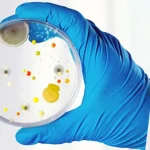
- Moulds: May develop on suitable surfaces or within susceptible products, sometimes producing visible colonies or discoloration.
The organisms of concern depend on the formulation, manufacturing environment, intended route of administration, and patient population. The presence of microorganisms does not automatically mean that visible spoilage will occur, and the absence of visible changes does not prove that a product is safe.
Common Causes of Microbial Spoilage
1. Contaminated raw materials
Active pharmaceutical ingredients, excipients, natural ingredients, and process materials may introduce microorganisms into a manufacturing process.
Materials derived from botanical or other natural sources may present particular microbiological challenges because of their origin and handling. Water and certain aqueous ingredients can also contribute to contamination if their microbiological quality is not adequately controlled.
Preventive measures:
- Establish appropriate supplier qualification and material specifications.
- Assess microbiological risks associated with incoming materials.
- Apply suitable sampling and testing strategies.
- Investigate unexpected microbial results before material approval or use.
2. Poor-quality pharmaceutical water
Water can support microbial survival and growth when system design, operation, sanitation, or monitoring is inadequate.
Potential risk areas include poorly maintained distribution systems, stagnant sections, inadequately controlled storage tanks, and unsuitable sampling practices.
Preventive measures:
- Maintain the water system according to approved procedures.
- Monitor relevant microbiological and chemical quality attributes.
- Investigate adverse trends and unexpected results.
- Ensure that water used in manufacturing meets the requirements applicable to its intended use.
3. Inadequate cleaning and sanitation
Product residues, moisture, and microorganisms can remain on equipment, transfer lines, utensils, and manufacturing surfaces if cleaning and sanitation are ineffective.
Some microorganisms can establish biofilms on suitable surfaces. Biofilms may make contamination more difficult to control and can contribute to recurring contamination events.
Preventive measures:
- Follow approved cleaning and sanitation procedures.
- Verify cleaning effectiveness where required.
- Inspect equipment and product-contact surfaces appropriately.
- Investigate repeated contamination associated with a particular equipment train or production area.
4. Inadequate preservation
Some pharmaceutical formulations contain antimicrobial preservatives to help control microbial growth. Their effectiveness depends on the formulation, preservative concentration, pH, packaging, and other product characteristics.
A preservative may be present but fail to provide adequate protection if it is incompatible with the formulation, binds to ingredients or packaging, or is present at an ineffective concentration.
Preventive measures:
- Evaluate the suitability of the preservative system.
- Perform applicable antimicrobial effectiveness testing.
- Monitor formulation changes that could affect preservative performance.
- Verify that manufacturing and storage conditions remain consistent with the product’s approved requirements.
Preservatives do not replace good manufacturing practices or appropriate microbiological controls.
5. Personnel and environmental contamination
Personnel, air, surfaces, equipment, and handling practices can contribute to microbial contamination.
The risk depends on the product, manufacturing process, facility design, and degree of environmental control required.
Preventive measures:
- Follow appropriate gowning and hygiene procedures.
- Maintain effective cleaning and environmental monitoring programmes.
- Minimize unnecessary interventions and open handling.
- Investigate contamination patterns linked to personnel, equipment, or specific manufacturing areas.
6. Packaging and container-closure problems
Packaging components may introduce contamination if their quality and handling are not adequately controlled. Damaged closures or unsuitable container-closure systems may also compromise protection during storage and use.
Repeated access to a multidose container can introduce microorganisms if the product is not handled according to its instructions.
Preventive measures:
- Establish suitable controls for packaging components.
- Verify container-closure integrity where applicable.
- Inspect packaging for damage and defects.
- Evaluate microbiological risks associated with repeated use and product dispensing.
7. Unsuitable storage conditions
Temperature, moisture, light exposure, and storage duration can influence microbial survival and product stability.
Temperature abuse may promote growth in susceptible formulations, while moisture ingress may affect products intended to remain dry. The actual risk depends on the organism, formulation, packaging, and storage conditions.
Preventive measures:
- Follow labelled storage conditions.
- Monitor storage conditions where required.
- Investigate temperature excursions and packaging damage.
- Assess the potential impact of storage deviations on microbiological quality and product stability.
Signs of Microbial Spoilage
Microbial spoilage can produce visible or measurable changes, but some contaminated products show no obvious signs.
| Observed change | Possible explanation | Important consideration |
|---|---|---|
| Cloudiness or unexpected turbidity | Microbial growth, precipitation, or formulation instability | Laboratory investigation is needed to distinguish possible causes. |
| Unusual odour | Microbial metabolism or chemical degradation | Odour alone cannot identify the cause or organism. |
| Colour change | Pigment production, chemical degradation, or other formulation changes | Compare with approved product specifications. |
| Gas formation or container swelling | Possible microbial gas production or packaging-related issues | Treat as a potential quality concern and investigate promptly. |
| Changes in viscosity or texture | Microbial activity, polymer degradation, or physical instability | Evaluate both microbiological and physicochemical causes. |
| Visible colonies or surface growth | Possible fungal or bacterial contamination | Do not assume organism identity from appearance alone. |
| Unexpected pH change | Microbial metabolism or chemical instability | Compare against appropriate stability and batch data. |
| No visible change | Contamination may still be present | Microbiological testing and risk assessment may be necessary. |
These observations are warning signs, not definitive proof of microbial spoilage. A suspected affected product should be assessed using approved procedures rather than judged by appearance alone.
Which Pharmaceutical Products May Be Vulnerable?
Microbial susceptibility varies with the formulation, manufacturing process, packaging, and intended use.
Liquid formulations
Oral solutions, suspensions, and other aqueous products may support microbial growth if their formulation and controls do not adequately restrict it.
Risk factors include contaminated water, inadequate preservation, poor sanitation, and contamination during filling or repeated use.
Creams, lotions, and gels
Topical formulations may contain water, oils, emulsifiers, and other ingredients that influence microbial susceptibility.
Microorganisms may also affect the physical stability of an emulsion or interact with ingredients in ways that alter product characteristics.
Ophthalmic and other sterile products
Products intended to be sterile require particularly stringent contamination controls. Microbial contamination can represent a serious patient-safety concern even when no visible spoilage occurs.
A contaminated sterile product must not be treated as acceptable simply because it appears normal.
Dry powders and solid dosage forms
Low water availability can restrict microbial growth, but it does not necessarily eliminate microorganisms. Contamination may remain relevant, especially if the product is later reconstituted or if its intended use creates particular microbiological risks.
The appropriate controls and acceptance criteria must reflect the specific product and applicable requirements.
How Microbial Spoilage Affects Product Quality
1. Changes in product stability
Microorganisms may metabolize formulation ingredients or produce substances that alter the product’s pH, odour, appearance, or physical characteristics.
2. Degradation of active ingredients
Certain microorganisms may transform or degrade susceptible active pharmaceutical ingredients, potentially affecting product potency or performance.
3. Formation of undesirable microbial products
Some microorganisms can produce enzymes, metabolites, or other substances that may affect product quality. Specific risks depend on the organism and product.
4. Patient-safety risks
The significance of contamination depends on the microorganism, its level, the dosage form, route of administration, and patient population. Certain contaminants may pose particular risks to vulnerable patients.
For this reason, microbial acceptability cannot be determined solely from the total microbial count. The identity of recovered organisms may also be important.
5. Manufacturing and business impact
Microbial spoilage may lead to batch rejection, investigations, additional testing, product recalls, supply disruption, and reputational damage.
Effective contamination prevention is therefore both a quality requirement and an important operational priority.
How to Investigate Suspected Microbial Spoilage
A suspected spoilage event should be investigated systematically under the site’s approved quality system.
Step 1: Contain and assess the affected product
Identify the affected batch or batches and assess whether other products, materials, equipment, or production periods may be involved.
Place material on the appropriate quality hold when required by the site’s procedures. Escalate potential patient-safety concerns promptly.
Step 2: Review the available evidence
Collect relevant information, including:
- Product appearance and any reported changes.
- Batch manufacturing and packaging records.
- Raw-material and water-system results.
- Cleaning and sanitation records.
- Environmental monitoring data.
- Storage and temperature records.
- Previous microbiological results and relevant trends.
Step 3: Perform appropriate microbiological testing
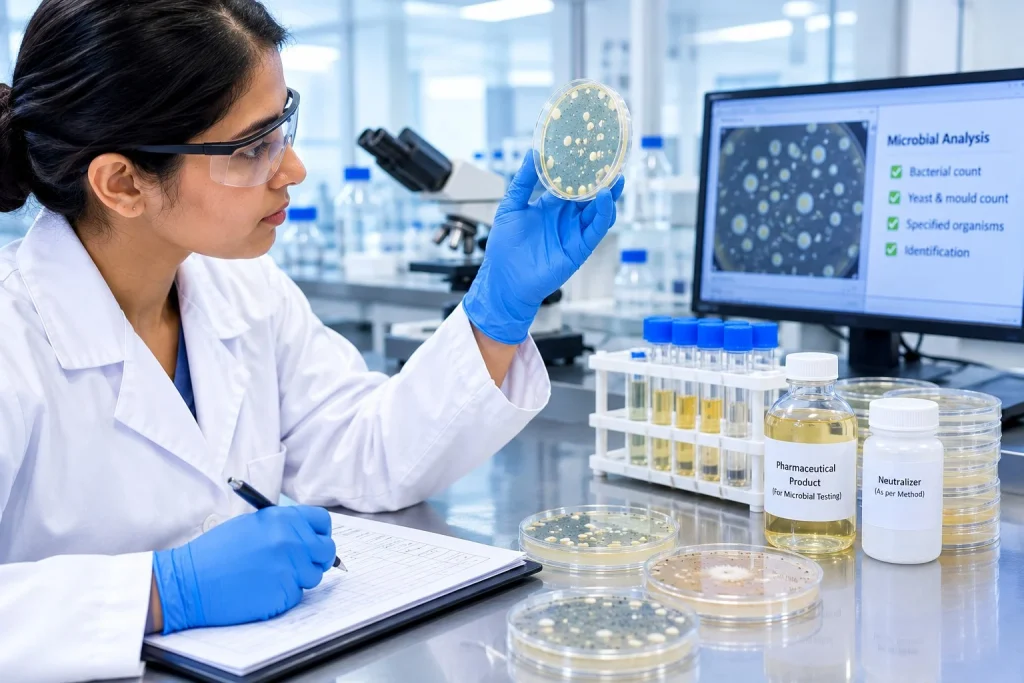
Testing should follow an approved and scientifically suitable method. Depending on the product and findings, the investigation may include microbial enumeration, testing for specified microorganisms, identification of isolates, or other justified examinations.
Method suitability and potential interference from preservatives or product ingredients should be considered when interpreting results.
Step 4: Identify and evaluate recovered microorganisms
Where justified, identify isolates to a level appropriate for the investigation and risk assessment.
Consider whether the organism may originate from raw materials, water, personnel, equipment, the manufacturing environment, or packaging. Identification alone does not establish the contamination source.
Step 5: Determine the likely root cause
Evaluate the evidence using appropriate investigation tools, such as a cause-and-effect diagram or the 5 Whys method.
Avoid concluding that personnel error or inadequate cleaning was the cause unless the evidence supports that conclusion.
Step 6: Assess product impact
Evaluate the potential effect on microbiological quality, chemical and physical stability, product performance, and patient safety.
Consider the organism recovered, the product’s intended use, the extent of the event, and whether other batches could be affected.
Step 7: Implement corrective and preventive actions
Actions may include repairing equipment, correcting water-system deficiencies, revising cleaning procedures, improving material controls, or addressing formulation and packaging vulnerabilities.
Verify the effectiveness of actions using appropriate evidence and document the final quality decision according to approved procedures.
Practical Example: Microbial Spoilage in an Oral Liquid
Consider an aqueous oral liquid in which the QC laboratory observes unexpected turbidity and a microbiological result outside the approved acceptance criteria.
A structured investigation might proceed as follows:
- The batch is placed on hold in accordance with the quality procedure.
- The laboratory verifies the test records, method suitability, and relevant controls.
- The investigation reviews water quality, raw materials, manufacturing records, cleaning records, and filling operations.
- Recovered microorganisms are identified where justified.
- The team evaluates whether the contamination could affect other batches and assesses the potential patient risk.
- The probable root cause is established from the evidence, and appropriate corrective and preventive actions are implemented.
- The batch disposition is decided by authorized personnel based on the investigation and applicable requirements.
This is an illustrative scenario, not a universal investigation protocol. The exact testing, escalation, and disposition depend on the product and the site’s approved procedures.
Preventing Microbial Spoilage: A GMP-Based Approach
Prevention requires coordinated controls throughout the product lifecycle.
| Control area | Recommended approach |
|---|---|
| Raw materials | Qualify suppliers, assess microbiological risks, and establish suitable specifications. |
| Pharmaceutical water | Maintain the system, monitor quality, and investigate adverse trends. |
| Equipment | Apply approved cleaning and sanitation procedures and investigate recurring contamination. |
| Personnel | Train staff in hygiene, gowning, and contamination-prevention practices. |
| Manufacturing | Control process conditions and minimize opportunities for contamination. |
| Formulation | Evaluate preservative suitability and product-specific microbiological risks. |
| Packaging | Control component quality and maintain suitable container-closure protection. |
| Storage | Maintain specified conditions and assess relevant excursions. |
| Laboratory testing | Use suitable methods, qualified media, appropriate controls, and reliable documentation. |
| Quality systems | Trend results, investigate deviations, and verify CAPA effectiveness. |
Microbiological limits and testing requirements should be established according to the product type, intended use, applicable pharmacopoeia, and regulatory requirements. A single microbial limit should not be applied universally to all pharmaceutical products.
Common Mistakes to Avoid
- Assuming a product is microbiologically acceptable because its appearance and odour are normal.
- Relying on preservatives as a substitute for contamination control.
- Treating every recovered microorganism as equally significant without considering product-specific risks.
- Repeating a failed microbiological test without a scientifically justified investigation.
- Ignoring adverse trends because individual results remain within specification.
- Closing an investigation without sufficient evidence for the root cause.
- Implementing CAPA without verifying that the actions prevent recurrence.
Frequently Asked Questions
1. What is the difference between microbial contamination and microbial spoilage?
Microbial contamination means that microorganisms have entered or are present in a material or product. Microbial spoilage refers to undesirable deterioration associated with microbial activity. Contamination can occur without visible spoilage, and spoilage may not be immediately apparent.
2. Can a pharmaceutical product be contaminated without changing its appearance?
Yes. Microorganisms may be present without causing visible changes in colour, clarity, odour, or texture. Appropriate microbiological controls and testing are therefore essential.
3. Which microorganisms cause pharmaceutical spoilage?
Potential spoilage organisms include bacteria, yeasts, and moulds. The organisms of concern vary with the formulation, manufacturing environment, storage conditions, and intended use. Specific organisms may be objectionable even at relatively low levels.
4. Do preservatives prevent all microbial growth?
No. Preservatives help control microbial growth under suitable conditions, but their effectiveness depends on the formulation and other factors. They do not replace GMP controls or applicable microbiological testing.
5. What should a manufacturer do if microbial spoilage is suspected?
The manufacturer should contain the affected product as appropriate, initiate a documented investigation, perform suitable testing, evaluate the impact on other batches and patient safety, establish the likely cause, and implement effective corrective and preventive actions.
6. Are microbial limits the same for all pharmaceutical products?
No. Requirements depend on factors such as the dosage form, route of administration, intended use, patient population, and applicable pharmacopoeial or regulatory requirements.
7. What is the role of QA in a microbial spoilage investigation?
QA oversees the quality-system process, including investigation adequacy, product-impact assessment, deviation documentation, CAPA review, and batch disposition according to assigned authority and approved procedures.
Conclusion
Microbial spoilage in pharmaceutical products can affect product stability, microbiological quality, patient safety, and manufacturing performance. It may result from contaminated raw materials, water-system deficiencies, inadequate sanitation, ineffective preservation, environmental contamination, packaging problems, or unsuitable storage conditions.
Effective prevention requires a risk-based approach that combines appropriate material controls, manufacturing hygiene, cleaning and sanitation, formulation protection, microbiological testing, and robust quality-system oversight.
Most importantly, the absence of visible spoilage does not prove the absence of microbial contamination. Consistent GMP practices, scientifically appropriate investigations, and effective preventive measures are essential to maintaining pharmaceutical product quality throughout its shelf life.
References
- U.S. Food and Drug Administration (FDA). Microbiological Quality Considerations in Non-Sterile Drug Manufacturing: Draft Guidance for Industry. September 2021. Read the FDA guidance.
- U.S. Food and Drug Administration (FDA). Questions and Answers on Current Good Manufacturing Practice Regulations: Production and Process Controls. Read the FDA resource.
- United States Pharmacopeia (USP). General Chapter <1111>, Microbiological Examination of Nonsterile Products: Acceptance Criteria for Pharmaceutical Preparations and Substances for Pharmaceutical Use. Read the USP chapter information.
- United States Pharmacopeia (USP). General Chapter <51>, Antimicrobial Effectiveness Testing. Read the USP chapter information.