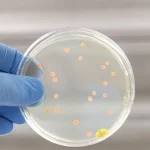
Microbial identification by MALDI-TOF MS is a modern analytical technique used to identify microorganisms based on their characteristic protein profiles. MALDI-TOF MS stands for Matrix-Assisted Laser Desorption/Ionization Time-of-Flight Mass Spectrometry. It enables rapid identification of many bacteria and yeasts by comparing their mass spectral fingerprints with reference profiles stored in a database.
In pharmaceutical microbiology, accurate microbial identification is important for investigating contamination, evaluating environmental monitoring isolates, and understanding microorganisms recovered from raw materials, water systems, and manufacturing areas. MALDI-TOF MS can support these activities by providing identification results more rapidly than many conventional biochemical methods.
However, the reliability of the result depends on appropriate sample preparation, instrument performance, database coverage, and correct interpretation. The method should therefore be used within a controlled laboratory workflow rather than as a replacement for every conventional microbiological test.
What Is MALDI-TOF MS?
MALDI-TOF MS is a mass spectrometry technique that generates a characteristic mass spectrum from molecules present in a microbial sample, particularly abundant proteins.
The resulting spectrum contains peaks associated with molecules of different mass-to-charge ratios. Software compares this pattern with reference spectra in a database and ranks the potential matches.
In routine microbial identification, the method commonly uses protein fingerprints, including abundant ribosomal proteins, to distinguish microorganisms. Its ability to rapidly identify many cultured bacterial and yeast isolates has made it an important tool in modern microbiology laboratories.
Principle of MALDI-TOF MS
The principle involves two main processes: matrix-assisted ionization and time-of-flight measurement.
1. Matrix-assisted laser desorption and ionization
A prepared microbial sample is mixed with or covered by a suitable chemical matrix on a target plate. After the sample dries, a laser pulse strikes the spot.
The matrix absorbs the laser energy and helps transfer energy to the sample, allowing molecules to enter the gas phase and become ionized. This relatively gentle ionization process helps preserve many protein ions without extensive fragmentation.
2. Time-of-flight measurement
The generated ions are accelerated by an electric field into a flight tube. They travel toward a detector, and their flight times depend on their mass-to-charge ratios.
Under comparable instrument conditions, ions with lower mass-to-charge ratios generally reach the detector sooner than ions with higher mass-to-charge ratios.
3. Generation of a mass spectrum
The detector records the ions, and the instrument software produces a mass spectrum containing peaks at characteristic mass-to-charge ratios.
4. Database comparison
The software compares the acquired spectrum with reference spectra in the instrument’s database. It then generates a ranked identification result and a confidence measure or score according to the specific system.
The result is accepted only when it satisfies the manufacturer’s identification criteria and the laboratory’s approved procedure.
Step-by-Step Workflow of MALDI-TOF MS
The exact workflow depends on the instrument, microorganism, and validated or verified laboratory method. A typical workflow includes the following stages.
Step 1: Selection of a suitable microbial isolate
A suitable colony or microbial isolate is selected from a culture using the approved procedure.
A pure culture is important because a mixed culture may produce a combined spectrum that does not correspond reliably to a single organism.
Step 2: Sample preparation
A small amount of microbial material is applied to the designated target spot. Depending on the organism and method, the sample may be analyzed using direct transfer or may require an extraction procedure.
Some organisms, including certain yeasts, molds, and mycobacteria, may require additional preparation to obtain reliable identification. Sample preparation must follow the instrument manufacturer’s instructions and the laboratory’s approved method.
Step 3: Addition of matrix
The appropriate matrix solution is applied to the sample spot as specified by the procedure. The spot is allowed to dry under the required conditions.
The matrix supports laser absorption and ionization during analysis.
Step 4: Instrument calibration and quality control
Calibration and quality-control activities are performed at the frequency and under the conditions specified by the manufacturer and applicable laboratory requirements.
The laboratory verifies that the system is functioning acceptably before reporting identification results.
Step 5: Spectral acquisition
The target plate is introduced into the instrument. The laser generates ions from the prepared sample, and the detector records the resulting mass spectrum.
Step 6: Database matching
The software compares the acquired spectrum with reference profiles in the available database and generates candidate identifications.
Step 7: Review and reporting
A trained analyst reviews the identification, the system’s confidence criteria, and any relevant supporting information. Results that do not meet the required criteria are handled according to the approved procedure.
Applications of MALDI-TOF MS in Pharmaceutical Microbiology
1. Environmental monitoring investigations
Environmental monitoring programs may recover microorganisms from air samples, surface samples, personnel monitoring, and other controlled manufacturing environments.
MALDI-TOF MS can help identify suitable recovered isolates. Identification results may support an investigation into whether isolates are recurring, whether similar organisms occur in different locations, or whether further investigation is needed.
The result should be interpreted alongside colony morphology, Gram-stain findings where applicable, sampling location, and historical monitoring data.
2. Pharmaceutical water system investigations
When microorganisms are recovered from purified water or other pharmaceutical water systems, identification can contribute to the investigation.
For example, recurring recovery of a similar organism from multiple sampling locations may prompt a review of sampling practices, sanitization records, system design, and microbial trends.
Identification alone does not prove the presence of a biofilm or establish the source of contamination. Additional evidence is required to support those conclusions.
3. Raw material and finished-product investigations
MALDI-TOF MS may help identify microorganisms recovered during the microbiological examination of raw materials or finished products, provided the method is suitable for the isolate and intended application.
Identification can support contamination investigations and help assess whether an organism is consistent with the expected background flora or represents an unusual finding.
It does not independently establish whether a product complies with its microbiological specification.
4. Contamination source assessment
Comparing identification results from different locations can help investigators develop hypotheses about possible contamination routes.
However, identification to the species level does not necessarily establish that two isolates are the same strain. Higher-resolution typing or molecular methods may be required to investigate a suspected common source.
5. Research and microbial characterization
MALDI-TOF MS is also used in research and other microbiological fields, including food microbiology and environmental microbiology. Applications depend on the organism, database, analytical method, and intended level of identification.
Advantages of MALDI-TOF MS
| Advantage | Explanation |
|---|---|
| Rapid identification | Many cultured isolates can be identified more quickly than with conventional biochemical identification workflows. |
| Broad applicability | Suitable systems can identify a wide range of bacterial and yeast isolates. |
| Protein fingerprinting | Identification uses characteristic spectral patterns rather than relying solely on visible biochemical reactions. |
| Laboratory efficiency | Automated spectrum acquisition and database comparison can reduce manual identification work. |
| Useful investigation support | Identification results can help characterize microorganisms recovered during contamination investigations. |
| Potential cost efficiency | Once implemented, high-throughput testing may reduce some consumable and labour costs compared with alternative workflows, depending on local circumstances. |
The actual performance and cost benefits depend on the organism, instrument, database, laboratory workload, and preparation requirements.
Limitations of MALDI-TOF MS
Despite its advantages, MALDI-TOF MS has limitations that laboratories must consider.
1. Dependence on database coverage
A microorganism may not be identified reliably if its reference spectrum is absent or insufficiently represented in the database. Closely related organisms may also have similar spectral profiles.
2. Mixed cultures
A sample containing multiple microorganisms can generate a mixed spectrum. This may result in an unreliable identification or no acceptable identification.
3. Difficult-to-identify organisms
Some fungi, mycobacteria, and other organisms may require additional extraction procedures or specialized databases. Identification performance varies across organism groups.
4. Closely related species
Certain organisms cannot be reliably differentiated at the species level using a particular MALDI-TOF MS system. Additional biochemical, molecular, or other confirmatory testing may be necessary.
5. Limited strain-level discrimination
Routine MALDI-TOF MS identification should not automatically be interpreted as strain-level identification. Determining whether two isolates are genetically related may require higher-resolution methods.
6. Equipment and expertise requirements
The instrument requires appropriate installation, maintenance, calibration, quality control, trained personnel, and a controlled database-management process. Acquisition and ongoing maintenance costs may also be significant.
MALDI-TOF MS vs. Conventional Microbial Identification
| Feature | MALDI-TOF MS | Conventional biochemical methods |
|---|---|---|
| Identification principle | Protein mass spectral fingerprint | Biochemical and phenotypic characteristics |
| Turnaround time | Often rapid after a suitable culture is available | May require longer incubation and multiple tests |
| Interpretation | Software-assisted database matching with defined acceptance criteria | Interpretation of biochemical reactions and identification keys |
| Equipment | Specialized mass spectrometer | Routine microbiological equipment and biochemical test systems |
| Limitations | Database coverage, sample preparation and discrimination of certain species | Time requirements, overlapping phenotypes and interpretation challenges |
| Role in a laboratory | Rapid identification tool | Identification tool and possible complementary or confirmatory method |
Neither approach is universally superior for every microorganism. The appropriate method depends on the intended identification, available resources, and required level of confidence.
Quality Control and Good Laboratory Practices
For reliable microbial identification, laboratories should establish documented procedures that address instrument performance and result interpretation.
Important considerations include:
- Method suitability and verification: Demonstrate that the method performs adequately for its intended use and the relevant organism groups.
- Calibration: Follow the manufacturer’s specified calibration procedure and acceptance criteria.
- Quality-control organisms: Use suitable positive and negative controls where required by the approved method and manufacturer.
- Pure culture selection: Avoid interpreting a spectrum from a suspected mixed culture as a definitive identification of one organism.
- Database management: Control software and database updates, and assess their impact where required.
- Equipment maintenance: Maintain service, calibration, troubleshooting, and maintenance records.
- Analyst competency: Train personnel in sample preparation, result interpretation, and escalation of uncertain results.
- Traceable reporting: Retain the sample identity, raw or electronic records as applicable, identification result, acceptance criteria, and relevant review documentation.
CLSI M58 provides guidance on the use of MALDI-TOF MS for identification of cultured microorganisms, including sample preparation, result interpretation, quality assurance, troubleshooting, and method verification. Its primary scope is clinical microbiology, so pharmaceutical laboratories should also consider the requirements relevant to their own intended use and quality system.
Practical Example: Identification of an Environmental Monitoring Isolate
A pharmaceutical microbiology laboratory recovers a bacterial colony from a surface monitoring plate in a controlled manufacturing area.
The analyst selects the isolate for identification under the approved procedure. The sample is prepared, applied to the MALDI-TOF MS target, and analyzed after the required instrument checks.
The software returns a species-level identification that meets the system’s acceptance criteria.
The microbiologist then reviews the result alongside the colony appearance, Gram-stain findings where applicable, monitoring location, and historical data.
If the organism is unusual or appears repeatedly in the same area, the laboratory may investigate potential contamination routes, personnel practices, cleaning and disinfection records, and related monitoring results.
The identification result contributes to the investigation but does not, on its own, establish the root cause or prove a contamination pathway.
Frequently Asked Questions (FAQs)
1. What does MALDI-TOF MS stand for?
MALDI-TOF MS stands for Matrix-Assisted Laser Desorption/Ionization Time-of-Flight Mass Spectrometry.
2. How does MALDI-TOF MS identify microorganisms?
It generates a characteristic mass spectrum from molecules in a microbial sample and compares that spectrum with reference profiles in a database.
3. Can MALDI-TOF MS identify bacteria and fungi?
Many systems identify a wide range of bacteria and yeasts. Identification of molds and certain other organisms may require additional preparation, specialized databases, or alternative methods.
4. Is MALDI-TOF MS faster than conventional biochemical testing?
It is often faster once a suitable culture is available because identification may be completed rapidly after sample preparation. However, the total turnaround time depends on the need for culture, extraction, repeat analysis, or confirmatory testing.
5. Can MALDI-TOF MS replace all conventional identification methods?
No. Some organisms may not be reliably distinguished, and additional testing may be required when results are inconclusive or when a higher level of discrimination is needed.
6. Is MALDI-TOF MS used in pharmaceutical quality control?
It can support microbial identification during environmental monitoring, water system investigations, and investigations involving raw materials or finished products, when the method is suitable for the intended use.
7. Does MALDI-TOF MS determine antimicrobial susceptibility?
Routine microbial identification by MALDI-TOF MS does not itself provide a conventional antimicrobial susceptibility result. Specialized applications exist, but these require their own validated or appropriately verified procedures.
Conclusion
Microbial identification by MALDI-TOF MS is an important development in modern microbiology. By comparing protein mass spectral fingerprints with reference databases, it enables rapid identification of many cultured microorganisms.
In pharmaceutical microbiology, this technology can support environmental monitoring investigations, water system assessments, and contamination investigations. Its effective use requires appropriate sample preparation, suitable database coverage, quality control, trained personnel, and careful interpretation of results.
When integrated into a suitable laboratory workflow, MALDI-TOF MS can strengthen microbial identification capabilities and support evidence-based pharmaceutical quality decisions.
References
- Clinical and Laboratory Standards Institute (CLSI). M58: Methods for the Identification of Cultured Microorganisms Using Matrix-Assisted Laser Desorption/Ionization Time-of-Flight Mass Spectrometry. Official CLSI standard information.
- Jang KS, Kim YH. Rapid and robust MALDI-TOF MS techniques for microbial identification: a brief overview of their diverse applications. Journal of Microbiology. 2018;56:209–216. Read the review.
- Bourassa L. MALDI TOF MS Quality Control in Clinical Microbiology. Clinical Laboratory News, Association for Diagnostics & Laboratory Medicine. Read the article.
- Current Status of Matrix-Assisted Laser Desorption/Ionization–Time-of-Flight Mass Spectrometry in Clinical Diagnostic Microbiology. Read the review on PubMed Central.