Biological indicators (BIs) are test systems containing viable microorganisms
providing a defined resistance to a specified sterilization process.
They are used to validate the effectiveness of sterilization processes, including
autoclaving, by confirming that the process can kill a highly resistant standard
population of microorganisms.
B𝗶𝗼𝗹𝗼𝗴𝗶𝗰𝗮𝗹 𝗜𝗻𝗱𝗶𝗰𝗮𝘁𝗼𝗿𝘀
*Typically consist of a known population of specific microorganisms (e.g., spores
of Geobacillus stearothermophilus for steam sterilization) on a carrier, such as a
paper strip, within a container.
* After sterilization, the BI is incubated to determine whether any microorganisms
survived the process. A positive growth result indicates a failed sterilization process,
while no growth indicates successful sterilization.
A𝘂𝘁𝗼𝗰𝗹𝗮𝘃𝗲 𝗰𝗮𝗹𝗶𝗯𝗿𝗮𝘁𝗶𝗼𝗻
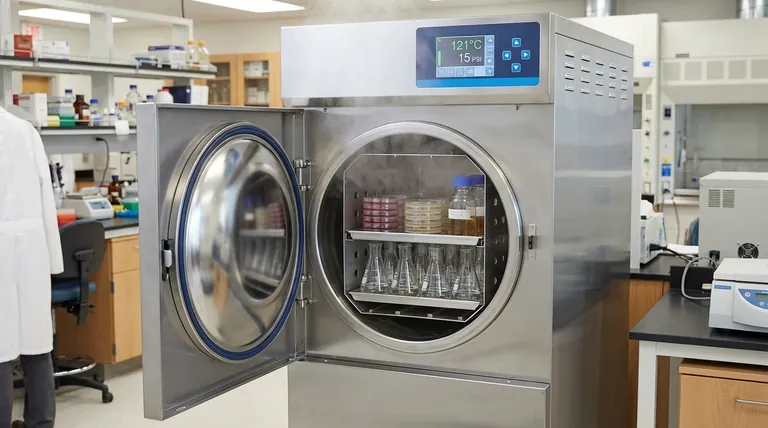
Calibration of an autoclave involves ensuring that the device operates at the
correct temperature and pressure for the appropriate amount of time to achieve
effective sterilization.
A𝘂𝘁𝗼𝗰𝗹𝗮𝘃𝗲 𝗰𝗮𝗹𝗶𝗯𝗿𝗮𝘁𝗶𝗼𝗻
- Calibration of an autoclave involves ensuring that the device operates at the correct temperature and pressure for the appropriate amount of time to achieveeffective sterilization.
- 04 biological indicators Within the autoclave top, middle, bottom, and one negative control.
- One is a positive control, with no need for sterilization.
- Place BIs in representative locations within the autoclave chamber, including areas least accessible to steam (cold spots).
- Run the autoclave through a standard sterilization cycle using your usual settings.( 121°C 26 minutes)
- Retrieve the BIs and incubate them according to the manufacturer’s instructions.
- Crush biological indicators with a crusher inside the tube broken and direct contact with the organism. the organism is destroyed by the autoclave withoutchanging colour from purple to yellow.
- Incubate at 55-60°C for G. stearothermophilus for 24-48 hours) or 7 days.
- Check the BIs for growth. No growth indicates successful sterilization.
- Frequency: Quarterly Once