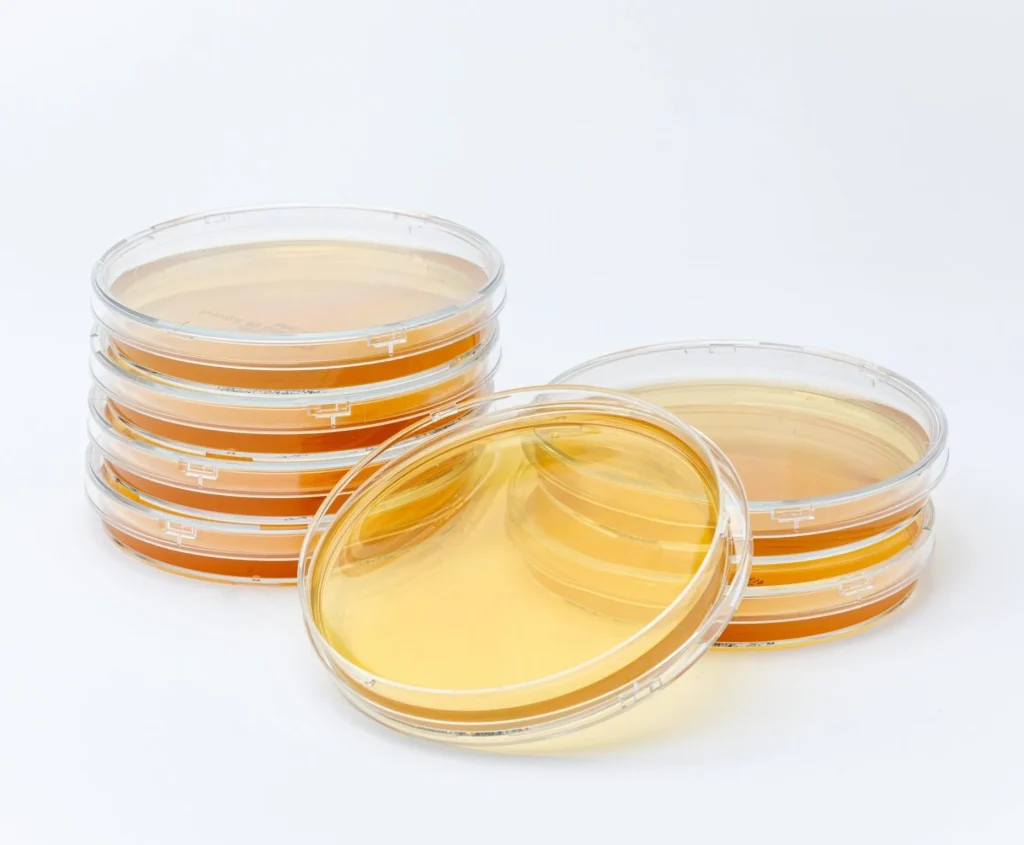
Environmental monitoring (EM) is an important part of contamination control in pharmaceutical manufacturing. It helps assess the microbiological condition of cleanrooms, controlled areas, equipment surfaces and personnel. Settle plates, contact plates and active air sampling plates are commonly used to detect viable microorganisms.
After sampling, these plates are generally incubated in an inverted position, with the agar surface facing downward and the plate lid underneath. This practice helps prevent condensation from dripping onto the agar surface and interfering with microbial recovery and colony counting.
What Does Incubating Plates in an Inverted Position Mean?
Incubating a Petri plate in an inverted position means placing it upside down during incubation, so the agar-containing base is above the lid.
This is a routine laboratory practice used for many microbiological culture plates, including environmental monitoring plates.
Why Are Environmental Monitoring Plates Incubated Inverted?
1. Prevents Condensation from Dripping onto Agar
During incubation, temperature differences between the agar and the surrounding environment can cause moisture to accumulate inside the Petri plate lid.
When plates are incubated in the normal upright position, accumulated condensation may fall onto the agar surface. This can disturb microbial colonies and affect the appearance of the growth.
Inverting the plate helps keep condensation away from the agar surface.
2. Prevents Spreading of Microbial Colonies
Water droplets falling onto the agar can cause microbial growth to spread across the surface.
This may result in:
- Merging of nearby colonies.
- Irregular colony distribution.
- Difficulty distinguishing individual colonies.
- Inaccurate CFU counting.
Inverting plates helps maintain better separation and visibility of colonies.
3. Supports Accurate Microbial Enumeration
Environmental monitoring results are generally expressed as colony-forming units (CFU).
For reliable enumeration, colonies should remain sufficiently separated and clearly visible. Condensation-related spreading can make colony counting difficult and may affect the interpretation of results.
Therefore, inverted incubation helps maintain the physical condition of the agar surface for more consistent examination.
https://pharmavk.com/colony-counting-errors-microbial-enumeration/
4. Reduces the Risk of Unwanted Contamination
Excess moisture moving across the agar surface may contribute to the transfer of microorganisms between nearby growth areas within the same plate.
Keeping condensation away from the agar surface helps reduce this risk and supports clearer microbial recovery assessment.
What Happens If EM Plates Are Incubated in the Wrong Position?
Incubating plates with the agar surface facing upward may allow condensation to accumulate and drip onto the medium.
Possible consequences include:
| Problem | Possible effect |
|---|---|
| Condensation droplets | Disturbed colony distribution |
| Excess moisture | Spreading of microbial growth |
| Merged colonies | Difficulty in CFU counting |
| Irregular growth patterns | Complicated result interpretation |
| Poor plate condition | Reduced reliability of examination |
Incorrect incubation orientation can affect the quality of environmental monitoring results and should be addressed according to the laboratory’s approved procedure.
Correct Handling of Environmental Monitoring Plates During Incubation
Follow these general practices:
- After sampling, close the Petri plate properly.
- Label the plate with the required identification details, such as sampling location, date and sample type.
- Transfer the plates to the designated incubation area using the approved handling procedure.
- Place the plates in an inverted position, unless the validated method or manufacturer instructions specify otherwise.
- Maintain the approved incubation temperature and duration.
- Avoid unnecessary handling or movement during incubation.
- After incubation, examine the plates and record the observed microbial growth.
- Perform CFU counting and further microbial identification, where required, according to the approved procedure.
https://pharmavk.com/why-are-em-plates-exposed-for-4-hours/
Common Mistakes to Avoid
- Incubating plates with the agar surface facing upward without an approved justification.
- Using plates with excessive condensation.
- Overlooking damaged, cracked or improperly closed plates.
- Mixing up plate identification details.
- Using incorrect incubation conditions.
- Delaying plate transfer or incubation beyond the approved procedure.
- Recording colony counts without checking the overall plate condition.
GMP Importance of Correct Plate Incubation
Environmental monitoring data are used to evaluate the microbiological state of controlled manufacturing areas. Incorrect plate handling or incubation can affect the reliability of the results and may complicate contamination investigations.
Under EU GMP Annex 1, environmental monitoring methods and equipment should be understood, appropriately controlled and supported by recovery-efficiency data. Therefore, laboratories should establish documented procedures for plate handling, incubation, examination and result recording.
The FDA guidance on sterile drug products produced by aseptic processing also emphasizes the importance of appropriate environmental monitoring methods and consistent microbiological recovery.
Frequently Asked Questions (FAQs)
1. Why are environmental monitoring plates incubated upside down?
They are incubated inverted to prevent condensation from dripping onto the agar surface and disturbing microbial colonies.
2. What happens if condensation falls onto the agar?
Condensation can spread microbial growth, merge colonies and make accurate CFU counting difficult.
3. Are settle plates and contact plates incubated inverted?
They are generally incubated in an inverted position after sampling, following the approved laboratory procedure and applicable method instructions.
4. Does inverted incubation improve microbial recovery?
It helps maintain the agar surface and colony distribution by reducing condensation-related interference. It does not replace the need for validated media, suitable incubation conditions or an effective sampling method.
5. Should all microbiological plates be incubated inverted?
Many routine agar plates are incubated inverted, but the correct orientation should always follow the validated test method, laboratory SOP and manufacturer’s instructions.
Conclusion
Incubating environmental monitoring plates in an inverted position is a simple but important microbiological laboratory practice. It helps prevent condensation from dripping onto the agar, reduces the possibility of colony spreading and supports reliable microbial enumeration.
Although it may appear to be a small procedural step, correct plate orientation contributes to the quality and consistency of environmental monitoring results in pharmaceutical microbiology laboratories.
References
- European Commission. EudraLex Volume 4, EU GMP Annex 1: Manufacture of Sterile Medicinal Products (2022). Official document
- U.S. FDA. Sterile Drug Products Produced by Aseptic Processing — Current Good Manufacturing Practice (2004). FDA guidance