
Microbiology
Agricultural microbiology is a branch of science that studies different microorganisms that are associated with plants, soil fertility, and even animal diseases.
- The microorganisms associated with plants include organisms of different groups like bacteria, fungi, actinomycetes, and protozoa.
- Agricultural microbiology has been extensively studied for the decade as it helps to understand the importance of relevant microbial strains to agricultural applications to minimize agricultural loss, increase soil fertility, and harvest.
- There is a symbiotic relationship between plants and the associated microorganisms where both benefit from each other.
- Besides, different topics within agricultural microbiology help in the diagnosis and prevention of plant diseases that might result from plant pathogens.
- Agricultural microbiology helps in the understanding of the specific plant requirements that include soil texture, soil nutrients, water content, and associated microorganisms.
- Based on the studies made in agricultural microbiology, different microorganisms can be used for different purposes, all ultimately leading to minimizing loss of plant and plant products and increasing fertility and harvest.
- These studies also help reduce production costs and explore areas for the production of plants in laboratories via techniques like plant tissue culture.
- The dominant group of microorganisms found in the soil and plants is bacteria. These bacteria are present in a symbiotic relationship with the plants to help in processes like nitrogen fixation and mineral supply.
- Bacteria are followed by actinomycetes, as the second most dominant group. Actinomycetes are also studied in agricultural microbiology as they produce different groups of antibiotics and also help in increasing the fertility of the soil.
- Well-aerated, cultivated, or acidic soils are mostly colonized by fungi which in association with plants help in increasing the harvest by providing necessary minerals and vitamins.
- Agricultural microbiology allows for the exploration of new and advanced techniques that can be used in agricultural practices to make the practices safer and reliable.

Why Salmonella detection only 10 gram sample for MLT Why not 1 gram?

Salmonella is weakest of all pathogens, but in favorable environment it is highlypathogenic than other. 10 g is worst case scenario. we have to prove it is absent in 10g…
Read moreExplain about ALCOA+?
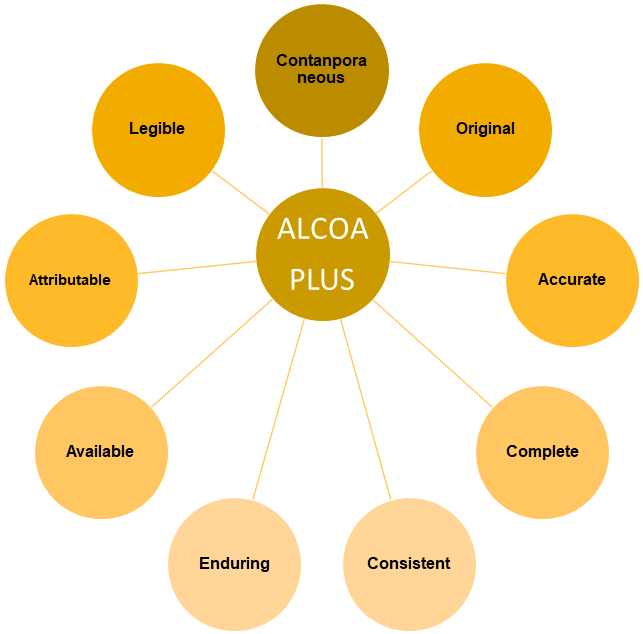
ALCOA+ is a fundamental concept in the pharmaceutical industry, particularly inGood Documentation Practices (GDP) and data integrity. It provides a framework toensure that data generated during the manufacturing, testing, and…
Read moreWhat is Data integrity?

Data integrity refers to the completeness, consistency, and accuracy of data.Complete, consistent, and accurate data should be attributable, legible,contemporaneously recorded, original or a true copy, and accurate (ALCOA). Data integrity…
Read moreWhy R2A using for water analysis?

R2A (Reasoner’s 2A) agar is used for water testing because it is a low-nutrientmedium that supports the growth of a wide variety of heterotrophic bacteria. Theprimary reasons for using R2A…
Read moreWhy does MCB incubate at 42–44 degrees Celsius?

During microbial limit testing MacConkey broth and MacConkey agar are two mediaused for identification of E.Coli which is a pathogen. But MacConkey broth isincubated at 42-44°C and MacConkey agar is…
Read moreHow do you set alert and action limits formula ?
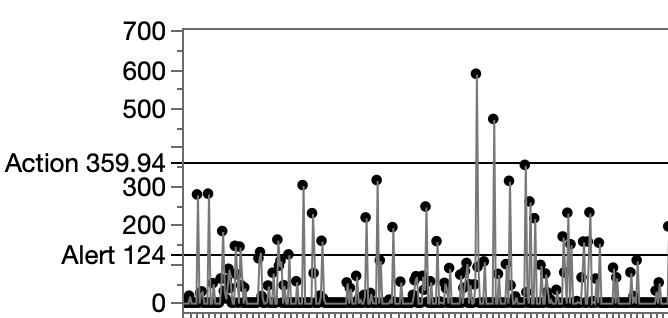
In pharmaceuticals alert and action limits are very important, because these limits areeffective control to the process.Alert and Action limits are in house limits, these limits must be less than…
Read moreExplain about your water sampling?

PrepareBefore collecting samples, identify outlets to sample, type of testing.sampling bin contain schedule, nose mask, sterile bottles, non sterile bottle, TOCbottle, heat resistant gloves, extra bottle and stopwatch. SafetyProtect yourself…
Read moreWhy Calibration is Important?
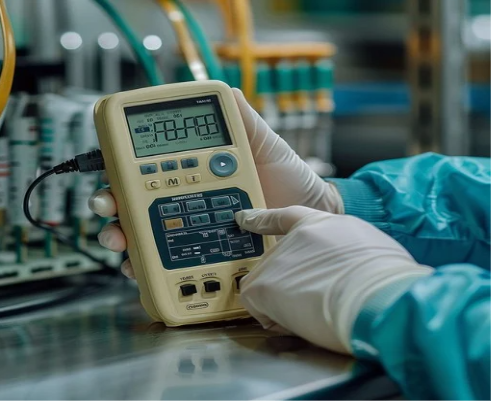
Calibration is the process of checking and adjusting a measuring device to ensure it gives accurate and reliable results. It works by comparing the device’s readings against a known, trusted standard. Whether it’s…
Read more𝗪𝗵𝘆 𝗶𝘀 𝗮 𝟬.𝟰𝟱 𝗺𝗶𝗰𝗿𝗼𝗻 𝗳𝗶𝗹𝘁𝗲𝗿 𝘂𝘀𝗲𝗱 𝗳𝗼𝗿 𝘄𝗮𝘁𝗲𝗿 𝗮𝗻𝗮𝗹𝘆𝘀𝗶𝘀 𝗶𝗻𝘀𝘁𝗲𝗮𝗱 𝗼𝗳 𝗮 𝟬.𝟮𝟱 𝗺𝗶𝗰𝗿𝗼𝗻 𝗳𝗶𝗹𝘁𝗲𝗿?

A 0.45 micron filter is used for water analysis instead of a 0.25 micron filter because it allows for the passage of larger particles while still effectively filtering out smaller…
Read more