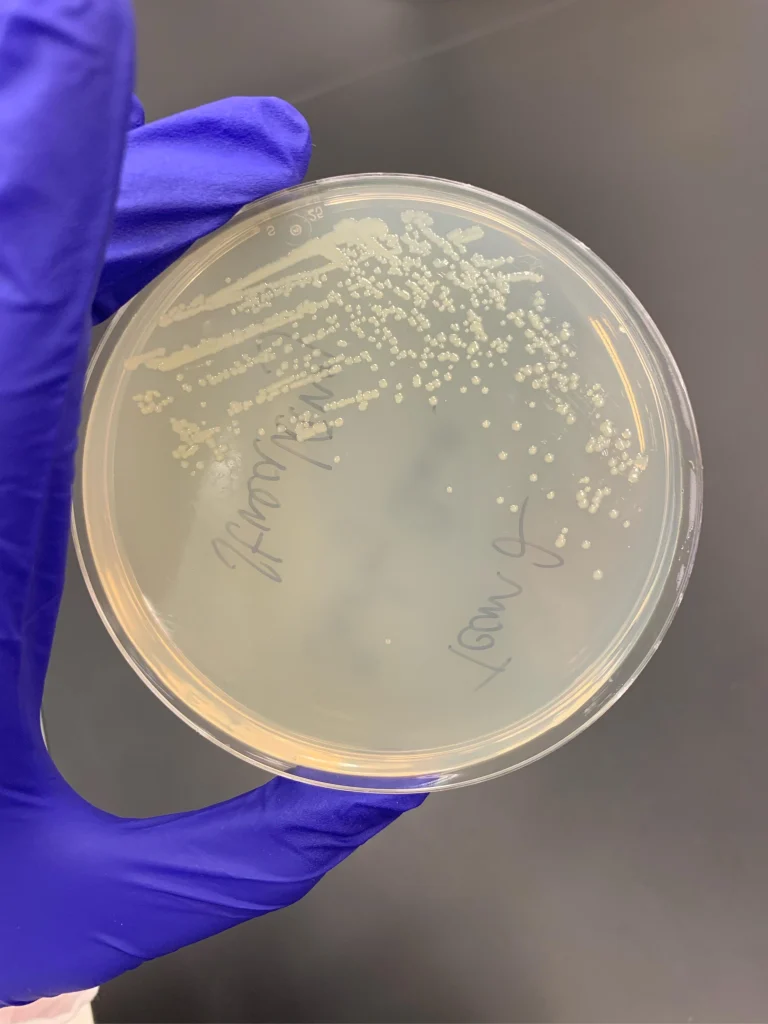
Microbial identification is an important activity in pharmaceutical microbiology laboratories. It helps determine which microorganism is present in a sample, culture or environmental monitoring plate. However, before performing identification, it is essential to check whether the microbial culture is pure.
A pure culture ideally contains only one type of microorganism. If a culture contains two or more different microorganisms, it is considered a mixed culture. Identifying microorganisms from a mixed culture without proper separation can lead to misleading results, incorrect identification and difficulties during investigation.
Therefore, purity checking before microbial identification is an important step in obtaining reliable microbiological results.
What Is Culture Purity?
Culture purity refers to the presence of a single microbial type in a culture, without unwanted microorganisms.
In routine microbiology laboratories, purity is commonly assessed by examining colony morphology on agar plates and performing appropriate subculturing and microscopic examination.
For example, if a plate shows colonies with different colours, sizes, shapes or textures, the culture may contain more than one microorganism.
However, differences in colony appearance do not always indicate different species. A single organism can sometimes show variations in colony morphology depending on culture conditions.
Therefore, further examination may be necessary.
Why Is Purity Checking Important Before Microbial Identification?
1. Prevents Incorrect Microbial Identification
Identification systems are generally designed to evaluate an individual microorganism.
When a mixed culture is used, characteristics from different microorganisms may influence the test results. This can lead to an incorrect or inconclusive identification.
Checking purity helps ensure that the organism selected for identification represents a single microbial type.
2. Helps Detect Mixed Microbial Cultures
During environmental monitoring, microbial limit testing or other microbiological examinations, more than one type of colony may appear on an agar plate.
For example, a plate may contain:
- Cream-coloured bacterial colonies.
- Yellow-pigmented colonies.
- Different-sized colonies with distinct appearances.
These observations may indicate mixed microbial growth and should be evaluated before identification.
3. Improves the Reliability of Identification Methods
Microbial identification may involve:
- Gram staining.
- Biochemical identification tests.
- Automated identification systems.
- MALDI-TOF mass spectrometry. https://pharmavk.com/microbial-identification-by-maldi-tof-ms-principles-and-applications/
- Molecular identification methods. https://pharmavk.com/microbial-identification-using-biochemical-tests/
Using an impure culture may produce conflicting or unreliable findings, depending on the method.
A purity check helps improve the reliability of the identification process.
4. Prevents Misinterpretation of Biochemical Reactions
Biochemical identification tests evaluate microbial characteristics such as enzyme activity, carbohydrate utilization and other metabolic reactions.
If two microorganisms are present, their combined activities may produce confusing or unexpected reactions.
For example, one organism may ferment a particular carbohydrate while another does not. Testing a mixed culture can make the resulting reaction difficult to interpret.
Therefore, purity should be assessed before proceeding with biochemical identification.
5. Supports Reliable Environmental Monitoring Investigations
In pharmaceutical manufacturing, environmental monitoring is used to assess microbial contamination in controlled areas.
When unexpected microbial growth is detected, identification may help determine the organism involved and support contamination investigations.
If the selected colony is not pure, the identification result may not accurately represent the microorganism recovered from the original sample.
Purity checking therefore supports reliable microbial identification and investigation.
How to Check Culture Purity Before Microbial Identification
The following general approach can be used in a microbiology laboratory, subject to the approved SOP and identification method.
Step 1: Examine Colony Morphology
Observe the colonies on the original agar plate.
Check:
- Colony size.
- Shape and margin.
- Colour and pigmentation.
- Surface texture.
- Elevation.
- Distribution across the plate.
Look for distinct colony morphologies that may suggest the presence of multiple microorganisms.
Step 2: Select a Representative Colony
Select a well-isolated colony for further examination using the approved aseptic technique.
If different colony morphologies are present, they should be evaluated separately when required.
Do not assume that selecting one large colony automatically guarantees a pure culture.
Step 3: Perform Subculturing
Transfer the selected colony onto an appropriate fresh culture medium using the approved laboratory procedure.
Subculturing helps obtain well-isolated growth for further examination.
Step 4: Examine the Subcultured Growth
After incubation under the specified conditions, examine the resulting colonies.
Check whether the growth shows a consistent colony morphology or whether different colony types are still present.
If multiple morphologies remain, further isolation may be necessary.
Step 5: Perform Microscopic Examination
Gram staining or another appropriate microscopic examination can provide additional information about the culture.
Observe characteristics such as:
- Gram reaction.
- Cell shape.
- Cell arrangement.
- Presence of visibly different cell types.
Microscopic examination supports purity assessment but does not independently prove that a culture contains only one species.
Step 6: Proceed With Microbial Identification
Once the culture is considered suitable for the selected identification method, proceed according to the validated or approved procedure.
Document the purity assessment and identification results as required.
What Happens If an Impure Culture Is Used for Identification?
Using an impure culture can affect the interpretation and reliability of microbial identification.
| Problem | Possible consequence |
|---|---|
| Presence of multiple microorganisms | Conflicting identification results |
| Mixed biochemical reactions | Incorrect interpretation |
| Different colony types selected together | Unreliable identification |
| Mixed growth in automated systems | Inconclusive or misleading results |
| Inadequate purity assessment | Incorrect investigation conclusions |
The impact depends on the identification method and the microorganisms present.
Practical Laboratory Example
Imagine a microbiologist examining an environmental monitoring plate collected from a pharmaceutical manufacturing area.
After incubation, the plate shows two different colony types:
- Type A: Small, cream-coloured colonies.
- Type B: Larger, yellow-pigmented colonies.
If the microbiologist selects growth containing both colony types and directly processes it for identification, the results may be unreliable.
Instead, the two colony types should be assessed separately, isolated where necessary and checked for purity before identification.
This approach helps determine whether the plate contains two different microorganisms or whether the observed differences are variations of the same organism.
Common Mistakes to Avoid
- Performing microbial identification directly from visibly mixed growth.
- Selecting multiple colony types together for subculturing.
- Assuming that similar colony appearances always indicate the same species.
- Assuming that different colony appearances always indicate different species.
- Ignoring microscopic examination where it is required.
- Proceeding with identification when purity is uncertain.
- Failing to document unusual colony morphology.
- Discarding the original plate before recording relevant observations.
GMP Importance of Culture Purity Checking
In pharmaceutical microbiology, microbial identification results may support environmental monitoring assessments, microbial limit test investigations, sterility test investigations and contamination control activities.
An unreliable identification result can affect the interpretation of microbial recovery and subsequent investigation decisions.
Therefore, laboratories should establish procedures for:
- Examination of colony morphology.
- Selection and isolation of representative colonies.
- Purity assessment before identification.
- Appropriate identification methods.
- Documentation and review of identification results.
Culture purity checking contributes to reliable microbiological data and supports effective contamination investigations.
Frequently Asked Questions (FAQs)
1. What is a pure microbial culture?
A pure microbial culture contains only one type of microorganism. It is obtained through suitable isolation techniques and assessed using appropriate microbiological methods.
2. Why should culture purity be checked before microbial identification?
Purity checking helps prevent interference from other microorganisms and improves the reliability of identification results.
3. Can Gram staining confirm culture purity?
Gram staining can help identify differences in cell morphology and Gram reaction. However, it cannot always confirm species-level purity because different organisms may have similar microscopic characteristics.
4. What should be done if two colony morphologies are observed on an agar plate?
The different colony types should be documented and evaluated separately when appropriate. Representative colonies can be isolated and checked for purity before identification.
5. Can an automated microbial identification system identify mixed cultures accurately?
Automated systems are generally intended for suitable pure isolates. Mixed cultures can produce unreliable or inconclusive results, so purity should be established according to the system manufacturer’s instructions.
6. Is purity checking important in environmental monitoring?
Yes. It helps ensure that microorganisms recovered from environmental monitoring samples are appropriately isolated and identified, supporting reliable contamination assessments.
Conclusion
Purity checking is an essential step before microbial identification because it helps ensure that the microorganism being tested is appropriately isolated. It reduces the risk of mixed-culture interference, improves identification reliability and supports accurate interpretation of microbiological findings.
In pharmaceutical microbiology laboratories, careful colony examination, appropriate subculturing, microscopic assessment and proper documentation help maintain the quality of microbial identification results.
References
- ISO 7218:2024. Microbiology of the food chain — General requirements and guidance for microbiological examinations. Provides general principles for microbiological examination and culture handling.
- UK Standards for Microbiology Investigations (UK SMI). Investigation of culture isolates for identification. Refer to the relevant organism-specific identification procedures and laboratory guidance.
- American Society for Microbiology (ASM). Clinical Microbiology Procedures Handbook. Guidance on isolation, culture purity and microbial identification.
- FDA. Bacteriological Analytical Manual (BAM). Methods and procedures for microbiological isolation and examination. FDA BAM reference