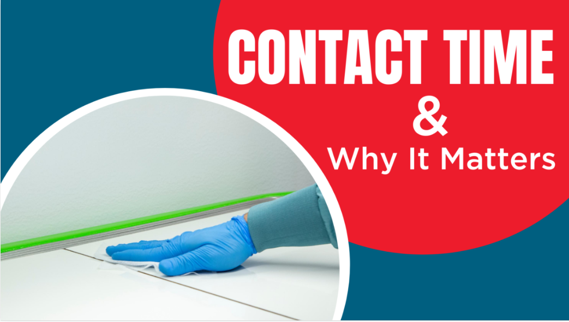
Disinfectant contact time (or wet contact time) is the duration a surface must remain visibly wet with a chemical agent to safely and effectively neutralize microbial contaminants.
In pharmaceutical cleanrooms, maintaining this precise window is critical for chemical reactions to penetrate cell walls, achieve required log reductions, and satisfy strict regulatory compliance.
Why Wet Contact Time Matters
- Complete Microbial Inactivation: Chemical disinfectants require water as a solvent and adequate time to bind, cross cell walls, and destroy target pathogens or spores.
- Regulatory Compliance: Regulatory frameworks mandate that facilities scientifically validate their disinfection practices through coupon studies to prove efficacy under real-world conditions.
- Preventing Product Contamination: Failing to meet the required wet time leaves microbial survivors behind, elevating the risk of batch contamination and patient harm.
- Process Control: Cleanroom airflow, high ventilation rates, and low humidity can cause disinfectants to dry prematurely, halting the chemical kill before it finishes.
Why is contact time important?
Contact time is important because it tells us how long the surface needs to remain visibly wet to kill all of the microorganisms listed on the label effectively. It ensures that the surface has been thoroughly cleaned and disinfected to help prevent infections from spreading.
It also informs others that if the product has been used on a surface, such as a bed, it has been cleaned to the European Norms (EN) standard testing (the highest standards) and is safe to be used by the next user.
The qualification of the disinfectant is based on the wet contact time, log reduction acceptance criteria, disinfectant concentration, water quality, surface types, and the microbial kill. The wet contact time during in vitro testing generally depends on the:
• Microbial kill
• Disinfectant formulation
• Disinfectant concentration
• Cleanroom Surface
The wet contact time and the inactivation of microorganisms in the cleanroom (real-world setting) generally depends on the:
• Temperature and humidity in the cleanroom
• Air exchange in the cleanroom
• Application technique (e.g., vaporization, spraying, mopping, wiping)
• Surface cleanliness
• Time for the disinfectant to dry
What is the timing of disinfectant?
Disinfectant time (or contact/dwell time) is the exact period a surface must remain visibly wet with a disinfectant to successfully kill germs. This duration typically ranges from 30 seconds to 10 minutes depending on the specific product and brand.
A disinfectant is only effective when it is used correctly.
Choosing the right product is important—but allowing it to remain on the surface for the validated contact time is what ensures effective microbial control.
Because in pharmaceutical manufacturing, it’s not just what you spray it’s how long you let it work that protects product quality and patient safety.