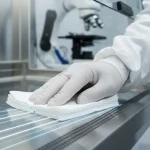
Visual inspection is critical for injectable products because it ensures patient safety by detecting life-threatening particulate contamination and identifying packaging defects like cracks or faulty seals.
Regulatory bodies mandate these checks to guarantee sterility and product integrity prior to administration.
Why is Visual Inspection So Important?
Injectable medicines are administered directly into the body, leaving little room for error.
Even a small visible defect can compromise product quality and patient safety.
Visual Inspection helps identify defects such as:
- Glass particles
- Rubber fragments
- Fibers
- Black or white particles
- Cracks in vials or ampoules
- Improper seals or closures
- Discoloration or cloudiness
- Incorrect fill volume
Where is Visual Inspection Performed?
Visual Inspection is commonly performed for:
- Injectable medicines
- Vaccines
- Intravenous (IV) fluids
- Prefilled syringes
- Ampoules
- Vials
- Biopharmaceutical products
It is a critical quality step before products are approved for distribution.
Each unit of injectable product should undergo one of the following processes as part of manufacturing:
- Manual Visual Inspection (MVI)
- Semi-Automated Visual Inspection (SAVI)
- Automated Visual Inspection (AVI)
The most commonly used process in pharmaceutical manufacturing is Manual Visual Inspection (MVI), which can be developed through a series of standard steps.
As per USP<𝟏𝟕𝟗𝟎>:
- 50-60% of defects should be classified as critical defects,
- 30-35% as major defects and
- 10-15% as minor defects.
Sometimes, the most important quality check is simply looking carefully.
Because in sterile manufacturing, even the smallest visible defect can have the biggest impact on patient safety.