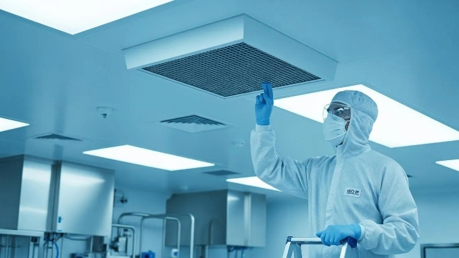
HEPA filter integrity testing is crucial to verify that a filter and its housing are completely sealed and free of microscopic leaks.
It guarantees that the system is actually capturing contaminants rather than letting them bypass the filter, ensuring product quality, staff safety, and strict regulatory compliance.
Testing for leaks in HEPA filters should be performed on a regular basis.
This is important not only to verify the integrity of a critical component of the cleanroom filtration system, but also to meet certain regulatory requirements.
How It Works
The test typically involves introducing an aerosol challenge (like PAO or DOP) upstream of the filter while using specialized photometers or particle counters to scan the downstream face.
This method definitively flags any filter media damage, seal leaks, or housing failures.
Benefits of Routine HEPA Filter Leak Testing
- Minimizing contamination risks
- Ensuring system reliability
- Maintaining product quality
- Reducing downtime
Why “Integrity” Matters
If there is a breach in the integrity of HEPA filter seals, dirty air from the plenum can bypass the filter and enter the critical zone. This is why validation of HEPAfilter systems is a mandatory step in certification for industries ranging from pharmaceuticals to aerospace.
How Often Should You Test Your HEPA Filters?
*Bi-annual testing
*Quarterly testing
*Post-maintenance testing
*After contamination events
Types of HEPA Filter Testing
- Integrity Testing (Leak Testing)
- Airflow Testing
- Particle Count Testing
- Pressure Drop Testing
A cleanroom is only as reliable as the air flowing through it. And that air is only as clean as the HEPA filters protecting it.
HEPA Filter Integrity Testing isn’t just another qualification activity.It’s a critical step in ensuring that sterile medicines are manufactured in a contamination-controlled environment.
Because in pharmaceutical manufacturing, you may never see a tiny leak—but its impact on product quality and patient safety can be enormous.
The Risks of Skipping HEPA Filter Testing
- Product Contamination – Undetected filter leaks can allow airborne particles and microorganisms to contaminate sterile products, leading to batch rejection or product recalls.
- Regulatory Non-Compliance – Failed inspections, GMP observations, and potential production shutdowns due to poor cleanroom performance.
- Higher Operating Costs – Damaged or clogged HEPA filters force HVAC systems to work harder, increasing energy consumption and maintenance costs.
- Employee Safety Risks – Poor air quality can expose employees to harmful contaminants, affecting their health and increasing workplace safety concerns.