Clean steam is vital in pharmaceutical manufacturing to prevent cross-contamination, ensure absolute product sterility, and meet regulatory safety standards.
Unlike standard utility steam, clean steam contains no chemical additives (e.g., corrosion inhibitors) and is meticulously filtered to eliminate biological and particulate matter.
What is clean steam?
Clean steam is used in the pharmaceutical and healthcare industries in processes where the steam or its condensate can come into contact with a pharmaceutical or medical product and cause contamination.
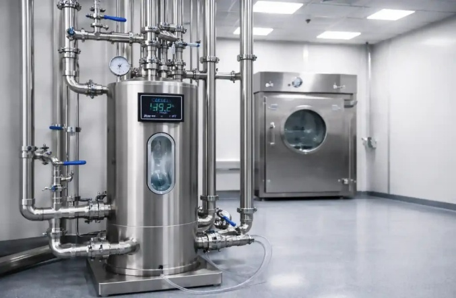
Clean Steam is high-purity steam produced from Water for Injection (WFI) or other suitably purified water using a dedicated clean steam generator. Unlike plant steam, Clean Steam is free from chemicals, corrosion products, and other contaminants that could affect product quality.
Where is Clean Steam Used?
Clean Steam plays a vital role in sterile manufacturing and is commonly used for:
- Sterilizing manufacturing equipment
- Sterilizing tanks and pipelines (SIP – Steam-In-Place)
- Sterilizing filling machines
- Sterilizing filters
- Sterilizing vessels used for injectable products Wherever sterility is critical, Clean Steam helps maintain a contamination-free process
Why Can’t Ordinary Steam Be Used?
Industrial or plant steam may contain:
- Rust particles
- Boiler treatment chemicals
- Mineral deposits
- Corrosion products
- Other impurities
If this steam comes into contact with pharmaceutical equipment or sterile systems, it can compromise product quality and patient safety.
That’s why Clean Steam is essential.
The key characteristics of clean steam include:
- Absence of added chemicals
- Lower levels of contaminants compared to plant steam
- Controlled moisture and dryness
- Suitable for non-critical applications
What Makes Clean Steam Different?
- Utility Steam: Generated from softened or demineralized water. It relies on chemical additives like volatile amines, filming agents, and oxygen scavengers to prevent boiler corrosion and scaling. These chemicals carry over into the steam vapor.
- Clean Steam: Generated using highly purified feedwater—typically Purified Water (PW) or Water for Injection (WFI). It is produced using dedicated clean steam generators made entirely of high-grade stainless steel (usually 316L) to prevent rouging and heavy metal leaching. No chemical additives are permitted at any point in the cycle.
Clean Steam may be invisible, but its role is enormous.