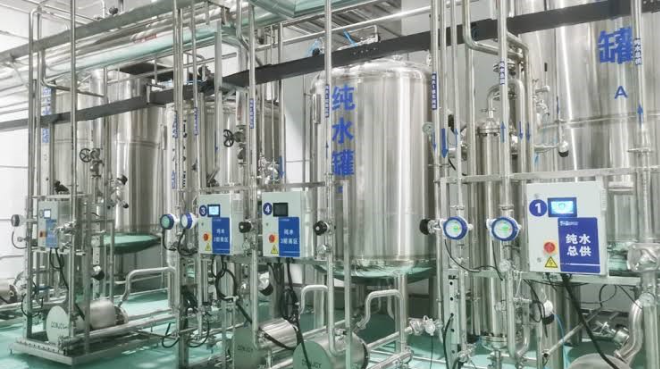
Water system sanitization in pharmaceutical manufacturing uses thermal, chemical, or ozone methods to control microbial proliferation and eliminate biofilms in Purified Water (PW) and Water for Injection (WFI) systems.
Selection depends on system design, operating temperature, and regulatory compliance.
Sanitization methods for pharmaceutical water systems are essential to maintaining this high level of purity. To maintain ultra-high purity water (UHPW) in pharmaceutical processes, effective sanitization methods are essential.
Methods
- Thermal Sanitization
- High-Temperature Operation: Maintains storage and distribution loops continuously at 70°C to 80°C to inhibit microbial growth.
- Periodic Steaming/Hot Water Cycles: Elevates system temperatures intermittently (e.g., >80°C) for a defined hold period.
- Advantages: Leaves no chemical residues and penetrates complex piping effectively.
- Chemical Sanitization
- Oxidizing Agents: Utilizes peracetic acid, hydrogen peroxide, ozone, or chlorine dioxide to destroy cellular components.
- Application Process: Involves introducing the chemical, ensuring contact time, and rinsing until acceptable conductivity and residual limits are met.
- Advantages: Operates safely at ambient temperatures and accommodates a wider array of construction materials.
- Ozone Sanitization
- On-Site Generation: Injects ozone gas continuously or intermittently into ambient water storage and distribution loops.
Destruction & Breakdown: Effectively degrades biofilms, bacteria, and endotoxins before reverting to pure oxygen. - Advantages: Fast acting with minimal chemical handling risks and zero toxic residuals.
Benefits of Water System Sanitization
- Control microbial growth
- Prevent biofilm formation
- Reduce endotoxin risk
- Maintain water quality
- Support GMP compliance
- Extend equipment life
- Protect product quality and patient safety
Best Practices for Water System Sanitization
An effective programme should include:
- Validated sanitization procedures
- Scheduled thermal or chemical sanitization
- Routine microbiological monitoring
- Biofilm prevention measures
- Trend analysis of water quality data
- Preventive maintenance
- Documentation of all sanitization activities