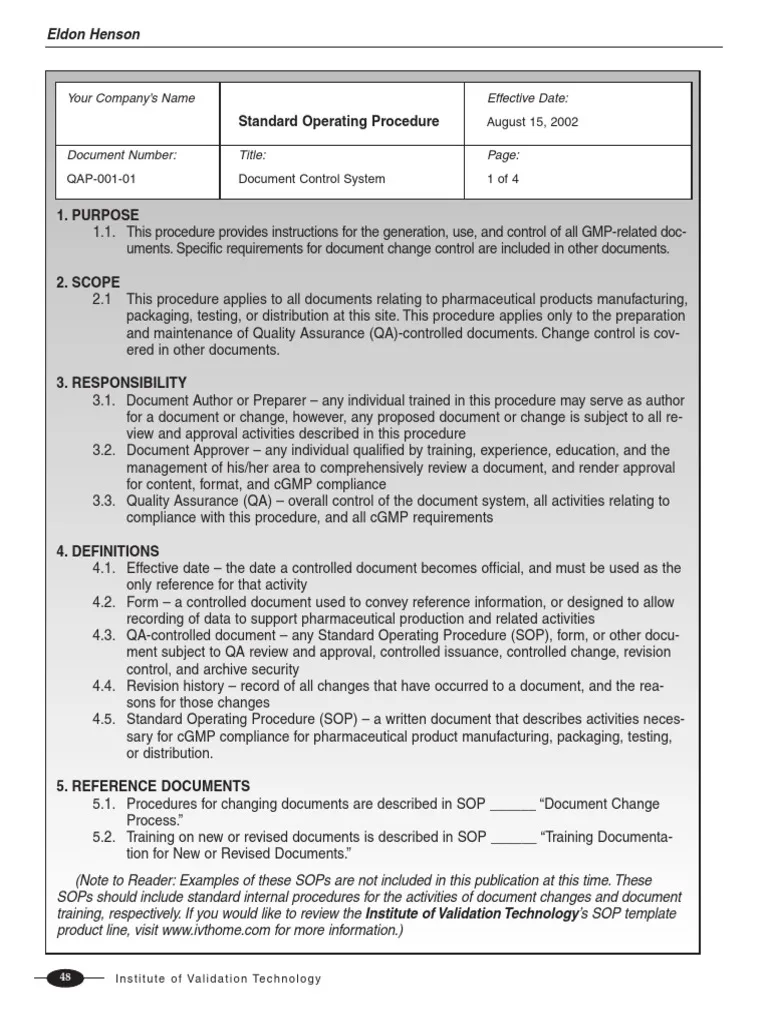
SOP lifecycle in pharmaceutical industry refers to the controlled process used to create, review, approve, issue, implement, revise, and retire Standard Operating Procedures (SOPs). SOPs are important GMP documents because they provide approved instructions for performing activities consistently, in line with established quality requirements.
An effective SOP lifecycle in pharmaceutical industry practice helps ensure employees follow the current approved procedure, receive appropriate training, and don’t keep using obsolete documents. This article walks through the key stages of SOP management, from initial drafting and approval to training, periodic review, revision, and retirement.
What Is an SOP in the Pharmaceutical Industry?
A Standard Operating Procedure (SOP) is an approved written instruction describing how a specific activity should be performed. In pharmaceutical manufacturing, SOPs may cover equipment cleaning, sampling, environmental monitoring, batch record review, deviation management, CAPA, change control, laboratory testing, document control, and cleaning and sanitation.
The purpose of an SOP is to promote consistency, reduce variability, and ensure activities are performed according to approved requirements.
https://pharmavk.com//cleaning-validation-in-pharma-critical-guide-to-maco-hbel-pde/
Why Is the SOP Lifecycle in Pharmaceutical Industry Important?
A procedure doesn’t stop mattering once it’s written and approved the document has to stay controlled throughout its entire period of use. A well-managed SOP lifecycle in pharmaceutical industry practice helps organizations:
- Maintain current and approved procedures
- Prevent the use of obsolete SOPs
- Ensure relevant personnel receive training
- Maintain document traceability and support consistent operations
- Manage procedural changes in a controlled manner
- Support GMP compliance and inspection readiness
Without proper document control, employees may follow outdated instructions, creating inconsistency and potential quality risk.
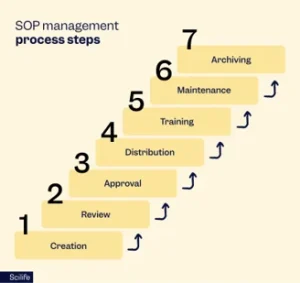
The 7 Stages of the SOP Lifecycle in Pharmaceutical Industry
The SOP lifecycle can be divided into seven key stages: creation and drafting, review, approval, issuance and implementation, training, periodic review and revision, and retirement and archival. The exact workflow may vary depending on the company’s pharmaceutical quality system and document-control procedure.
Stage 1: SOP Creation and Drafting
The first stage is identifying the need for a new procedure or updating an existing one. An SOP may be required when a new process is introduced, new equipment is installed, a regulatory requirement changes, a deviation identifies a procedural gap, a CAPA requires a procedural update, a process is transferred or modified, or an existing SOP is unclear or outdated. The document author should understand the process and work with relevant subject matter experts.
https://pharmavk.com/Why-is-CAPA-Correct/
What Should an SOP Include?
Depending on the document-control procedure, an SOP may include: SOP title, SOP number or document ID, version/revision number, effective date, purpose, scope, responsibilities, definitions, materials or equipment where applicable, the procedure itself, references, revision history, and approval details. The SOP should be clear, specific, and written so trained personnel can follow it consistently.
Stage 2: SOP Review
Before approval, the draft SOP should be reviewed by appropriate personnel — process owners, subject matter experts, Quality Assurance, department heads, or other relevant functions. The goal is to verify the procedure is technically accurate, complete, practical, and consistent with applicable requirements.
Key Questions During SOP Review
Reviewers may ask: Is the procedure accurate? Are responsibilities clearly defined? Can it be followed as written? Are important controls included? Does it conflict with another approved document? Are references current? Does the change affect product quality or compliance? Comments and revisions should flow through the organization’s approved document-control process.
Stage 3: SOP Approval
An SOP should be formally approved before it becomes effective, confirming that authorized personnel have reviewed and accepted it for implementation. Depending on the quality system, approval may involve the document author, department head, process owner, Quality Assurance, or other designated approvers. Only the approved version should be issued for operational use, with appropriate document identification and version control.
Stage 4: SOP Issuance and Implementation
After approval, the SOP is issued through the organization’s controlled document-management process and made available to the personnel who need it. Important controls include controlled document access, effective date, version identification, distribution control, removal of obsolete versions, and availability at the point of use where required. The effective date should allow enough time for implementation activities, including training.
Stage 5: SOP Training
Training is a critical part of the SOP lifecycle in pharmaceutical industry practice — employees should understand the procedure before performing the activity independently. Training may include reading and acknowledgement, instructor-led training, on-the-job training, demonstration of practical activities, and assessment of understanding where appropriate. The type of training should match the complexity and criticality of the procedure.
https://pharmavk.com//what-is-data-integrity/
Why Is SOP Training Important?
Simply making an SOP available doesn’t demonstrate that personnel understand how to perform it. For critical or complex activities, training effectiveness may need to be assessed. Training records should show who was trained, which SOP and version, the training date, the trainer or method, and assessment results if required.
Stage 6: Periodic Review and SOP Revision
An SOP should be reviewed according to the organization’s document-management process. A review may be triggered by scheduled periodic review, process or equipment changes, regulatory updates, deviations, CAPA, audit observations, changes in responsibilities, or process improvements. If changes are required, the SOP should be revised through the approved document-control and, where applicable, change-control process.
Revision Control
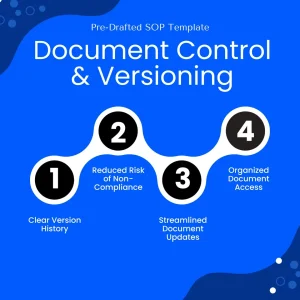
Each revision should clearly identify the current version, and the organization should maintain a revision history explaining significant changes. For example:
| Version | Change | Status |
|---|---|---|
| 01 | Initial issue | Obsolete |
| 02 | Updated sampling procedure | Obsolete |
| 03 | Added revised training requirements | Current |
Revision control helps personnel identify the current approved procedure and understand the document’s history.
Stage 7: SOP Retirement and Archival
An SOP may eventually become unnecessary — when a process is discontinued, equipment is permanently removed, a procedure is replaced, or multiple documents are consolidated. A retired SOP should be formally withdrawn according to the approved document-control procedure, though obsolete documents may still need retention for the required record-retention period. Archived SOPs should be clearly marked obsolete and protected from unintended use.
SOP Lifecycle Flow
The SOP lifecycle in pharmaceutical industry practice can be summarized as:
Need Identified → Drafting → Review → Approval → Issuance → Training → Implementation → Periodic Review → Revision or Retirement
This lifecycle should be supported by appropriate document control at every stage.
SOP Creation vs. SOP Revision
| Activity | SOP Creation | SOP Revision |
|---|---|---|
| Purpose | Introduce a new procedure | Update an existing procedure |
| Trigger | New process or requirement | Change, review, CAPA, or improvement |
| Previous version | Usually not applicable | Existing version is evaluated |
| Training | Required before implementation | Required based on impact |
| Version control | Initial version issued | New revision replaces the previous one |
| Obsolete document | Not applicable | Previous version withdrawn and controlled |
Common Mistakes in SOP Management
- Writing procedures that are difficult to follow
- Using unclear responsibilities
- Copying generic procedures without considering the actual process
- Approving SOPs without adequate technical review
- Training employees after the SOP becomes effective
- Allowing obsolete versions to remain at the workplace
- Failing to assess the impact of changes
- Missing periodic reviews
- Updating procedures without revision control
- Maintaining incomplete training records
These issues can lead to inconsistent practices and document-control observations during audits or inspections.
Best Practices for SOP Lifecycle Management
- Define a clear document-control procedure
- Assign appropriate authors and reviewers
- Use a standard SOP template
- Ensure technical and quality review before approval
- Maintain clear version control
- Define an appropriate effective date
- Train affected personnel before implementation
- Remove obsolete documents from active use
- Review SOPs periodically or when changes occur
- Assess training requirements after each revision
- Maintain document and training records
- Retain obsolete documents according to approved retention requirements
SOP Lifecycle and Change Control
SOP revision may link to change control when a proposed change affects an established process, system, equipment, or quality requirement. Not every editorial correction needs a formal change-control process, but changes that could affect product quality, compliance, validation status, or operational controls should be assessed according to the organization’s pharmaceutical quality system. This keeps changes controlled and traceable.
Frequently Asked Questions
What is the SOP lifecycle?
The SOP lifecycle is the controlled process through which a Standard Operating Procedure is created, reviewed, approved, issued, implemented, revised, and eventually retired or archived.
Why is SOP training required?
Training helps ensure relevant personnel understand the current approved procedure before performing the activity independently.
How often should an SOP be reviewed?
Review frequency should follow the organization’s approved document-management procedure and applicable requirements. An SOP should also be reviewed when significant changes affect the procedure.
What happens to an obsolete SOP?
An obsolete SOP should be withdrawn from active use, clearly identified as obsolete, and retained or archived according to the organization’s record-retention requirements.
Does every SOP change require employee retraining?
Training requirements should be assessed based on the nature and impact of the change. Significant procedural changes may require retraining before the revised SOP becomes effective.
Conclusion
The SOP lifecycle in pharmaceutical industry practice is more than writing and approving a document. Effective SOP management requires controlled creation, technical review, approval, implementation, personnel training, periodic review, revision, and proper archival. A well-managed lifecycle helps ensure employees work according to the current approved procedure and that changes are introduced in a controlled, traceable manner — strengthening consistency, quality, and GMP compliance.
References