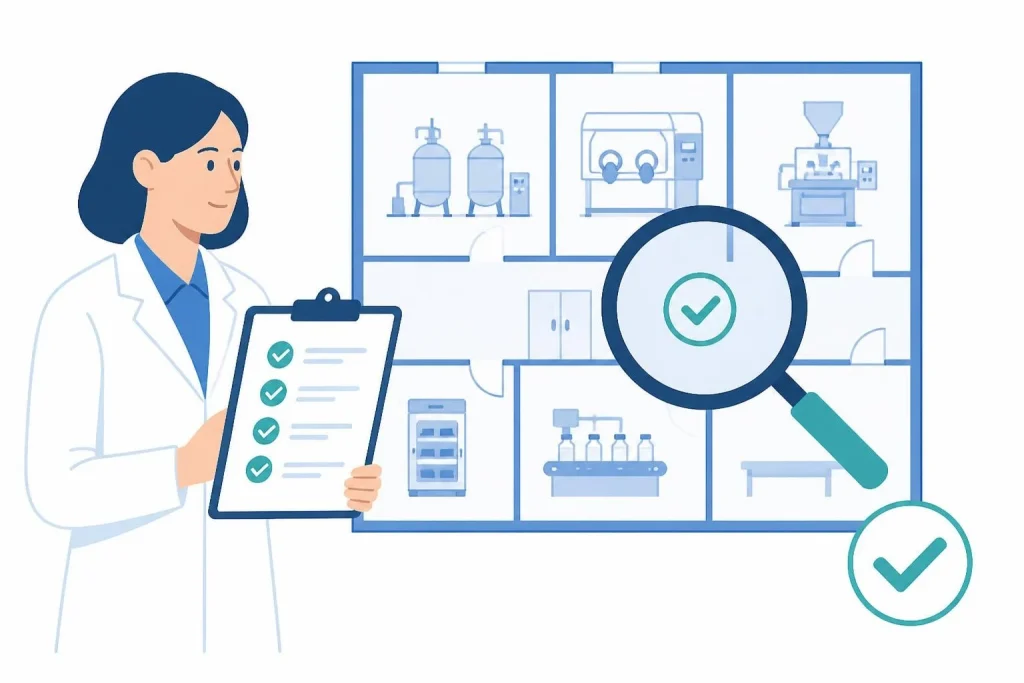
An internal audit, also called a self-inspection, is a planned review of a company’s own operations to check compliance with GMP, procedures, and regulations. It helps a company find weaknesses before an inspector does.
1. Why Internal Audits Matter
- They confirm that daily work follows approved procedures.
- They find gaps and risks early.
- They support continuous improvement.
- They prepare the site for regulatory inspections and customer audits.
2. Planning the Audit
A yearly audit schedule covers all areas, such as production, warehouse, quality control, utilities, and documentation. Areas with higher risk, or with past problems, are audited more often. Each audit has a defined scope, a checklist, and a team of trained auditors who are independent of the area being audited.
3. Carrying Out the Audit
Opening meeting: the team explains the scope and schedule.
Evidence gathering: auditors review documents, observe operations, and talk to staff. They compare what they see with SOPs and GMP requirements.
Closing meeting: the team shares its findings and agrees on the next steps.
4. Classifying Findings
- Critical: a serious breach that could harm patients or product quality.
- Major: a significant departure from GMP or procedures.
- Minor: a small issue with low risk.
- Observation: an opportunity for improvement.
5. Reporting and Follow-Up
The auditor writes a report describing the findings. The audited area responds with a plan and, where needed, a CAPA with owners and due dates. QA tracks these actions and checks that they are completed and effective.
6. Tips for Effective Audits
- Use trained, objective auditors
- Base findings on facts and clear references
- Follow up on past findings
- Share lessons learned across departments
Conclusion
Internal audits are a valuable tool for staying compliant. When they are planned well and followed up properly, they strengthen the quality system and build confidence ahead of any external inspection.
This article is for general educational purposes. Always follow your own company procedures and applicable regulations.