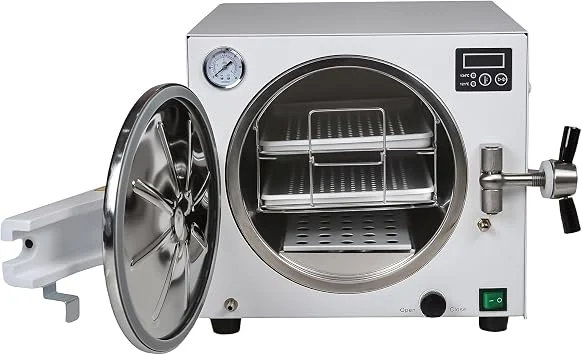
Autoclave sterilization depends on effective saturated steam contact with all surfaces of the materials being sterilized. However, what happens when air remains trapped inside an autoclave load during a sterilization cycle?
Trapped air is a critical factor that can interfere with steam penetration, heat transfer, and sterilization effectiveness. Even when the autoclave displays the required temperature and pressure, the presence of residual air can prevent certain areas of the load from reaching the necessary sterilization conditions.
In pharmaceutical microbiology laboratories, understanding the impact of trapped air is essential for maintaining sterilization reliability, preventing contamination risks, and ensuring compliance with Good Manufacturing Practices (GMP).
https://pharmavk.com/how-do-you-ensure-that-every-autoclave-cycle-is-properly-sterilized-or-not/
- Why Is Air Removal Important During Autoclaving?
An autoclave uses saturated steam under pressure to achieve moist-heat sterilization. For effective sterilization, steam must reach all surfaces of the materials being processed.
Air removal is important because:
- Air acts as a barrier to direct steam contact with the load.
- Air pockets interfere with uniform heat distribution.
- Residual air can reduce the effectiveness of heat transfer.
- Air trapped inside containers, tubing, or porous materials can prevent adequate steam penetration.
Unlike saturated steam, trapped air does not condense and release latent heat in the same way. Therefore, its presence can create conditions that compromise sterilization.
- How Does Trapped Air Affect Steam Temperature?
When air remains inside the autoclave chamber or within the load, it mixes with the incoming steam.
This creates a mixture of air and water vapour rather than pure saturated steam.
At a given total pressure, the partial pressure of steam is lower when air is present. Consequently, the steam temperature may be lower than expected for that total pressure.
For example, an autoclave pressure reading may appear acceptable, but the actual steam conditions surrounding the load may not provide the required temperature for effective sterilization.
This is why pressure readings alone cannot confirm successful sterilization.
https://pharmavk.com/why-is-autoclave-sterilization-carried-out-at-121c-for-15-minutes/
- What Happens When an Autoclave Load Contains Trapped Air?
Trapped air can create several problems during the sterilization cycle.
- Incomplete Steam Penetration
Air pockets prevent steam from reaching certain surfaces of the load. This is particularly problematic in:
- Closely packed glassware.
- Porous materials and laboratory garments.
- Bottles with narrow openings.
- Tubing and hollow equipment.
- Densely packed microbiological waste.
As a result, some areas may remain inadequately exposed to saturated steam.
- Uneven Heat Distribution
Air acts as a thermal barrier and reduces efficient heat transfer. Consequently, different parts of the load may heat at different rates.
While the chamber temperature may reach the programmed set point, the coldest location within the load may take longer to reach the required sterilization temperature.
- Inadequate Microbial Inactivation
Effective moist-heat sterilization requires sufficient exposure to the validated combination of temperature, pressure and time.
When trapped air interferes with steam contact, microorganisms and resistant bacterial spores may survive in inadequately heated areas.
This can result in an ineffective sterilization cycle and potential contamination risks during subsequent laboratory activities.
- False Assurance from Pressure and Temperature Readings
One important concern is that the autoclave display may show acceptable pressure and temperature values even when air removal is inadequate.
Pressure alone cannot establish that saturated steam has reached every part of the load. Therefore, cycle monitoring and validation must consider actual sterilization conditions and air-removal effectiveness.
- How Does Trapped Air Enter or Remain Inside an Autoclave Load?
Several operational and equipment-related factors can contribute to incomplete air removal.
Common causes include:
- Overloading: Excessive loading restricts steam circulation and creates spaces where air can remain trapped.
- Improper loading arrangement: Closely placed containers or incorrectly positioned materials can obstruct steam penetration.
- Insufficient air removal: Inadequate vacuum pulses or an ineffective gravity-displacement process can leave residual air.
- Vacuum pump malfunction: Poor vacuum performance can affect air removal during pre-vacuum cycles.
- Door gasket leakage: Damaged seals may allow air to enter the chamber.
- Blocked drain or air discharge line: Restricted drainage can interfere with the removal of air and condensate.
- Poor steam quality: Non-condensable gases present in the steam supply can compromise sterilization conditions.
Identifying these factors is important when investigating an autoclave cycle failure.
- How Can Trapped Air Be Detected?
Autoclave performance should be evaluated using appropriate physical, chemical and biological monitoring methods.
Bowie-Dick Test
The Bowie-Dick test is used in suitable pre-vacuum sterilizers to evaluate air removal and steam penetration in a standardized test pack.
- Uniform colour change indicates acceptable test performance.
- Uneven colour development or a localized uncoloured area may indicate residual air or inadequate steam penetration.
The test is generally performed daily before processing loads in applicable pre-vacuum sterilizers, according to the approved procedure.
Chemical Indicators
Chemical indicators provide evidence of exposure to specified sterilization conditions. They can help identify potential problems with steam penetration when appropriately selected and placed.
However, a chemical indicator does not independently establish sterility.
Biological Indicators
Biological indicators containing resistant spores of Geobacillus stearothermophilus are used to evaluate the effectiveness of moist-heat sterilization processes.
A positive biological indicator result may indicate inadequate microbial inactivation and requires investigation.
Biological indicators should be used at locations and frequencies established through the validated monitoring programme.
- How Can Pharmaceutical Microbiology Laboratories Prevent Trapped Air?
Preventing air entrapment requires proper equipment operation, loading practices and routine monitoring.
The following practices help maintain effective sterilization:
- Follow the approved SOP for autoclave operation and loading.
- Avoid overloading the sterilization chamber.
- Maintain adequate spacing between materials to facilitate steam circulation.
- Select the appropriate validated cycle for the load type.
- Ensure that bottles and containers are positioned according to the approved loading configuration.
- Verify the performance of vacuum pumps, door gaskets, valves and drain lines.
- Perform routine air-removal tests where applicable.
- Monitor physical parameters, chemical indicators and biological indicators as specified.
- Maintain autoclave calibration, preventive maintenance and periodic requalification records.
The loading pattern should remain consistent with the configuration established during sterilization validation.
- What Should Be Done If Trapped Air Is Suspected?
If an air-removal test fails or there is evidence of inadequate steam penetration, the affected sterilization process should not be considered acceptable.
The laboratory should follow its approved deviation and investigation procedure.
A typical investigation includes:
- Review the autoclave cycle printout, including temperature, pressure, exposure time and relevant vacuum parameters.
- Examine the loading arrangement and verify whether the correct sterilization cycle was selected.
- Review Bowie-Dick or other applicable air-removal test results.
- Inspect the vacuum system, door seals, valves and drain lines.
- Assess the impact on the affected load.
- Document the investigation and implement appropriate corrective and preventive actions (CAPA).
- Repeat testing and demonstrate satisfactory performance before returning the equipment to routine use, as required by the approved procedure.
Affected materials should remain on hold until their suitability has been assessed and formally dispositioned by authorized personnel. Simply repeating the sterilization cycle without investigating the cause is not an adequate corrective action.
- Why Is Air Removal Important in Autoclave Validation?
Autoclave validation demonstrates that the sterilization process consistently achieves the required performance under defined operating conditions.
Air removal is an important part of this assessment because inadequate air elimination can compromise steam penetration and temperature distribution.
Validation and routine monitoring should consider:
- Air-removal effectiveness.
- Temperature distribution and heat penetration.
- Correlation between pressure and temperature.
- Equilibration time and exposure time.
- Biological indicator results, where applicable.
- Load configuration and worst-case loading conditions.
- Routine cycle acceptance criteria.
For porous loads processed in applicable pre-vacuum sterilizers, air-removal testing is particularly important. WHO GMP guidance recommends an air-removal test cycle, normally performed daily, or an appropriate air detector system.
Therefore, successful validation must demonstrate that the selected cycle can consistently remove air and deliver the required sterilization conditions throughout the intended load.
- Conclusion
Trapped air in an autoclave load is more than an operational inconvenience; it is a potential cause of sterilization failure. Residual air can restrict steam penetration, interfere with heat transfer and prevent certain areas of the load from achieving the required sterilization conditions.
For pharmaceutical microbiology laboratories, effective air removal, correct loading practices, routine equipment maintenance and appropriate sterilization monitoring are essential for ensuring reliable results.
Remember: Achieving the required chamber temperature and pressure does not necessarily mean that every part of the load has been effectively sterilized. Proper steam penetration and air removal are equally important.
Frequently Asked Questions (FAQs)
- Why is trapped air a problem during autoclaving?
Trapped air acts as a barrier to steam penetration and heat transfer, potentially preventing effective sterilization.
- Can an autoclave show 121°C even when air is trapped?
Yes. The chamber may display the programmed temperature, but residual air can create temperature variations within the load.
- Which test is commonly used to detect inadequate air removal?
The Bowie-Dick test is commonly used to evaluate air removal and steam penetration in applicable pre-vacuum sterilizers.
- Which microorganism is used in biological indicators for moist-heat sterilization?
Geobacillus stearothermophilus is commonly used because of its resistance to moist heat.
- Does passing the Bowie-Dick test confirm sterility of the load?
No. It evaluates air removal and steam penetration under standardized test conditions. It does not independently establish the sterility of an actual processed load.
References
- World Health Organization (WHO). (2022). WHO Good Manufacturing Practices for Sterile Pharmaceutical Products. WHO Technical Report Series No. 1044, Annex 2. WHO Technical Report Series
- Centers for Disease Control and Prevention (CDC). Guideline for Disinfection and Sterilization in Healthcare Facilities – Steam Sterilization. CDC Guidelines
- U.S. Food and Drug Administration (FDA). (2004). Guidance for Industry: Sterile Drug Products Produced by Aseptic Processing – Current Good Manufacturing Practice. FDA Guidance
- European Commission. EudraLex Volume 4, EU Guidelines for Good Manufacturing Practice, Annex 1: Manufacture of Sterile Medicinal Products (2022). EU GMP Guidelines
- ISO 17665:2024. Sterilization of Health Care Products – Moist Heat – Requirements for the Development, Validation and Routine Control of a Sterilization Process for Medical Devices