Culture media provide the nutrients and suitable conditions required for microorganisms to grow during pharmaceutical microbiological testing. However, preparing the correct medium is not enough. Its temperature at the time of use is also important.
In pharmaceutical microbiology laboratories, culture media may need to be cooled, warmed or equilibrated to a specified temperature before use, depending on the test method. Using media that are too hot or too cold can affect microbial recovery, agar solidification, colony development and test performance.
This article explains why bringing culture media to the required temperature before use is an important laboratory practice.
What Does Bringing Culture Media to the Required Temperature Mean?
It means allowing prepared or sterilized culture media to reach the temperature specified in the approved test method or manufacturer’s instructions before using them.
The required temperature depends on the type and application of the medium.
For example:
- Molten agar: Usually cooled to approximately 45–50°C before pouring, depending on the method.
- Prepared agar plates: Used or equilibrated under the temperature conditions specified in the procedure.
- Liquid media: Brought to the temperature required by the test method before inoculation or use.
These temperatures are not interchangeable. Always follow the approved procedure and media manufacturer’s instructions.
Why Is Temperature Control Important Before Using Culture Media?
1. Prevents Heat Damage to Microorganisms
If molten agar is too hot when mixed with a microbial suspension, excessive heat can damage or reduce the viability of microorganisms.
This may result in lower microbial recovery and inaccurate colony counts, particularly during pour plate testing.
Cooling molten agar to the specified temperature before mixing helps minimize heat-related damage.
2. Maintains the Performance of Culture Media
Some culture media contain heat-sensitive ingredients, including antibiotics, vitamins, blood components and other supplements.
Adding these ingredients while the medium is excessively hot may affect their activity.
Therefore, the medium should be cooled to the temperature recommended for the specific supplement before it is added.
3. Ensures Proper Agar Solidification
Agar changes from a liquid to a gel as it cools.
If molten agar becomes too cold before pouring, it may start solidifying inside the container. This can make dispensing difficult and result in uneven distribution across Petri plates.
Maintaining the recommended pouring temperature helps ensure that the medium remains sufficiently fluid for uniform pouring.
4. Supports Uniform Distribution of Microorganisms
During pour plate testing, the microbial suspension is mixed with molten agar before the medium solidifies.
If the agar temperature is unsuitable, it may solidify too quickly or affect microbial viability.
Using the recommended temperature supports proper mixing and more uniform distribution of microorganisms throughout the medium.
5. Helps Maintain Consistent Test Conditions
Temperature differences between media, samples and laboratory conditions can influence the performance of microbiological procedures.
Bringing media to the required temperature helps maintain consistency between test preparations and reduces avoidable variations during testing.
What Happens If Culture Media Are Used at the Wrong Temperature?
| Temperature-related issue | Possible consequence |
|---|---|
| Molten agar is too hot | Reduced microbial viability |
| Molten agar is too cold | Premature solidification |
| Heat-sensitive supplements are added too early | Reduced supplement activity |
| Media are used without required equilibration | Variation in test conditions |
| Agar is held hot for too long | Possible deterioration of medium performance |
These effects depend on the medium composition, test method and exposure conditions.
Practical Example: Cooling Molten Agar Before Pouring Plates
Consider a microbiology laboratory performing microbial enumeration using the pour plate technique.
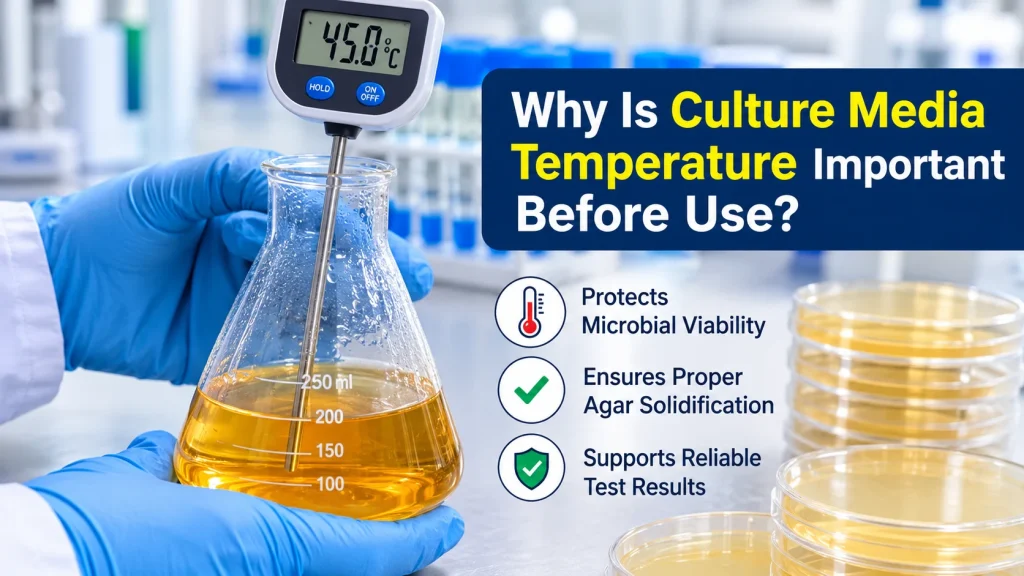
After sterilization, the molten agar is cooled in a controlled water bath to the temperature specified in the test procedure.
For example, the FDA Bacteriological Analytical Manual describes using plate count agar cooled to 45 ± 1°C for a particular aerobic plate count procedure.
The laboratory then follows these general steps:
- Remove the sterilized medium from the autoclave using appropriate protective equipment.
- Allow the medium to cool under controlled conditions.
- Monitor the temperature using a suitable, calibrated or verified temperature-measuring device.
- Confirm that the medium has reached the required temperature.
- Mix the sample and medium according to the approved method.
- Pour the medium aseptically into sterile Petri plates.
- Allow the agar to solidify before proceeding with incubation.
Important: The 45 ± 1°C example applies to the specific FDA method cited. It should not be treated as a universal temperature for every pharmaceutical microbiological test.
Common Mistakes to Avoid
- Pouring molten agar immediately after autoclaving without checking its temperature.
- Allowing molten agar to cool until it begins to solidify.
- Adding heat-sensitive supplements while the medium is excessively hot.
- Using an unverified thermometer or temperature probe.
- Keeping molten agar at elevated temperatures for longer than permitted.
- Repeatedly heating or remelting media without an approved procedure.
- Using refrigerated prepared plates without the required equilibration, where applicable.
GMP Importance of Culture Media Temperature Control
In pharmaceutical microbiology, culture media must be suitable for their intended use and capable of supporting the required microbial growth.
Incorrect temperature handling may affect microbial recovery and compromise the reliability of microbiological test results.
Therefore, laboratories should establish documented procedures covering:
- Temperature requirements for different media.
- Controlled cooling and warming practices.
- Monitoring and recording of temperatures, where required.
- Maximum permitted holding time for molten media.
- Addition of heat-sensitive supplements.
- Media quality control, including growth promotion testing where applicable.
Growth promotion testing helps demonstrate that the medium can support the growth of the specified test microorganisms under the defined conditions.
Frequently Asked Questions (FAQs)
1. Why should molten agar be cooled before pouring plates?
Molten agar is cooled to the specified pouring temperature to reduce heat-related damage to microorganisms and maintain suitable handling and pouring characteristics.
https://pharmavk.com/why-does-the-media-cool-to-45-degrees-before-pouring-the-plates/
2. What happens if molten agar is too hot during pour plate testing?
Excessive heat can reduce microbial viability, resulting in lower recovery and potentially inaccurate microbial counts.
3. Why should heat-sensitive supplements be added after cooling the medium?
High temperatures may reduce the activity of certain supplements. Cooling the medium to the recommended temperature helps preserve their intended function.
4. Can culture media be used immediately after autoclaving?
Not always. Many media require controlled cooling or equilibration before use. The correct procedure depends on the medium and its intended application.
5. Is 45–50°C the required temperature for all agar media?
No. This range is commonly used for certain molten agar pouring procedures, but the actual temperature must follow the applicable method and manufacturer’s instructions.
Conclusion
Bringing culture media to the required temperature before use is an important step in pharmaceutical microbiology. It helps protect microbial viability, maintain the activity of heat-sensitive ingredients, ensure proper agar handling and support consistent microbiological testing.
A simple temperature check before using culture media can help prevent avoidable laboratory errors and improve the reliability of test results.
References
- U.S. Food and Drug Administration (FDA). Bacteriological Analytical Manual, Chapter 3: Aerobic Plate Count. Includes instructions for tempering plate count agar to 45 ± 1°C for the specified method. Read FDA method
- U.S. Food and Drug Administration (FDA). BAM Media M163: Tryptone Salt Agar. Describes cooling the medium to 45–50°C before pouring plates. Read the method
- National Centre for Disease Control (NCDC), India. Guidance on Media and Disks. Includes guidance on cooling Mueller-Hinton agar after autoclaving. Read guidance
- ISO 8199:2018. Water quality — General requirements and guidance for microbiological examinations by culture.