In pharmaceutical manufacturing, monitoring test results over time is essential for maintaining consistent product quality and identifying potential problems before they become serious. Even when a test result meets its approved specification, an unusual change from historical performance may require further evaluation.
Out-of-Trend (OOT) results in pharma refer to results that differ unexpectedly from an established pattern or historical data, even though they may remain within the specified acceptance limits. Recognizing these results helps pharmaceutical companies identify process variation, laboratory issues, equipment problems, and emerging quality risks.
OOT investigation is an important part of pharmaceutical Quality Assurance (QA), Quality Control (QC), process monitoring, and the Pharmaceutical Quality System (PQS). It supports data trending, risk-based decision-making, and continual improvement.
This article explains what OOT results mean, how they differ from Out-of-Specification (OOS) results, how investigations are conducted, and how pharmaceutical professionals can document and evaluate OOT findings.
What Is an Out-of-Trend (OOT) Result?
An Out-of-Trend (OOT) result is a test result that shows an unexpected deviation from a previously established pattern, historical performance, or statistically defined trend.
The result may still fall within the approved specification, but it may indicate a change that deserves investigation.
For example, suppose a pharmaceutical product has consistently shown an assay result between 98% and 100% over several batches. A new batch produces an assay result of 95.5%, while the approved specification is 95% to 105%.
Although the result meets the specification, the noticeable change from historical performance may trigger an OOT assessment according to the company’s approved procedure.
OOT identification criteria can vary depending on the product, process, test method, historical data, and established trending rules. Not every unusual result automatically constitutes a formal OOT; the applicable procedure should define how potential trends are identified and assessed.
Why Are OOT Results Important in Pharma?
OOT results can provide early warning of changes in manufacturing or testing performance.
They help pharmaceutical companies:
- Identify unusual patterns before results exceed specifications.
- Detect gradual changes in manufacturing processes.
- Recognize potential equipment or instrument performance issues.
- Identify changes in raw materials or suppliers.
- Evaluate recurring laboratory variations.
- Support continued process verification and product quality review.
- Strengthen investigations, CAPA, and risk management.
- Maintain consistent product quality throughout the product lifecycle.
An OOT result does not automatically mean that a batch is defective. However, it should not be ignored simply because the result meets specification.
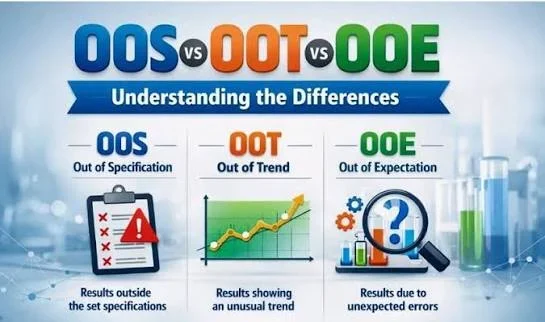
What Is the Difference Between OOT and OOS?
OOT and OOS are related quality concepts, but they identify different types of concerns.
Out-of-Specification (OOS) refers to a result that falls outside an established specification or acceptance criterion. FDA’s OOS guidance explains how such results should be investigated in pharmaceutical production.
Out-of-Trend (OOT) refers to an unexpected pattern or result relative to historical data or an established trend. An OOT result may remain within specification.
| Comparison | OOT result | OOS result |
|---|---|---|
| Full form | Out-of-Trend | Out-of-Specification |
| Main concern | Unexpected change from historical performance or an established trend | Result outside an established specification or acceptance criterion |
| Can the result meet specification? | Yes, it often can | No, by definition |
| Typical trigger | A predefined trend rule or an unusual result identified during review | A result outside an applicable specification or acceptance criterion |
| Investigation focus | Historical data, process variability, possible causes, and potential quality impact | Laboratory assessment, potential assignable cause, manufacturing investigation, and batch impact as appropriate |
| Potential significance | May indicate an emerging issue | Indicates a specification failure requiring investigation |
| Documentation | As required by the approved OOT/trending procedure | As required by the applicable OOS procedure and regulations |
Important: OOT and OOS are not interchangeable. A result that is both outside specification and inconsistent with historical performance should be handled under the applicable OOS procedure, with additional trending considerations where appropriate.
OOT Investigation in Pharma: Step-by-Step Procedure
OOT investigations should follow a documented, scientifically sound, and risk-based approach. The exact workflow depends on the organization’s approved procedures and the nature of the result.
Step 1: Identify the Potential OOT Result
Review the test result against historical data, established trends, and the applicable identification criteria.
Potential triggers may include:
- A result close to a specification limit that differs substantially from historical values.
- A gradual upward or downward trend.
- Repeated results moving in the same direction.
- An unexpected change following a process or equipment modification.
- A result that falls outside a statistically defined control or alert limit, where such limits are appropriately established.
A control limit used for statistical process monitoring is not necessarily the same as a product specification limit.
Step 2: Notify the Relevant Department
The analyst or responsible employee should report the potential OOT result according to the approved procedure.
Relevant personnel may include:
- Quality Control (QC)
- Quality Assurance (QA)
- Production or manufacturing
- Engineering or maintenance
- Validation or process specialists
The level of involvement should reflect the nature and potential impact of the result.
Step 3: Perform an Initial Data and Laboratory Review
Review the original data and relevant laboratory records to determine whether an obvious issue may have affected the result.
Depending on the test, this may include:
- Checking calculations and data transcription.
- Reviewing sample identification and preparation.
- Confirming instrument calibration and status.
- Reviewing standards, reagents, and reference materials.
- Checking the analytical method and applicable SOP.
- Examining raw data, chromatograms, worksheets, and electronic records.
- Reviewing audit trails where relevant.
- Assessing whether any documented procedural deviation occurred.
The purpose is to establish what the available evidence shows, not to assume that the analyst or laboratory caused the unusual result.
Step 4: Review Historical and Trend Data
Compare the result with relevant historical data.
The review may consider:
- Previous batches of the same product.
- Results from the same manufacturing line or equipment.
- Historical results from the same test method.
- Supplier or raw material trends.
- Seasonal or time-related patterns, where relevant.
- Process changes, maintenance activities, or deviations.
- Results from ongoing process monitoring.
The comparison should use scientifically appropriate data. Products, methods, equipment, or processes that are not meaningfully comparable should not be combined without justification.
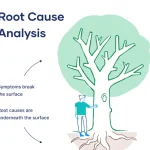
Step 5: Identify Potential Root Causes
Investigate plausible causes based on the evidence.
Potential areas include:
Laboratory-related factors
- Sample preparation variation.
- Instrument performance changes.
- Reagent or reference standard issues.
- Calculation or transcription errors.
- Method execution differences.
Manufacturing-related factors
- Changes in raw material properties.
- Mixing or processing variability.
- Equipment performance changes.
- Changes in process parameters.
- Differences in environmental or storage conditions.
System-related factors
- Changes in suppliers or materials.
- Inadequate process controls.
- Incomplete procedures or training.
- Changes in analytical methods.
- Inadequate review of historical trends.
Root cause should not be assigned without supporting evidence. If the investigation cannot establish a definitive cause, that uncertainty should be documented.
Step 6: Assess Product and Process Impact
Evaluate whether the OOT result could indicate a broader quality concern.
The assessment may include:
- The potentially affected batch or batches.
- Other products using the same equipment or process.
- Related raw materials or suppliers.
- Results from adjacent production periods.
- Potential impact on critical quality attributes.
- The need for additional monitoring or investigation.
Any batch disposition or product-impact decision must follow the applicable quality procedures and be supported by the evidence available.
Step 7: Define Corrective and Preventive Actions
https://pharmavk.com/Why-is-CAPA-Correct/
Where an issue or credible risk is identified, determine whether corrective and preventive actions (CAPA) or other controls are appropriate.
Possible actions include:
- Equipment inspection or maintenance.
- Review of process parameters.
- Additional monitoring or trend analysis.
- Revision of an SOP when justified.
- Targeted training.
- Supplier investigation.
- Improvement of analytical controls.
CAPA should address the identified cause or risk. Actions should not be selected solely to make a trend appear acceptable.
Step 8: Document, Review, and Close the Investigation
The final investigation report should explain the concern, evidence reviewed, conclusions, quality impact, and any follow-up actions.
QA or another authorized function should review and approve the investigation according to the site’s procedures.
Closure should be based on completion of required investigation activities and appropriate assessment of any outstanding risk, not simply on the completion of a form.
Practical OOT Examples in the Pharmaceutical Industry
The following examples are illustrative. The trigger criteria and values are not universal regulatory limits.
Example 1: Assay Result Showing a Downward Trend
Suppose a tablet product has an approved assay specification of 95% to 105%.
| Batch | Assay result |
|---|---|
| Batch A | 99.6% |
| Batch B | 99.2% |
| Batch C | 98.8% |
| Batch D | 97.9% |
| Batch E | 95.8% |
Batch E is still within the stated specification, but the sequence shows a downward pattern.
Potential concern: The trend may reflect a change in process performance, analytical variation, raw material characteristics, or another factor.
Investigation approach:
- Verify the original test data and calculations.
- Review the analytical method and instrument history.
- Compare relevant manufacturing parameters and raw material data.
- Assess whether the pattern meets the site’s OOT criteria.
- Document the investigation and implement appropriate actions if a cause or risk is identified.
The trend alone does not prove a manufacturing failure. The investigation must establish whether the pattern is meaningful and what it indicates.
Example 2: Increasing Microbial Counts in Pharmaceutical Water
A pharmaceutical facility routinely monitors microbial counts in a water system.
| Monitoring period | Illustrative microbial count |
|---|---|
| Week 1 | 2 CFU/mL |
| Week 2 | 3 CFU/mL |
| Week 3 | 5 CFU/mL |
| Week 4 | 8 CFU/mL |
Assume these results are within the applicable site limits. The increasing pattern may still warrant review under the established trending procedure.
Potential concern: The pattern could reflect a developing change in system performance, sampling conditions, or laboratory recovery.
Investigation approach:
- Review sample collection, transport, and testing records.
- Check relevant water system operating and sanitization records.
- Review results from related sampling points.
- Examine recent maintenance, interventions, or changes.
- Assess whether additional sampling or corrective action is warranted under the approved procedure.
The facility should not wait for an action limit to be exceeded if the trend meets established criteria for investigation.
Example 3: Increasing Environmental Monitoring Results
https://pharmavk.com/Why-is-Environment/
A cleanroom’s environmental monitoring data show increasing microbial recovery over several monitoring sessions, although the individual results remain within the applicable limits.
Potential concern: The pattern may indicate a change in personnel practices, cleaning effectiveness, material transfer, equipment condition, or other contamination-control factors.
Investigation approach:
- Identify the affected sampling locations and monitoring periods.
- Review organism identification data when available and appropriate.
- Assess cleaning and disinfection records.
- Review personnel, maintenance, and process interventions.
- Evaluate related environmental monitoring results.
- Document conclusions and any risk-based corrective actions.
An upward trend does not automatically establish contamination of the product. The product impact must be evaluated using the relevant process knowledge and evidence.
What Should an OOT Investigation Report Contain?
A well-documented OOT investigation generally includes the following information, as applicable to the site’s procedure.
| Section | Details |
|---|---|
| Investigation identification | Report number, date, product, batch, or process |
| Description of the concern | Original result and reason the trend was flagged |
| Acceptance criteria | Applicable specification and established OOT criteria |
| Historical data review | Relevant results, charts, and comparison periods |
| Initial assessment | Review of raw data, calculations, instruments, and method execution |
| Investigation findings | Evidence reviewed and plausible causes assessed |
| Root cause | Confirmed cause, if established, or documented limitations |
| Quality impact | Assessment of affected batches, processes, or products |
| Actions | Corrective action, preventive action, or additional monitoring, as applicable |
| Conclusion | Scientific rationale and investigation outcome |
| Approval and follow-up | Required QA review, authorization, and effectiveness checks |
Records should be attributable, legible, contemporaneous, original or appropriately verified, accurate, complete, consistent, enduring, and available as applicable to the record system.
Common Mistakes During OOT Investigation
1. Ignoring a Result Because It Meets Specification
A specification-compliant result may still indicate a meaningful change in process performance.
Best practice: Evaluate the result against the established trend criteria and historical data.
2. Treating Every Unusual Result as a Confirmed OOT
Not every numerical fluctuation indicates a genuine quality concern. Normal variation, sample size, data comparability, and the suitability of the trend method should be considered.
Best practice: Apply predefined, scientifically justified criteria and document the rationale for the assessment.
3. Repeating Tests Without a Scientific Justification
Repeating tests solely to obtain a result closer to historical values can obscure the original finding.
Best practice: Any retesting or resampling should be justified, authorized, and performed according to the applicable procedure. Preserve and assess the original data.
4. Assuming the Laboratory Is Always Responsible
OOT results may originate from laboratory variation, manufacturing changes, material differences, equipment performance, or several interacting factors.
Best practice: Consider plausible causes across the process and base conclusions on evidence.
5. Closing the Investigation Without Reviewing Related Data
An isolated result may be part of a broader pattern affecting other batches, equipment, or sampling locations.
Best practice: Extend the review where scientifically justified and assess the potential wider impact.
How Can Pharmaceutical Companies Prevent Recurring OOT Results?
OOT prevention relies on effective process monitoring and a functioning Pharmaceutical Quality System.
Useful practices include:
- Establishing scientifically justified trend-review criteria.
- Using appropriate statistical tools where suitable.
- Maintaining qualified and calibrated equipment.
- Reviewing process and analytical performance regularly.
- Maintaining effective supplier controls.
- Investigating meaningful trends promptly.
- Linking relevant findings to deviation management and CAPA.
- Reviewing the effectiveness of actions using suitable follow-up data.
- Updating risk assessments when new information changes the understanding of a process.
ICH Q10 describes the importance of monitoring process performance and product quality, maintaining a state of control, and supporting continual improvement throughout the product lifecycle.
Frequently Asked Questions (FAQs)
1. What does OOT mean in pharma?
OOT stands for Out-of-Trend. It describes a result or pattern that differs unexpectedly from historical data or established trend criteria, even when the result may remain within specification.
2. Can an OOT result be within specification?
Yes. A result can meet the approved specification and still be considered OOT if it meets the organization’s established criteria for an unusual trend.
3. What is the difference between OOT and OOS?
OOT identifies an unexpected trend or historical pattern. OOS identifies a result outside an established specification or acceptance criterion. An OOT result may be specification-compliant, while an OOS result is not.
4. Is OOT investigation mandatory for every unusual result?
The response depends on applicable requirements and the site’s approved procedures. Companies should establish scientifically justified criteria for identifying and evaluating potential trends and document decisions appropriately.
5. Who is responsible for OOT investigation?
QC may identify or initially assess the result, while QA coordinates or reviews the investigation according to the quality system. Production, engineering, validation, microbiology, or other specialists may contribute depending on the issue.
6. Does every OOT result require CAPA?
Not necessarily. The investigation should determine whether corrective or preventive action is warranted. A CAPA decision should reflect the evidence, identified cause or risk, recurrence potential, and applicable procedures.
7. What is the role of trending in pharmaceutical quality?
Trending helps identify changes in process performance, recurring deviations, unusual laboratory results, and emerging risks. It supports timely investigation and continual improvement.
8. Which guidance is relevant to OOT investigation?
FDA’s guidance on investigating OOS test results notes that many of its principles may also be useful for evaluating OOT results. ICH Q10 provides a broader framework for monitoring product and process performance within the pharmaceutical quality system.
Conclusion
Out-of-Trend (OOT) results are valuable signals in pharmaceutical quality management. They can reveal unusual changes in product, process, laboratory, or environmental monitoring data before a specification limit is exceeded.
An effective OOT investigation should review the original data, compare relevant historical results, assess plausible causes, determine potential quality impact, and document a scientifically supported conclusion. Corrective and preventive actions should be implemented when justified, followed by appropriate evaluation of their effectiveness.
Remember: a result can meet specification and still deserve investigation. Effective trending helps pharmaceutical companies identify emerging risks early and maintain consistent product quality.
References
- U.S. Food and Drug Administration (FDA). Investigating Out-of-Specification (OOS) Test Results for Pharmaceutical Production: Guidance for Industry. The guidance notes that many of its principles may also be useful when examining OOT results. https://www.fda.gov/regulatory-information/search-fda-guidance-documents/investigating-out-specification-oos-test-results-pharmaceutical-production-level-2-revision
- International Council for Harmonisation (ICH). ICH Q10: Pharmaceutical Quality System. https://www.ich.org/page/quality-guidelines
- European Medicines Agency (EMA). ICH Q10 Pharmaceutical Quality System — Scientific Guideline. https://www.ema.europa.eu/en/scientific-guidelines/ich-q10-pharmaceutical-quality-system
- U.S. Food and Drug Administration (FDA). Process Validation: General Principles and Practices. https://www.fda.gov/regulatory-information/search-fda-guidance-documents/process-validation-general-principles-and-practices