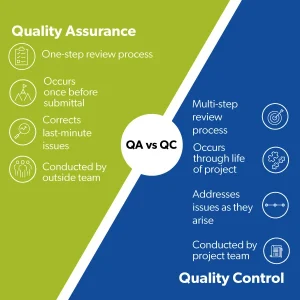
QA review vs QC review is an important distinction in pharmaceutical manufacturing because Quality Assurance (QA) and Quality Control (QC) perform different but complementary activities. QC primarily focuses on testing and evaluating materials, samples, and products against established specifications, while QA provides broader oversight of the quality system and ensures processes and documentation are appropriately controlled.
Although both functions contribute to product quality, their review activities have different purposes and responsibilities. This article breaks down QA review vs QC review across scope, documents reviewed, review questions, batch release, and more useful for anyone working in pharmaceutical manufacturing, QC laboratories, or quality management systems.
What Is QA Review in Pharmaceutical Industry?
QA review is a quality-system and compliance-oriented review performed to verify that activities, processes, and records have been completed according to approved procedures and applicable requirements. QA may review documentation generated by manufacturing, QC, engineering, warehouse, validation, and other departments including batch manufacturing and packaging records, SOPs and controlled documents, deviations, CAPA records, change controls, OOS/OOT investigations, environmental monitoring records, validation documentation, training records, and equipment/facility records.
The exact scope of QA review varies according to the pharmaceutical organization’s quality system. 21 CFR 211.22 establishes the quality control unit’s authority to review production records and approve or reject products, which underpins much of this broader QA oversight role.
https://pharmavk.com/Why-is-CAPA-Correct/
What Is QC Review in Pharmaceutical Industry?
QC review focuses mainly on laboratory-generated data and testing activities. QC personnel review analytical and microbiological records to verify that testing was performed according to approved methods, specifications, procedures, and laboratory controls covering analytical and microbiological test results, raw data, chromatograms, spectra, calculation sheets, sample information, reference standard records, reagent and media records, instrument records, system suitability results, and OOS/OOT laboratory investigations.
The purpose is to ensure laboratory results are reliable, complete, accurate, and appropriately documented.
QA Review vs QC Review: Key Differences
The main difference between QA review and QC review is the scope of the review:
| Parameter | QA Review | QC Review |
|---|---|---|
| Primary focus | Quality system and compliance | Laboratory testing and analytical data |
| Main area | Manufacturing and quality systems | Laboratory operations |
| Records reviewed | Batch records, deviations, CAPA, change control, etc. | Raw data, results, calculations, chromatograms, test records |
| Main question | Was the activity performed according to approved requirements? | Was the test performed correctly and is the result reliable? |
| Personnel | QA professionals | QC analysts/reviewers |
| Product impact | Evaluates broader quality and compliance information | Evaluates test results against specifications |
| Role in batch release | Provides QA oversight and final quality assessment per procedure | Provides laboratory testing results and related assessment |
These responsibilities can differ between organizations, so the company’s approved procedures should always be followed.
7 Key Differences Between QA Review and QC Review
1. Difference in Primary Responsibility
QA responsibility: QA oversees the pharmaceutical quality system and ensures processes are controlled and documented appropriately review can extend across multiple departments.
QC responsibility: QC is primarily responsible for laboratory testing and associated data, ensuring testing uses approved methods and that results are appropriately evaluated and documented.
2. Difference in Documents Reviewed
QA may review: batch manufacturing records, batch packaging records, deviations, CAPA, change controls, SOPs, validation documents, training records, and manufacturing records.
QC may review: analytical worksheets, microbiological records, chromatograms, spectra, raw data, calculations, system suitability results, laboratory notebooks, and instrument records.
Some records involve both departments depending on the process.
3. Difference in Review Questions
QA review questions: Was the approved SOP followed? Are all required entries complete? Were deviations documented? Were required approvals obtained? Are manufacturing records complete? Were changes appropriately controlled? Were required investigations completed? Is the overall documentation acceptable?
https://pharmavk.com/sop-lifecycle-in-pharmaceutical-industry/
QC review questions: Was the approved analytical method followed? Is the sample correctly identified? Are calculations accurate? Did system suitability meet requirements? Are all required raw data available? Were appropriate standards and reagents used? Are results within specification? Are analytical records complete and traceable?
4. QA Review vs QC Review During Batch Release
Both QA and QC contribute information used during batch disposition, but their responsibilities differ. QC generates and reviews laboratory results for raw materials, in-process materials, finished products, and other samples. QA evaluates the broader quality information associated with the batch manufacturing records, packaging records, QC results, deviations, OOS investigations, environmental monitoring results, change controls, CAPA impact, and process-related documentation according to the organization’s approved procedures.
5. Example: Finished Product Testing
Consider a finished product requiring assay, dissolution, microbial, and other applicable testing.
QC review covers: sample identification, approved test method, instrument suitability, system suitability, raw data, calculations, test results, specification compliance, and analyst/reviewer documentation.
QA review subsequently considers the QC results together with other batch-related information: batch manufacturing records, QC results and relevant laboratory records, deviations, OOS/OOT investigations, environmental monitoring information where relevant, change controls, required approvals, and overall batch documentation.
This illustrates that QC provides important laboratory evidence, while QA considers the broader quality picture.
6. QA Review vs QC Review in Microbiology
This distinction matters in pharmaceutical microbiology too. QC microbiology review covers environmental monitoring results, microbial enumeration, bioburden results, sterility test records, growth promotion test records, media preparation records, microbial identification records, incubation conditions, positive/negative controls, and microbiological raw data.
QA review evaluates this microbiology information as part of the broader quality assessment. For example, if an environmental monitoring result exceeds an established limit, QC may perform the laboratory review and provide the relevant data, while QA oversees or assesses the associated investigation according to the quality system.
7. QA and QC Work Together
QA and QC shouldn’t be viewed as completely separate functions their activities are interconnected. A simplified workflow:
Sampling → QC Testing → QC Review → Results → QA Quality Review → Investigation/Assessment Where Required → Batch Disposition
The actual workflow depends on the organization’s procedures and manufacturing process.
Common Mistakes When Understanding QA and QC
- “QC does everything related to quality” : QC is an important part of pharmaceutical quality, but quality management extends well beyond laboratory testing.
- “QA only checks documents” : QA responsibilities can extend to quality systems, compliance, investigations, change control, audits, validation oversight, and training, depending on the organization’s structure.
- “QA and QC are the same” : they have different responsibilities, although both contribute to quality assurance and patient safety.
- “QC results alone determine batch release” : batch disposition generally involves multiple quality records and requirements, not just one laboratory result.
QA Review vs QC Review: Practical Comparison
| Question | QA | QC |
|---|---|---|
| Reviews laboratory raw data? | Depending on procedure | Yes |
| Reviews manufacturing records? | Yes | Generally not primary responsibility |
| Performs laboratory testing? | Generally no | Yes |
| Reviews analytical calculations? | May review according to procedure | Yes |
| Manages deviations/CAPA? | Quality oversight | Provides technical input where applicable |
| Reviews OOS investigations? | Quality oversight | Laboratory investigation and technical assessment |
| Reviews change controls? | Quality oversight | Provides impact assessment where applicable |
| Supports batch disposition? | Yes, according to quality system | Provides QC testing information |
Best Practices for Effective QA and QC Review
- Use current approved procedures
- Clearly define QA and QC responsibilities
- Ensure reviewers are appropriately trained
- Review records systematically
- Maintain traceability of corrections and changes
- Verify calculations and critical data
- Ensure deviations are appropriately documented
- Escalate unexpected or potentially significant results according to procedure
- Maintain complete and accurate records
- Ensure QA and QC communicate when quality issues are identified
Frequently Asked Questions
What is the difference between QA review and QC review?
QA review generally focuses on broader quality-system compliance and documentation, while QC review primarily focuses on laboratory testing, analytical data, and test results.
Does QA perform laboratory testing?
QA personnel generally provide quality oversight rather than performing routine laboratory testing. Laboratory testing is normally performed by QC or other designated laboratory functions.
Does QC report to QA?
Organizational structure varies between companies. QA and QC may be separate functions within the quality organization, or their reporting structures may differ.
Who reviews laboratory raw data?
QC personnel typically perform the technical review of laboratory data according to approved procedures. Additional QA review may be required depending on the organization’s quality system.
Does QA review batch records?
Yes. QA commonly performs or oversees review of batch documentation as part of the quality-system process, although exact responsibilities depend on the organization’s procedures.
Are QA and QC equally important?
QA and QC perform different functions that work together within a pharmaceutical quality system. QC provides laboratory testing and data; QA provides broader quality oversight.
Conclusion
Understanding QA review vs QC review helps clarify how different quality functions work together in pharmaceutical manufacturing. QC review primarily evaluates laboratory testing, analytical data, calculations, and test results. QA review has a broader focus, evaluating batch documentation, deviations, CAPA, change controls, and other quality-system records.
Neither function replaces the other. Effective pharmaceutical quality management depends on clearly defined responsibilities, reliable documentation, appropriate review, and communication between QA, QC, manufacturing, and other relevant departments.
References