Dead-leg control in pharmaceutical water systems is essential for maintaining water quality, minimizing microbial contamination risks, and supporting Good Manufacturing Practice (GMP) compliance. Dead legs are sections of piping or connections where water circulation is inadequate, creating conditions that may favour microbial persistence and biofilm formation.
In pharmaceutical manufacturing, purified water (PW) and water for injection (WFI) systems require appropriate hygienic design, operation, monitoring, and maintenance. Poorly designed or inadequately controlled dead legs can create areas that are difficult to clean, sanitize, and monitor effectively. Microorganisms associated with these areas may contribute to deterioration in microbiological water quality, while certain Gram-negative bacteria may introduce endotoxins.
Therefore, pharmaceutical water systems should be designed to minimize stagnant areas, maintain suitable circulation, and allow effective drainage, sanitization, and routine monitoring.
What Is a Dead Leg in a Pharmaceutical Water System?
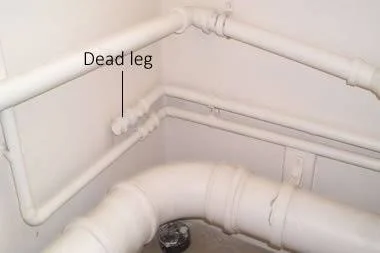
A dead leg is a section of piping, fitting, or connection in which water movement is insufficient to provide effective flushing under the system’s normal operating conditions.
Dead legs may occur in branches, unused connections, instrument ports, sampling arrangements, and other piping configurations that are not adequately swept by circulating water.
For example, a long branch connected to a purified water distribution loop may receive little or no regular flow. If water remains stagnant in this section, microorganisms may persist or multiply under suitable conditions.
Dead legs are not defined solely by the presence of a branch. Their risk depends on factors such as branch geometry, flow conditions, temperature, surface characteristics, frequency of use, and the effectiveness of the system’s sanitization strategy.
Why Is Dead-Leg Control Important?
1. Preventing Microbial Proliferation
Stagnant or poorly circulated water may create favourable conditions for microbial survival and growth. If nutrients and suitable environmental conditions are present, microbial populations may increase in affected areas.
Microorganisms may subsequently enter the circulating water when flow conditions change, potentially affecting downstream sampling points or water-use locations.
Control measure: Minimize stagnant sections through hygienic design and maintain appropriate circulation, flushing, and sanitization practices.
2. Reducing Biofilm Formation
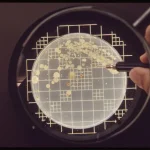
Biofilms develop when microorganisms attach to surfaces and become embedded in a self-produced matrix. Internal pipe surfaces, fittings, and poorly flushed sections may provide locations for biofilm development.
Biofilms can be difficult to remove because attached microorganisms may be less susceptible to certain cleaning and sanitization treatments than freely suspended microorganisms.
Control measure: Use suitable hygienic materials and surface finishes, minimize stagnant areas, and establish effective, validated or otherwise appropriately qualified cleaning and sanitization strategies.
3. Controlling Endotoxin Risk
Certain Gram-negative bacteria can release endotoxins, which are components of their outer membrane. Endotoxins may remain present even after the bacteria that produced them have been killed.
Consequently, reducing viable microbial counts alone does not necessarily demonstrate adequate endotoxin control.
Control measure: Apply appropriate controls for microbial contamination and endotoxins based on the water grade, system design, intended use, and applicable specifications.
4. Maintaining Purified Water and WFI Quality https://pharmavk.com/Why-is-Water-for-Inj/
Purified water and water for injection are used in pharmaceutical manufacturing for different purposes and have specific quality requirements.
Poorly controlled stagnant areas can contribute to microbial contamination and may compromise the ability of a water system to remain in its intended state of control. The potential consequences depend on the water grade, the extent of contamination, and the intended use.
Control measure: Maintain system qualification, suitable operating conditions, routine chemical and microbiological monitoring, and endotoxin testing where required.
5. Supporting GMP Compliance
Pharmaceutical water systems should have appropriate hygienic design, documented operating procedures, maintenance controls, and monitoring programmes.
Dead legs that are poorly justified, inadequately controlled, or difficult to sanitize may raise questions during quality reviews or regulatory inspections.
Control measure: Maintain current piping and instrumentation diagrams (P&IDs), design assessments, maintenance records, sanitization records, risk assessments, and investigation records where applicable.
Common Causes of Dead Legs
Dead legs may arise from design decisions, modifications, equipment installations, or changes in how a water system is used.
Common examples include:
-
Unused piping branches that remain connected to the distribution loop.
-
Instrument connections that create poorly flushed sections.
-
Sampling points with unsuitable piping geometry.
-
Equipment modifications that introduce stagnant sections.
-
Inadequately designed valve arrangements.
-
Changes in system operation that reduce circulation through previously active sections.
-
Temporary connections that are not properly removed or controlled.
Periodic inspection and review of water-system drawings can help identify these conditions before they contribute to water-quality problems.
How Can Dead Legs Be Prevented and Controlled?
1. Apply Hygienic System Design
Dead-leg prevention should begin during the design stage. Piping arrangements should support adequate circulation, cleanability, sanitization, and drainage.
Branches and connections should be assessed according to the actual system design and applicable engineering and regulatory guidance. A single dimensional rule should not be applied indiscriminately to every connection.
2. Minimize Unused Connections
Unused branches and redundant piping should be avoided wherever practical. If a connection is no longer required, it should be removed or modified using an approved engineering change process.
Simply closing a valve may not eliminate a dead leg if stagnant water remains trapped behind it.
3. Use Hygienic Valves and Fittings
Appropriately selected hygienic valves, fittings, and instrument connections can help reduce poorly flushed spaces.
Components should be compatible with the water quality, operating temperature, sanitization method, and applicable design requirements.
4. Maintain Appropriate Flow and Drainability
Water circulation should be appropriate for the system design and operating requirements. Piping arrangements should also support drainage where required and avoid unintended water retention.
Flow conditions should be evaluated during design qualification and when significant system modifications occur.
5. Establish Effective Sanitization
Thermal, chemical, or other suitable sanitization strategies may be used depending on the system design and materials of construction.
Sanitization procedures should be appropriately qualified or validated, as applicable, and supported by documented operating parameters. Sanitization should not be treated as a substitute for correcting a fundamentally poor hygienic design.
6. Conduct Routine Inspection and Monitoring
Routine monitoring helps demonstrate whether the water system remains under control.
Depending on the system and risk assessment, activities may include:
-
Microbiological testing at defined sampling points.
-
Endotoxin monitoring where required.
-
Review of alert and action limit excursions.
-
Assessment of adverse microbial trends.
-
Inspection of unused branches and sampling arrangements.
-
Review of sanitization and maintenance records.
Unexpected results should be investigated under the site’s approved procedures.
Effect of Dead Legs on Pharmaceutical Water Quality
The possible impact of dead legs depends on their design, the operating conditions, and the effectiveness of existing controls.
| Potential issue | Possible consequence |
|---|---|
| Water stagnation | Increased potential for microbial persistence or growth |
| Biofilm formation | Persistent contamination and possible microbial release |
| Endotoxin-producing organisms | Potential endotoxin contamination |
| Inadequate sanitization | Reduced effectiveness of microbial control |
| Poor monitoring coverage | Delayed detection of developing water-quality problems |
A dead leg does not automatically mean that the water is contaminated or that a batch is affected. The actual impact must be assessed using relevant test results, system information, and a documented quality risk assessment.
Practical Example: Investigating a Suspected Dead Leg
Consider a hypothetical purified water system in which microbial counts at one sampling point begin to increase over several monitoring cycles.
The QC and engineering teams review historical results, recent maintenance activities, sampling procedures, and the relevant P&ID. The review identifies an infrequently used branch that may not receive adequate water circulation.
The team then assesses the branch design, sampling arrangement, and sanitization effectiveness. Additional testing or engineering evaluation is performed according to approved procedures.
If the investigation confirms that the branch contributes to inadequate microbial control, the site may modify or remove the connection through an approved change control process. The team subsequently evaluates the effectiveness of the corrective action using predefined acceptance criteria and appropriate follow-up monitoring.
This example illustrates how engineering assessment, microbiological evidence, change control, and CAPA can work together to maintain pharmaceutical water quality.
Frequently Asked Questions
1. What is the main purpose of dead-leg control?
The main purpose is to minimize stagnant or poorly flushed areas that may support microbial persistence, biofilm formation, and deterioration of pharmaceutical water quality.
2. Can dead legs cause biofilm formation? https://pharmavk.com/Biofilm-in-Pharmac/
Yes. Under suitable conditions, microorganisms can attach to internal surfaces and form biofilms. However, biofilm formation depends on several factors, including water quality, temperature, surface characteristics, and operating conditions.
3. Why are dead legs a concern in WFI systems?
WFI systems require stringent control of water quality. Poorly controlled stagnant areas may increase the risk of microbial contamination and endotoxin-related problems, depending on the system and the organisms involved.
4. Is flushing sufficient to eliminate a dead leg?
Not necessarily. Flushing may reduce stagnant water or remove some suspended microorganisms, but it may not adequately control established biofilms or correct poor piping design. The appropriate action depends on the identified risk and system configuration.
5. How can dead legs be identified?
They may be identified through P&ID reviews, physical inspections, engineering assessments, flow and drainage evaluations, maintenance reviews, and investigations of recurring microbiological results.
6. What is the role of change control in dead-leg management?
Change control ensures that piping modifications, new connections, and equipment installations are assessed for their potential effects on hygienic design, circulation, sanitization, drainability, qualification, and water quality.
Conclusion
Dead-leg control is an important part of maintaining microbiological control in pharmaceutical water systems. Stagnant or poorly flushed sections may support microbial persistence and biofilm formation, potentially increasing the risk of contamination and endotoxin-related concerns.
The most effective approach is to prevent dead legs through hygienic design, minimize unused connections, maintain suitable circulation and drainage, implement effective sanitization, and monitor water quality consistently.
In pharmaceutical water systems, prevention through sound engineering design is generally more reliable than attempting to control the consequences of poor design through flushing or sanitization alone.