In pharmaceuticals alert and action limits are very important, because these limits are
effective control to the process.
Alert and Action limits are in house limits, these limits must be less than guideline limits or
define limits.
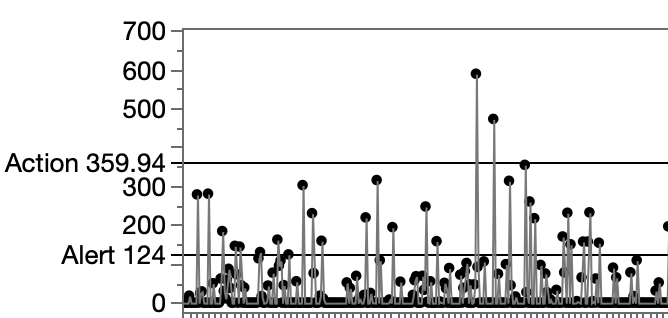
Alert and Action limits defined based on trend analysis.
Alert and Action limits are like a barrier before the guideline limits.
𝐀𝐥𝐞𝐫𝐭 𝐥𝐢𝐦𝐢𝐭
To be alert the microbial counts reach to this alert level.
It is nor necessary to take any action.
Possible deviation from normal process condition.
This is a trigger, that something is going wrong means microbial count increasing that area.
𝐀𝐜𝐭𝐢𝐨𝐧 𝐋𝐢𝐦𝐢𝐭𝐬:
When microbial count reach this action limits then action is mandatory.
To control the microbial count in the area.
Signal an apparent deviation from normal process condition And require immediate action.
If not controlled, we might get area failure.
These alert and action limits must be less than final limits.
𝐄𝐱𝐚𝐦𝐩𝐥𝐞
Active air sample Grade -C Final limit 100.(as per EU GMP, WHO-GMP, D&C schedule-m
and PIC/s).
to establish the alert limit based on trend analysis – 20
to establish the action limit based on trend analysis – 24.
𝐒𝐢𝐠𝐦𝐚 𝐛𝐚𝐬𝐢𝐬 𝐥𝐢𝐦𝐢𝐭𝐬
𝐀𝐥𝐞𝐫𝐭 𝐥𝐞𝐯𝐞𝐥
Alert Level = Average +2 X Sigma
Ex: Average limit = 11.28
Standard Deviation (sigma) =4.16
= 11.28 + 2 X 4.16=20
𝐀𝐜𝐭𝐢𝐨𝐧 𝐥𝐞𝐯𝐞𝐥
Action Level = Average + 3 X Sigma
Ex: Average limit = 11.28
Standard Deviation (sigma) =4.16
=11.28 +3 X 4.16=24
All observations related to the water system and environmental monitoring are subject to
trend analysis. Trends are prepared but its limit always remains a point of discussion because
all regulatory guidelines provide a single limit for the tests. No alert and action limit is given.
Sufficient data should be available to determine the alert and action limits by 3 sigma
formula. Alert and action limit of water system and environmental monitoring should be
calculated with minimum one year data because results vary in different seasons of the year.