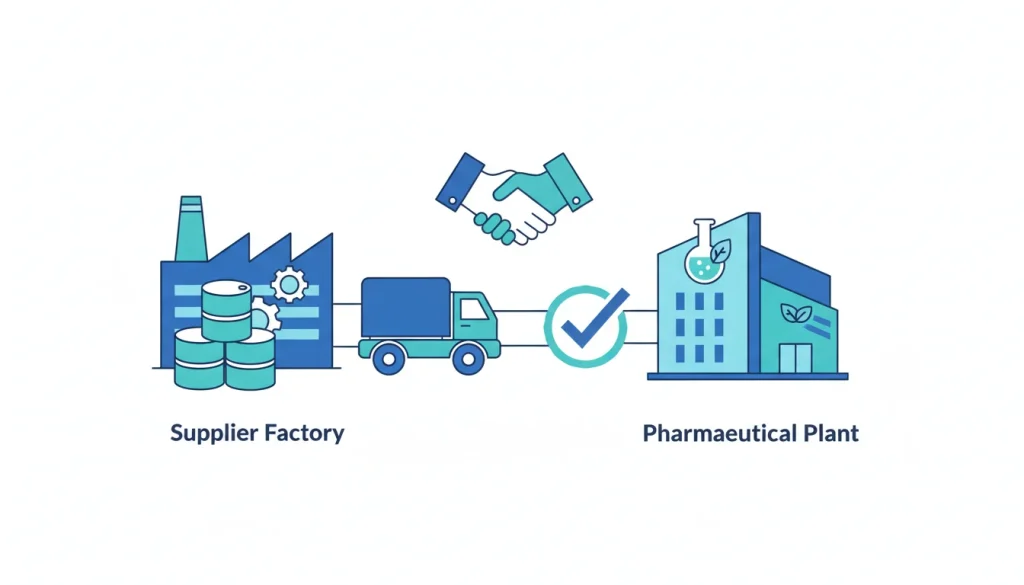
Pharmaceutical companies rely on suppliers for raw materials, packaging components, services, and sometimes whole manufacturing steps. Since the quality of these inputs affects the final product, suppliers must be qualified and monitored.
1. Why Supplier Qualification Matters
The marketing authorisation holder remains responsible for quality even when work is outsourced. A poorly controlled supplier can cause contamination, mix-ups, or inconsistent material, so the company needs evidence that suppliers can meet its requirements.
2. Steps in Supplier Qualification
Step 1: Identify and assess risk. Classify the material or service by its impact on quality. Active ingredients and primary packaging are usually higher risk than general office supplies.
Step 2: Collect information. Use a supplier questionnaire and request documents such as GMP certificates, quality manuals, and regulatory approvals.
Step 3: Evaluate samples. Test samples or trial batches against the company’s specifications.
Step 4: Audit where needed. For higher-risk suppliers, QA carries out an on-site or remote audit of the supplier’s quality system and facilities.
Step 5: Approve and agree. Add the supplier to the approved list and sign a quality agreement that defines responsibilities, change notification, and complaint handling.
3. Ongoing Monitoring
- Review incoming material results and rejections
- Track complaints and deviations linked to the supplier
- Check delivery performance and responsiveness
- Re-audit or re-evaluate on a risk-based schedule
4. What Is in a Quality Agreement?
- Scope of supply and specifications
- Responsibilities for testing and release
- Notification of changes to process, site, or materials
- Audit rights and regulatory inspections
- Handling of deviations, complaints, and recalls
5. Common Issues
- Using suppliers that are not on the approved list
- No quality agreement in place
- Audits that are overdue or too shallow
- Ignoring supplier performance trends
Conclusion
Strong supplier qualification protects the supply chain and the final product. A risk-based process, clear agreements, and regular monitoring keep quality under control from the start.
This article is for general educational purposes. Always follow your own company procedures and applicable regulations.