Introduction
Preservative Effectiveness Testing (PET) is an important microbiological test used to evaluate whether an antimicrobial preservative system can control the growth of microorganisms in a pharmaceutical product. It is particularly relevant to products in which microbial contamination may occur during storage or repeated use.
Preservatives may be incorporated into certain aqueous pharmaceutical formulations to help limit microbial proliferation. However, their effectiveness depends on several factors, including preservative concentration, product pH, formulation composition, packaging, storage conditions, and the microorganisms being tested.
A product containing a preservative does not automatically have adequate antimicrobial protection. The effectiveness of the preservative system must be demonstrated using an appropriate, predefined test procedure.
In pharmaceutical microbiology, this assessment is commonly called preservative effectiveness testing or antimicrobial effectiveness testing (AET). United States Pharmacopeia (USP) General Chapter ⟨51⟩ describes Antimicrobial Effectiveness Testing, while the European Pharmacopoeia addresses the efficacy of antimicrobial preservation in Chapter 5.1.3.
This article explains the purpose of preservative effectiveness testing, the major factors affecting results, common laboratory errors, and practical approaches to troubleshooting unexpected findings.
What Is Preservative Effectiveness Testing?
Preservative effectiveness testing evaluates the ability of an antimicrobial preservative system to control specified challenge microorganisms in a product over a defined period.
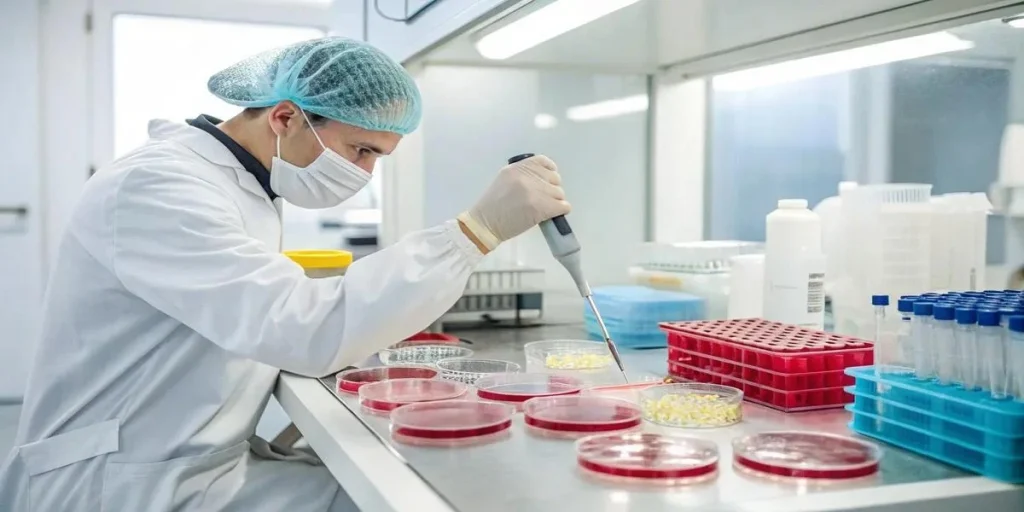
During a challenge study, selected microorganisms are introduced into the test product under controlled conditions. The viable microbial population is measured at specified intervals, and the results are assessed against the applicable pharmacopoeial or approved study acceptance criteria.
The test helps determine whether the formulation provides adequate antimicrobial protection for its intended use.
Why Is PET Performed?
The main purposes include:
- Demonstrating the effectiveness of the preservative system during product development.
- Evaluating whether formulation changes affect antimicrobial protection.
- Supporting appropriate product stability assessments.
- Assessing products for which antimicrobial preservation is needed during storage or use.
- Investigating changes in preservative performance associated with formulation, manufacturing, or packaging.
PET does not replace routine microbiological quality testing, appropriate manufacturing controls, or sterility testing where required.
Which Pharmaceutical Products May Require PET?
The need for preservative effectiveness testing depends on the dosage form, intended use, applicable compendial requirements, and product-specific risk assessment.
Examples of products for which preservative effectiveness may be relevant include:
- Multidose ophthalmic preparations.
- Certain multidose parenteral products.
- Aqueous oral liquids.
- Topical creams, lotions, and gels.
- Nasal and otic preparations.
- Other pharmaceutical formulations containing antimicrobial preservatives.
Not every product in these categories has identical testing requirements. The applicable pharmacopoeia, product specification, regulatory commitments, and intended use should determine the appropriate approach.
How Does Preservative Effectiveness Testing Work?
Although the exact procedure depends on the applicable standard and product, the general workflow involves the following stages.
Step 1: Select the Challenge Microorganisms
The applicable test method specifies the required challenge organisms. A commonly referenced USP ⟨51⟩ panel includes:
- Staphylococcus aureus
- Pseudomonas aeruginosa
- Escherichia coli
- Candida albicans
- Aspergillus brasiliensis
The current applicable chapter should be consulted for the exact requirements, organism strains, and product category.
Step 2: Inoculate the Product
The test product is inoculated with the prescribed microbial challenge under controlled conditions. The inoculum level and preparation should follow the approved procedure.
Step 3: Store Under Defined Conditions
The inoculated samples are maintained under the conditions specified by the applicable test method. Appropriate precautions should be taken to avoid unintended changes to the product or test conditions.
Step 4: Determine Viable Microbial Counts
At the specified intervals, samples are examined using an appropriate microbial enumeration procedure. The test method must be suitable for recovering surviving microorganisms in the presence of the product’s preservative system.
Step 5: Calculate Microbial Reduction
Results may be expressed as changes in viable counts or logarithmic reductions, depending on the applicable method.
Log reduction is calculated as:
Log reduction = log₁₀(initial viable count) − log₁₀(viable count at the specified time)
For example, if the initial count is 1,000,000 CFU/mL and the later count is 10,000 CFU/mL:
Log reduction = log₁₀(1,000,000) − log₁₀(10,000)
Log reduction = 6 − 4 = 2
This represents a 2-log reduction, equivalent to a 99% reduction in the viable count. Whether this result is acceptable depends on the applicable criteria, organism, product category, and test interval.
Step 6: Compare Results With Acceptance Criteria
The observed results are evaluated against the criteria defined by the applicable pharmacopoeia or approved protocol. Requirements can differ by product category and microorganism, so a single acceptance criterion should not be applied universally.
8 Factors That Affect Preservative Effectiveness Testing Results
1. Preservative Concentration
The preservative concentration is one of the most important determinants of antimicrobial activity.
If the concentration is too low, the product may not adequately control microbial growth. However, increasing the concentration does not always produce a proportional improvement in effectiveness because the preservative’s activity also depends on its chemical properties and formulation environment.
Factors to consider include:
- The specified preservative concentration.
- The amount of preservative available in the effective form.
- Compatibility with other ingredients.
- Potential loss or degradation during storage.
- Preservative distribution within the formulation.
Example: A formulation may contain the intended total preservative concentration, but interactions with other ingredients may reduce the amount available to exert antimicrobial activity.
QA/QC action: Evaluate preservative content using a suitable analytical method and assess the formulation and stability data when effectiveness is lower than expected.
2. Product pH
Product pH can influence preservative activity, especially when the antimicrobial action depends on the chemical form of the preservative.
Some weak-acid preservatives, for example, generally have greater activity in their undissociated form. As pH increases, the proportion of the undissociated form may decrease, potentially reducing antimicrobial activity.
However, the effect of pH depends on the particular preservative, formulation, and target microorganisms.
Example: A formulation’s pH shifts during stability testing. Even if the measured preservative concentration remains within specification, its antimicrobial performance may change.
QA/QC action: Review pH results, formulation composition, preservative chemistry, and stability trends together rather than assessing preservative concentration alone.
3. Formulation Composition
Other ingredients can influence preservative effectiveness by changing its solubility, distribution, chemical stability, or availability.
Potentially important components include:
- Surfactants.
- Emulsifiers.
- Polymers and thickening agents.
- Proteins and other macromolecules.
- Oils and lipid phases.
- Solvents and cosolvents.
- Other excipients with binding or partitioning effects.
In emulsions, a preservative may distribute between the aqueous phase, oil phase, and other formulation components. The amount present in the formulation is not necessarily equivalent to the amount available in the phase where microorganisms are present.
Example: A change in the emulsifier concentration may alter preservative partitioning, resulting in different antimicrobial performance even when the preservative’s total concentration is unchanged.
QA/QC action: Assess excipient compatibility and the effect of formulation changes through appropriate development studies and documented risk assessment.
4. Microorganism Type and Characteristics
Different microorganisms can respond differently to the same preservative system.
The observed response may depend on:
- The microorganism’s biological characteristics.
- Its susceptibility to the preservative.
- The challenge organism specified by the method.
- The condition and preparation of the inoculum.
- The initial viable count and its measurement accuracy.
A preservative system may control one organism effectively but show weaker activity against another.
Example: A product demonstrates the expected reduction for a bacterial challenge organism but does not meet the relevant criterion for a fungal organism.
QA/QC action: Review organism-specific results, inoculum preparation, culture quality, and the applicable acceptance criteria. Do not assume that a satisfactory result for one organism establishes effectiveness against all challenge organisms.
5. Product Packaging and Container-Closure System
Packaging can influence preservative performance during storage and use.
Relevant considerations include:
- Compatibility between the product and container materials.
- Potential adsorption or absorption of preservative by packaging components.
- Changes in the formulation during storage.
- Container design and product-contact surfaces.
- The intended use pattern, including repeated access where applicable.
The impact depends on the specific formulation and packaging materials.
Example: A preservative interacts with a packaging component, potentially reducing the concentration available in the product over time.
QA/QC action: Assess the marketed container-closure system and relevant stability data. Where justified, compare preservative content and effectiveness at appropriate stages of the product lifecycle.
6. Storage Conditions and Product Age
Temperature, light exposure, storage duration, and other environmental factors can affect preservative stability and product characteristics.
Preservatives may degrade, interact with formulation components, or become less available over time. Changes in pH, physical appearance, or emulsion stability may also influence antimicrobial performance.
Example: A product meets the required PET criteria during initial development, but later stability data indicate a change in preservative content or formulation characteristics.
QA/QC action: Evaluate stability-indicating data and preservative content throughout the relevant product lifecycle. The extent of testing should be consistent with applicable requirements and the approved stability strategy.
7. Neutralization and Microbial Recovery
This is a particularly important laboratory factor.
Preservatives can continue to inhibit microorganisms after the sample has been removed for enumeration. If their activity is not adequately neutralized or removed, viable microorganisms may fail to grow on the recovery medium even though they survived in the original product.
This can result in artificially low microbial counts and an apparent improvement in preservative effectiveness.
Common recovery approaches may include:
- A suitable chemical neutralizer.
- Appropriate dilution.
- Membrane filtration with suitable rinsing.
- A justified combination of recovery techniques.
The chosen procedure must be suitable for the product and preservative. Neutralizers themselves should not adversely affect the challenge organisms, and microbial recovery suitability should be demonstrated as required.
Example: A preserved product produces unexpectedly low recovery counts. Investigation shows that the neutralization procedure does not adequately remove the preservative’s antimicrobial activity.
QA/QC action: Review neutralizer suitability, dilution factors, recovery conditions, controls, and microbial recovery validation or verification. USP General Chapter ⟨1227⟩ provides relevant guidance on microbial recovery from pharmaceutical products.
8. Test Execution, Media and Laboratory Conditions
Errors in test execution can influence PET results independently of the product’s actual preservative performance.
Potential factors include:
- Incorrect inoculum preparation or concentration.
- Errors in dilution and enumeration.
- Unsuitable or inadequately controlled culture media.
- Incubation conditions that do not meet the approved procedure.
- Inconsistent sample mixing or handling.
- Incorrect timing of scheduled measurements.
- Calculation or transcription errors.
- Inadequate control of test conditions.
Example: A laboratory obtains inconsistent counts between replicate samples because the product was not handled or mixed consistently before sample withdrawal.
QA/QC action: Review raw data, media suitability, inoculum records, incubation conditions, calculations, analyst technique, and the approved procedure. Document and investigate any deviation in accordance with the quality system.
Summary Table: Factors Affecting PET Results
| Factor | Potential effect | Recommended assessment |
|---|---|---|
| Preservative concentration | Reduced antimicrobial activity if insufficient or unstable | Preservative content and stability data |
| Product pH | Changes in preservative activity | pH trend and preservative chemistry |
| Formulation composition | Binding, partitioning, or reduced availability | Excipient compatibility and formulation assessment |
| Challenge organism | Different susceptibility or growth response | Organism-specific counts and culture records |
| Packaging | Potential interaction or loss of available preservative | Container compatibility and stability data |
| Storage conditions | Preservative degradation or formulation changes | Stability results and storage history |
| Neutralization and recovery | Artificially low counts due to residual preservative activity | Recovery suitability and neutralization assessment |
| Test execution | Incorrect or variable results | Raw data, controls, media, calculations, and procedural compliance |
Common PET Failures and Troubleshooting
When PET results do not meet the applicable acceptance criteria, the investigation should distinguish between a genuine formulation-related issue and a problem with the test method or execution.
Scenario 1: Insufficient Microbial Reduction
Possible causes:
- Inadequate preservative concentration.
- Reduced preservative availability.
- An unfavorable pH.
- Formulation interactions.
- Preservative degradation during storage.
Investigation: Review preservative content, pH, formulation history, stability results, and organism-specific data.
Scenario 2: Unexpectedly Low Recovery Counts
Possible causes:
- Incomplete neutralization.
- Inadequate dilution or rinsing.
- Unsuitable recovery conditions.
- Errors in sample preparation or enumeration.
Investigation: Assess microbial recovery suitability, neutralizer performance, dilution records, and relevant controls.
Scenario 3: Inconsistent Results Between Test Intervals
Possible causes:
- Variability in sample preparation or handling.
- Differences in enumeration performance.
- Inconsistent test execution.
- Changes in product characteristics.
Investigation: Review the full data set, laboratory records, calculations, and product history before reaching a conclusion.
Scenario 4: Results Differ Between Product Batches
Possible causes:
- Differences in preservative content or pH.
- Raw material or manufacturing variability.
- Formulation or process changes.
- Differences in storage history.
Investigation: Compare batch records, analytical results, formulation variables, and stability data using a scientifically justified approach.
Investigations should follow approved laboratory and quality procedures. Repeating the test without a documented rationale should not be used to replace investigation of the original result.
PET vs Preservative Content Testing
These two tests provide different types of information and should not be treated as interchangeable.
| Parameter | Preservative Effectiveness Testing | Preservative Content Testing |
|---|---|---|
| Main purpose | Evaluates antimicrobial performance against a defined challenge | Measures the amount of preservative present |
| Typical approach | Microbial challenge study | Suitable chemical or analytical method |
| Result | Microbial counts or reduction over time | Preservative concentration |
| Main limitation | Results depend on the test method, organisms, formulation, and recovery | Concentration alone does not prove antimicrobial effectiveness |
| Application | Demonstrating effectiveness of the preservative system | Monitoring preservative content against established specifications |
FDA guidance explains that antimicrobial preservative effectiveness is demonstrated during product development, while suitable preservative-content testing can support control at release and during shelf life. The testing strategy should follow applicable requirements and the product’s approved quality system.
Good Laboratory Practices for Reliable PET Results
To support reliable and interpretable results:
- Follow the current applicable pharmacopoeial chapter and approved SOP.
- Use the specified challenge organisms and suitable inoculum preparation.
- Establish the suitability of microbial recovery in the presence of the product.
- Confirm that neutralization is effective and does not inhibit recovery.
- Use suitable culture media and follow applicable media quality controls.
- Record sample preparation, incubation, observations, and calculations accurately.
- Investigate unexpected findings using documented evidence.
- Assess preservative content, pH, formulation, packaging, and stability data where relevant.
- Apply the appropriate acceptance criteria for the product category.
- Do not use preservatives as a substitute for good manufacturing practices or as a way to compensate for unacceptable microbial contamination introduced during manufacturing.
Frequently Asked Questions (FAQs)
1. What is the purpose of Preservative Effectiveness Testing?
PET evaluates whether a product’s antimicrobial preservative system can control specified microorganisms under defined test conditions. It supports assessment of the formulation’s antimicrobial protection for its intended use.
2. What is the difference between PET and AET?
The terms Preservative Effectiveness Testing and Antimicrobial Effectiveness Testing are commonly used for the same general type of pharmaceutical challenge test. USP General Chapter ⟨51⟩ uses the title Antimicrobial Effectiveness Testing.
3. Why is product pH important in PET?
Product pH can affect the chemical form, availability, and antimicrobial activity of certain preservatives. The magnitude and direction of the effect depend on the specific preservative and formulation.
4. Can a product pass preservative content testing but fail PET?
Yes. The measured preservative concentration may meet specification while the preservative is insufficiently available or effective in the formulation. Other possible causes include pH, formulation interactions, or differences in microbial recovery and test execution.
5. Why is neutralization important during PET?
Neutralization prevents residual preservative activity from suppressing microbial growth during the recovery and enumeration stages. Inadequate neutralization may produce falsely low counts and misleading conclusions.
6. Does passing PET prove that a product is sterile?
No. PET evaluates antimicrobial effectiveness against specified challenge organisms. It does not establish sterility and cannot replace a required sterility test or other applicable microbiological controls.
7. When should PET be performed?
The timing depends on the product, applicable requirements, and development and stability strategy. PET may be used during formulation development and to assess preservative effectiveness over the relevant product lifecycle, including appropriate stability studies.
Conclusion
Preservative Effectiveness Testing is an important tool for assessing the ability of pharmaceutical formulations to control microbial growth. Its results depend on both the actual performance of the preservative system and the reliability of the laboratory test.
Preservative concentration, product pH, formulation composition, challenge microorganisms, packaging, storage conditions, neutralization, and laboratory execution can all affect the outcome.
For reliable results, pharmaceutical microbiology laboratories should use an appropriate test procedure, demonstrate suitable microbial recovery, apply predefined acceptance criteria, and investigate unexpected findings systematically.
Most importantly, antimicrobial preservatives should complement—not replace—good manufacturing practices and effective microbiological quality controls.
References
- United States Pharmacopeia (USP). General Chapter ⟨51⟩, Antimicrobial Effectiveness Testing. Official USP-NF chapter.
- United States Pharmacopeia (USP). General Chapter ⟨1227⟩, Validation of Microbial Recovery from Pharmacopeial Articles. Official USP-NF chapter.
- U.S. Food and Drug Administration (FDA). Questions and Answers on Current Good Manufacturing Practice Regulations: Production and Process Controls. Official FDA guidance.
- International Council for Harmonisation (ICH). Q6A: Specifications—Test Procedures and Acceptance Criteria for New Drug Substances and New Drug Products: Chemical Substances. Official FDA guidance.
- European Pharmacopoeia. General Chapter 5.1.3, Efficacy of Antimicrobial Preservation. Consult the current official edition applicable to the product.